ICP Analysis & Lookalike Modeling
 Buying Signals & Intent
 AI Automation and Data
 SalesIntel Platform
 Marketing
 Sales
Sales Revenue Operations
 Advertising
 Resources
 Events
A quick AI-generated overview extracted directly from the content of this page.
Sales teams are constantly looking for tools and platforms to streamline their lead generation and prospecting efforts. Cognism, a popular sales intelligence platform, has gained considerable attention in recent years.
About Cognism
One of the key features of Cognism is its vast international database, which is one of the largest in the industry. This database contains a wealth of information on millions of companies and professionals from various industries worldwide. It enables Cognism’s users to access valuable data points such as company profiles, contact details, and job titles, which can be utilized for targeted outreach and personalized marketing campaigns. This extensive database provides users with a broad reach and the potential to identify new business opportunities in global markets.
However, it’s important to note that while Cognism boasts a large international database, the concern lies in the relevancy and accuracy of the data it provides. As with any data-driven platform, there is always a risk of outdated or incorrect information. Cognism strives to maintain data accuracy by employing various methods, including machine learning algorithms and regular data verification processes.
Nevertheless, users should exercise caution and conduct their due diligence to ensure the accuracy and relevancy of the data they rely on for their sales and marketing efforts. Regular data updates and quality assurance practices can help mitigate these concerns and ensure the best possible outcomes when utilizing Cognism’s services.
Cognism Features
- Verified Contact Information: Users can find verified emails, direct dials, and safe-to-call mobile numbers for decision-makers.
- Sales Intelligence: It provides insights to identify and engage with ready-to-buy accounts, enhancing the effectiveness of sales campaigns.
- CRM Integrations: Seamlessly integrates with major CRMs like Salesforce and HubSpot, allowing for efficient data transfer and management.
- Data Enrichment available.
- Compliance and Security: Adheres to GDPR, SOC2, and ISO27001 standards, ensuring high data security and privacy.
Cognism Ratings and Reviews
Cognism generally receives positive reviews for its ease of use, customer support, and value for money. It has an overall rating of 4.6 out of 5 on platforms like Capterra.
Cognism Limitations
Cognism has been a reputable sales intelligence platform that offers globally compliant data and robust features to help revenue teams generate and close business opportunities faster. However, in recent times, users have noted several shortcomings that affect its efficiency and overall satisfaction. Here are some limitations and concerns that lead users to explore Cognism alternatives:
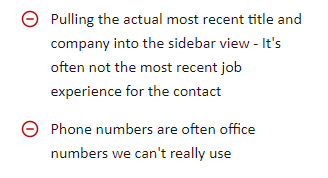
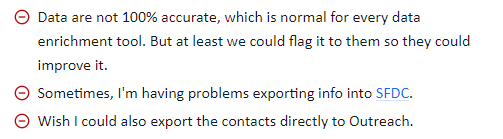
- Data Accuracy Issues: Users have reported inaccuracies and outdated data, particularly in the Asian market, which can lead to inefficiencies in sales outreach.
- Salesforce Integration Challenges: There have been difficulties in integrating intent data into Salesforce in a readable format, affecting email automation processes.
- Limited Contact Coverage: Some users find the contact information coverage insufficient, especially preferring more US-based contacts and an increase in European data.
- Application Performance: Occasional slowness in the application hampers prospecting efficiency.
Recently, a noticeable user base faced concerns with Cognism.
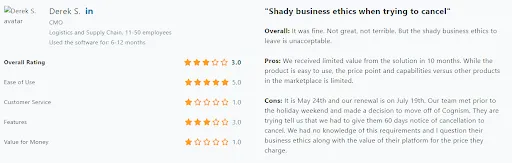
It’s always wise to explore Cognism alternatives and evaluate which one best suits your specific needs before making a purchase or renewing. In this blog post, we’ll delve into the top 10 alternatives to Cognism, comparing their features and pricing to help you make an informed decision.
Top 10 Cognism Alternatives
In the realm of B2B data platforms, Cognism has emerged as a leading solution, offering businesses valuable insights and comprehensive data for sales and marketing activities. However, as the market continues to evolve, several Cognism alternatives have emerged, providing organizations with a range of options to meet their specific data needs and drive success in their B2B strategies.
Here are the top 10 Cognism alternatives that offer unique features and functionalities that cater to different aspects of data analysis, customer relationship management, and business intelligence.
| Alternative | Key Features | Why Choose |
|---|---|---|
| SalesIntel |
|
|
| ZoomInfo |
|
|
| Apollo.io |
|
|
| Skrapp |
|
|
| Lusha |
|
|
| UpLead |
|
|
| Clearbit |
|
|
| Seamless |
|
|
| 6sense |
|
|
| LeadIQ |
|
|
| Lead411 |
|
|
SalesIntel
SalesIntel is the first Signal-First Agentic Pipeline Generation Platform that transforms how GTM teams generate pipeline. Powered by Signal360, it tracks thousands of buying signals spanning the entire buying journey, from predictive signals that identify future pipeline opportunities to demand-capture signals that reveal accounts actively evaluating solutions today. This dual-timeline approach gives revenue teams the early-mover advantage to engage accounts before formal evaluation begins, while also converting immediate opportunities.
Main features:
- Signal360: Tracks 30+ buying signal categories including predictive signals (funding rounds, leadership changes, team expansions, technology adoptions) and demand-capture signals (website visits, content downloads, pricing page views, competitor searches, Bombora topic surges)
- Capture, Qualify, Activate methodology: Systematically transforms scattered market signals into coordinated revenue action
ICP account matching and intelligent account scoring to surface the accounts that matter most - Automated buying group mapping: Identifies technical buyers, economic buyers, champions, and influencers across target accounts
- GTMCanvas: No-code agentic workflow builder that triggers custom sequences when buying signals fire
- ProspectConnect: Orchestrated multi-stakeholder outreach with signal-triggered sequences
- AdsIntel: Precision programmatic advertising targeted only to accounts showing genuine buying signals
- VisitorIntel: Identifies anonymous website visitors showing active interest
- Champions on the Move (JobsIntel): Tracks when champions or target buyers change jobs
- 95% data accuracy with 54M+ verified mobile numbers and unlimited data access
- Native integrations with Salesforce, HubSpot, Marketo, Dynamics, Zoho, Outreach, Salesloft, and more
- Free RevDriver Chrome Extension for real-time prospecting in your Chrome browser
- SOC2 certified with SSO/SAML, RBAC, GDPR/CCPA compliance
SalesIntel Pricing
SalesIntel does not publicly disclose pricing on its website. Pricing is customized based on team size, data requirements, and platform modules such as Signal360, VisitorIntel, GTM Canvas, ProspectConnect, and AdsIntel.
Pricing: Custom Quote Required
Limitations:
- Learning Curve: The breadth of features and signal categories may require ramp-up time, though this depth is what enables more comprehensive pipeline generation.
- Platform Complexity: The UI reflects the depth of available intelligence; teams used to simpler point solutions may need onboarding support (dedicated CSM provided).
Ratings: 4.5/5 (G2)
How does Cognism compare to SalesIntel?
Cognism and SalesIntel are both designed to help revenue teams identify and engage potential buyers with accurate B2B contact data. Cognism is known for its global database and strong coverage across European markets, making it a popular choice for international prospecting. SalesIntel differentiates itself through human-verified contact data, helping teams improve accuracy and reduce time spent validating records. SalesIntel also provides tools such as VisitorIntel, buyer intent data, RevDriver, and GTM Canvas to support account identification and pipeline generation. Businesses focused on data accuracy and go-to-market intelligence often evaluate SalesIntel as a strong alternative to Cognism.
Cognism vs SalesIntel – Compare Cognism’s global database with SalesIntel’s human-verified data, unlimited access model, and industry-leading accuracy for North American prospecting.
ZoomInfo
ZoomInfo is another leading sales intelligence platform that offers a wide range of features to help businesses find and engage with their target audience. It provides access to a vast database of contacts, along with detailed company information. ZoomInfo’s real-time updates and AI-powered insights enable sales teams to stay ahead of the game. While its pricing plans are not publicly available, ZoomInfo is known to be a more expensive option compared to its competitors.
Main features:
- Conversation intelligence is now included
- Contacts and interactions are automatically synchronized to your CRM.
- Prediction using modeling
- Cross-channel marketing via tracking website visits
ZoomInfo Pricing
ZoomInfo does not publicly publish pricing on its website. Organizations must contact sales for a quote. According to multiple industry pricing reports, plans typically start around $15,000+ per year and can increase significantly based on seats, credits, and add-on products.
Pricing:
- Custom Pricing
- Industry estimates: $15,000–$30,000+ annually
Limitations:
- High Cost: Premium pricing may be prohibitive for smaller businesses.
- Data Accuracy: Users have reported occasional outdated information.
- Customer Support: Mixed reviews on responsiveness and helpfulness.
Ratings: 4.4/5 (G2)
How does Cognism compare to ZoomInfo?
Cognism and ZoomInfo are among the most recognized names in the sales intelligence market. ZoomInfo offers a broad platform that combines contact data with intent signals, conversation intelligence, workflow automation, and other revenue acceleration tools. Cognism, on the other hand, is often appreciated for its compliance-focused approach and strong international data coverage. While ZoomInfo may appeal to larger organizations seeking an extensive suite of GTM solutions, Cognism can be a good fit for teams prioritizing prospecting efficiency and global reach.
Cognism vs ZoomInfo – See how Cognism’s EMEA-focused coverage stacks up against ZoomInfo’s larger database, intent data, and enterprise GTM platform.
Skrapp
Skrapp is a B2B email finder built around a 150M+ contact database, with automatic verification for every discovered email. It’s designed for sales teams that prospect with a Chrome extension that surfaces verified emails from a domain search for finding contacts at specific companies, and bulk CSV enrichment for larger lists.
Skrapp lands as a Cognism alternative for teams that found the platform too expensive, too locked into annual contracts, or too broad for what they actually use, and would rather pay month-to-month for a focused tool that handles email finding and verification well. The 92% search success rate and 97%+ verification accuracy keep bounces down, which directly addresses the data accuracy concerns Cognism users have flagged.
Main features:
- Domain search for finding contacts at target companies
- Bulk email finder for CSV uploads, useful for trade show lists and prospect imports
- Real-time SMTP verification on every result
- 150M+ B2B profile database, refreshed daily
- Native CRM integrations with HubSpot, Salesforce, and Pipedrive
- Credit-based pricing with month-to-month plans, no per-seat fees
Skrapp Pricing
Skrapp publicly offers a free plan and paid subscriptions.
Pricing:
- Free Plan
- Starter – Starts around $49/month
- Professional and Enterprise plans available
(Verify directly before publishing, as Skrapp frequently updates credit allocations.)
Limitations:
- Narrower scope than Cognism: Skrapp focuses on email finding and verification, so teams that relied on Cognism for intent data or in-platform sequencing will need separate tools.
- No phone numbers: Unlike Cognism’s direct dials and mobile coverage, Skrapp doesn’t provide phone data, teams that prospect by phone will need to pair it with another tool.
- Coverage variation: Data accuracy can vary outside core English-speaking markets, similar to the regional coverage gaps Cognism users have flagged.
Ratings: 4.5/5 (G2)
Cognism vs Skrapp – Compare Cognism’s full sales intelligence platform with Skrapp’s streamlined email-finding and verification solution.
Seamless
Seamless.AI is a platform that caters to sales, marketing, and recruiting teams by providing access to B2B contacts, including cell phone numbers, emails, direct dials, and buyer intent data. It positions itself as a real-time data intelligence search engine rather than a mere database, aiming to differentiate itself from competitors like ZoomInfo.
Main features:
- Using firmographic filter options, locate your company’s target audience and prospects.
- Features for news and person alerts let you know which prospects should be contacted
- Lead validation and lead quality in the context of lead creation
- Works with Zoho, Keap, Pipedrive, Zapier, Salesforce, and Outreach CRM, sales, and marketing solutions.
Seamless.AI Pricing
Seamless.AI does not publicly disclose detailed pricing.
Pricing:
- Free Plan Available
- Pro and Enterprise plans require a custom quote
Limitations:
- Data Quality: Some users experience issues with outdated or incorrect data.
- Search Filters: Limited search filter options compared to competitors.
- Integration: Fewer native integrations with other software.
Ratings: 4.2/5 (G2)
How does Cognism compare to Seamless.AI?
Cognism and Seamless.AI both help sales professionals discover prospects and generate leads. Seamless.AI uses AI-driven search capabilities to help users identify contact information and build prospect lists quickly. Cognism focuses on delivering verified contact data, compliance support, and broader international coverage. Organizations that prioritize automation and rapid list building may be drawn to Seamless.AI, while businesses seeking dependable contact data and global prospecting capabilities often evaluate Cognism more favorably.
Cognism vs Seamless.AI – Compare Cognism’s compliance-first approach with Seamless.AI’s real-time search engine and lead generation capabilities.
Sales Navigator is a sales prospecting and account research platform built on platform’s professional network. It enables sales teams to identify decision-makers, monitor account activity, and engage prospects through personalized outreach. While it is not a traditional contact database, many organizations use it alongside sales intelligence platforms to support prospecting efforts.
Main Features:
- Advanced lead and account search filters
- Real-time buyer and company insights
- Lead recommendations powered by paltform’s data
- CRM integrations
- Relationship mapping capabilities
- Alerts for job changes and company updates
Sales Navigator Pricing
Publicly offers several Sales Navigator plans.
Pricing:
- Core – Starts around $99.99/month
- Advanced – Custom pricing
- Advanced Plus – Custom pricing
Limitations:
- Limited Contact Information: Does not provide direct emails or phone numbers.
- Requires Additional Tools: Often used alongside a dedicated sales intelligence platform.
- Premium Pricing: Costs can increase significantly for larger teams.
Ratings: 4.3/5 (G2)
Cognism vs Sales Navigator – Compare Cognism’s verified contact data with Sales Navigator’s relationship-driven prospecting and account research capabilities.
Kaspr
Kaspr is a prospecting platform focused on helping sales professionals find verified contact information. It provides access to phone numbers, email addresses, and company information through its browser extension, making it particularly popular among European sales teams.
Main Features:
- Verified phone numbers and email addresses
- CRM integrations
- Contact export functionality
- Prospect list management
Kaspr Pricing
Kaspr publicly publishes pricing.
Pricing:
- Free – $0
- Starter – $49/user/month
- Business – $79/user/month
- Enterprise – Custom Pricing
Limitations:
- Limited Database Depth: Not as extensive as some enterprise-focused platforms.
- Regional Coverage Variations: Data quality can vary across different markets.
- Limited Advanced Intelligence: Fewer intent and analytics features compared to larger competitors.
Ratings: 4.4/5 (G2)
How does Cognism compare to Kaspr?
Cognism and Kaspr both provide access to contact information for sales prospecting, but Kaspr is generally geared toward individual sellers and smaller teams. Cognism offers broader database coverage, more advanced prospecting capabilities, and additional features such as intent data. Businesses with larger sales teams and more complex prospecting requirements often find Cognism better suited to their needs.
RocketReach
RocketReach is a contact data platform that helps businesses find email addresses, phone numbers, and social media profiles of professionals across various industries. It provides access to a large global database and is commonly used by sales, recruiting, and business development teams for prospecting and outreach activities.
Main Features:
- Access to millions of professional contact records
- Email and phone number lookup
- Bulk contact enrichment
- CRM integrations and exports
- API access for custom workflows
RocketReach Pricing
RocketReach’s pricing varies based on credits and team size. The company has historically offered plans starting around $70–$100/month for individual users, with higher tiers for teams. Recent user reports suggest pricing can exceed $300–$500/month for larger plans.
Pricing:
- Individual Plans – Typically start around $70–$100/month
- Team Plans – Custom Pricing
- Enterprise – Custom Pricing
Limitations:
- Data Accuracy: Some users report occasional inaccuracies in contact information.
- Limited Intent Data: The platform focuses primarily on contact discovery rather than buying signals.
- Advanced Features: Certain capabilities require higher-tier plans.
Ratings: 4.5/5 (G2)
How does Cognism compare to RocketReach?
Cognism and RocketReach both provide access to professional contact information, but RocketReach is often used for quick contact lookups and individual prospect research. Cognism offers a more comprehensive prospecting platform that includes intent data, mobile numbers, and workflow integrations designed for sales teams. RocketReach can be a practical choice for occasional prospecting, while Cognism is generally better positioned for organizations running structured outbound sales programs at scale.
Cognism vs RocketReach – Compare Cognism and RocketReach to determine which platform offers better contact coverage, affordability, and global reach.
Clearbit (HubSpot Breeze Intelligence)
Clearbit focuses on data enrichment and offers the ability to instantly append over 100 data points to a company’s profile, including information about its technology stack (technographics) and employees (firmographics). The platform integrates with popular CRMs like Salesforce, Marketo, HubSpot, Pardot, and Segment to automate and optimize sales and marketing workflows.
Main features:
- 250 public and private data sources 100+ business-to-business characteristics
- Website intent signal optimization
- Social media advertisements are immediately synchronized.
- Lead routing and scoring have been improved.
Clearbit (HubSpot Breeze Intelligence) Pricing
Clearbit is now part of HubSpot’s Breeze Intelligence offering.
Pricing:
- Custom pricing based on HubSpot plan and usage
- Contact sales for a quote
Limitations:
- Limited Contact Data: Primarily focused on company data rather than contact details.
- API-Dependent: Best suited for companies that can leverage its API.
- Pricing Transparency: Pricing details are not readily available.
Ratings: 4.3/5 (G2)
Cognism vs Clearbit (HubSpot Breeze Intelligence) – See whether Cognism’s contact database or Breeze Intelligence’s enrichment and CRM-native insights better support your GTM strategy.
Apollo.io
Apollo boasts a B2B database of over 250 million contacts and 30 million companies. Along with its Engagement Suite, it enables sales and marketing teams to run outbound activities and sequences effectively. With its extensive database, Apollo aims to empower users to reach out to prospects with personalized outreach at scale.
Main Features:
- Lead Validation
- Lead Enrichment
- Lead Quality
- Lead Analysis
- Browser Extension
Apollo.io Pricing
Apollo offers a free plan along with several paid tiers. Current publicly available pricing includes:
Pricing:
- Free Plan – $0
- Basic – $59/user/month
- Professional – $99/user/month
- Organization – $149/user/month
Limitations:
- Data Freshness: Users have reported occasional stale data.
- User Interface: Some find the UI to be less intuitive.
- Feature Set: Not as feature-rich as some competitors.
Ratings: 4.6/5 (G2)
How does Cognism compare to Apollo.io?
Cognism and Apollo.io both help sales teams find prospects and build pipelines, but they serve slightly different needs. Apollo.io combines prospecting data with built-in sales engagement tools such as email sequencing and outreach automation. Cognism focuses more heavily on delivering compliant contact data, mobile numbers, and intent insights. Apollo.io is often favored by startups and growing teams looking for an all-in-one platform, while Cognism may be better suited for organizations that place greater emphasis on data quality, compliance, and international prospecting.
Cognism vs Apollo.io – Explore whether Cognism’s compliance-focused data or Apollo’s affordable all-in-one prospecting and engagement platform is the better fit for your team.
LeadIQ
LeadIQ provides a prospecting platform that assists users in finding B2B prospect data, tracking sales triggers, and employing effective sequencing for personalized outreach. The platform utilizes patented AI technology to streamline the prospecting process, making it easier for sales teams to engage in faster outreach while maintaining personalization.
Main features:
- Constant record updating integration with industry-leading technologies
- Analytics dashboard is available.
LeadIQ Pricing
LeadIQ no longer prominently publishes detailed pricing for all plans.
Pricing:
- Free Plan Available
- Essential and Team plans require contacting sales for updated pricing.
- For enterprise-level deployments, custom pricing applies.
Limitations:
- Data Accuracy: Inconsistent data accuracy reported by some users.
- Integration: Limited integrations with CRM systems.
- Search Capabilities: Basic search functionality could be enhanced.
Ratings: 4.3/5 (G2)
How does Cognism compare to LeadIQ?
Cognism and LeadIQ both support prospecting workflows, but their strengths differ. LeadIQ focuses on simplifying lead capture and sales outreach by helping representatives collect and sync prospect data directly into their CRM. Cognism provides a larger database, stronger international coverage, and additional buyer intelligence features. Organizations looking for a lightweight prospecting workflow may appreciate LeadIQ, while teams seeking broader data coverage and deeper sales intelligence often consider Cognism.
Lead411
Lead411 offers global contact and company data, boasting over 450 million contacts within 20 million companies worldwide. Their database includes B2B emails, B2B direct dials, and intent data, providing users with a wide range of options for their prospecting needs.
Main Features:
- Marketing services may be used to develop custom lists.
- The lead score recognizes companies that are fast expanding.
- Email and phone number lookup Chrome extension
Lead411 Pricing
Lead411 publicly discloses pricing on its website.
Pricing:
- Free Trial – 7 days
- Spark – $49/month
- Ignite – Starting at $150/month
- Enterprise plans available upon request
Limitations:
- UI Design: The user interface is considered outdated by some users.
- Data Accuracy: Mixed reviews on the reliability of data.
- Customer Support: Inconsistent support experiences.
Ratings: 4.2/5 (G2)
How does Cognism compare to Lead411?
Cognism and Lead411 both provide sales intelligence and contact data solutions, but Lead411 places significant emphasis on buyer intent signals and trigger-based prospecting. Cognism offers extensive global coverage, compliant contact data, and strong mobile number availability. Lead411 can be a strong option for teams looking to identify prospects based on buying signals, while Cognism may be better suited for organizations that require international reach and a larger prospect database.
Cognism vs Lead411 – Discover whether Cognism’s international coverage or Lead411’s value-focused pricing and intent-powered prospecting delivers better ROI.
UpLead
UpLead offers B2B prospecting services with access to contacts and company data from over 200 countries worldwide. The platform provides search filters, intent data, data enrichment, technology tracking, and account-based marketing (ABM) capabilities. It also integrates seamlessly with major CRM platforms.
Main feature:
- Lead show in real time
- 50+ search filters
- CRM connectors of many types
- Social profile connections
UpLead Pricing
UpLead publicly lists pricing plans.
Pricing:
- Free Trial – $0 for 7 days
- Essentials – $99/month
- Plus – $199/month
- Professional – Custom Pricing
Limitations:
- Data Accuracy: Occasional discrepancies in data accuracy.
- Lead Volume: Limited number of leads in the basic plan.
- Interface: Some users find the interface less user-friendly.
Ratings: 4.5/5 (G2)
How does Cognism compare to UpLead?
Cognism and UpLead both emphasize data quality and sales prospecting accuracy. UpLead is known for its real-time email verification capabilities and straightforward pricing structure, making it attractive to small and mid-sized businesses. Cognism differentiates itself through its international reach, compliance-first approach, and access to additional sales intelligence signals. Teams focused on global prospecting and enterprise-scale outreach may find Cognism a stronger fit, while UpLead can appeal to organizations seeking simplicity and predictable costs.
Cognism vs UpLead – Compare Cognism and UpLead to see which platform offers the best balance of data accuracy, affordability, and ease of use
Lusha
Lusha provides B2B data for enterprise sales, marketing, and recruiting teams through its prospecting platform, web extension, and API. Lusha claims to serve a large number of sales professionals and organizations.
Main features:
- In a single search, you can find up to 1000 contacts and companies.
- Export your prospect lists to CRM or CSV with ease.
- Salesforce, Outlook, Gmail, Hubspot, and Zoho are among the systems that it integrates with.
- Dashboard analytics highlights team members’ prospecting activities.
Lusha Pricing
Lusha offers a free plan and custom paid packages. The company no longer prominently displays exact pricing tiers on its pricing page and instead encourages users to contact sales.
Pricing:
- Free Plan Available
- Pro, Premium, and Scale plans available
- Contact sales for current pricing
Limitations:
- Data Quantity: Smaller database compared to some competitors.
- Integration: Limited CRM and sales tool integrations.
- Pricing: Some users find the pricing higher for the data volume provided.
Ratings: 4.4/5 (G2)
How does Cognism compare to Lusha?
Cognism and Lusha both help businesses find contact information and connect with decision-makers. Lusha is known for its ease of use, straightforward interface, and accessibility for small businesses and individual sales professionals. Cognism typically provides a larger database, stronger compliance capabilities, and more advanced sales intelligence features. Companies with simple prospecting needs may find Lusha sufficient, while larger organizations often choose Cognism for its scalability and broader data coverage.
Cognism vs Lusha – Evaluate Cognism’s verified mobile numbers against Lusha’s user-friendly platform and flexible pricing model.
Clay
Clay is a data enrichment and workflow automation platform that helps go-to-market teams build prospect lists, enrich records, and automate research processes. Rather than functioning as a traditional sales database, Clay connects with dozens of data providers and AI tools to create highly customized prospecting workflows. It has gained popularity among modern outbound and growth teams looking to automate manual prospecting tasks.
Main Features:
- Data enrichment from multiple providers
- AI-powered research and personalization
- Automated list building and prospecting workflows
- CRM synchronization and integrations
- Custom waterfall enrichment capabilities
- No-code workflow builder
Clay Pricing
Clay publicly publishes pricing.
Pricing:
- Free – $0
- Launch – $167/month
- Growth – $446/month
- Enterprise – Custom Pricing
Limitations:
- Learning Curve: Users may require time to understand advanced workflow creation.
- Not a Standalone Database: Teams may still need external data sources.
- Usage-Based Costs: Costs can increase as workflow volume grows.
Ratings: 4.8/5 (G2)
Cognism vs Clay – See how Cognism’s ready-to-use contact database compares with Clay’s flexible data orchestration and enrichment workflows.
Demandbase
Demandbase is a go-to-market platform designed to help B2B organizations identify, engage, and convert high-value accounts. The platform combines account-based marketing (ABM), advertising, intent data, sales intelligence, and revenue analytics into a single solution. Demandbase is particularly popular among enterprise organizations looking to align sales and marketing efforts around target accounts and buying groups.
Main Features:
- Account-based marketing and advertising capabilities
- Buyer intent data and account identification
- AI-powered account scoring and prioritization
- Website visitor identification
- Revenue analytics and pipeline reporting
- CRM integrations with Salesforce, HubSpot, and Microsoft Dynamics
Demandbase Pricing
Demandbase uses a custom pricing model and does not publish pricing publicly. Pricing is based on platform fees, user licenses, and selected modules.
Pricing:
- Custom Quote Required
- Platform fee + per-user pricing model
Limitations:
- High Cost: Pricing is geared toward enterprise organizations and may not suit smaller businesses.
- Complexity: The platform has a steep learning curve due to its extensive feature set.
- Implementation Time: Initial setup and onboarding can require significant resources.
Ratings: 4.4/5 (G2)
Cognism vs Demandbase – Compare Cognism’s prospecting data with Demandbase’s account-based marketing and revenue intelligence capabilities.
Slintel/6Sense
Slintel, which has been acquired by 6Sense, offers a sales intelligence platform that provides B2B leads and buyer intent data. It delivers essential information about organizations and leads to sales and marketing teams. 6Sense also helps to streamline lead generation and research processes, increase conversions, and maximize marketing ROI.
Main Features:
- It offers various key data types and features, including technographics, firmographics, and lead enrichment.
- The platform integrates with major CRMs like Salesforce, HubSpot, and Pipedrive, as well as sales tools like Outreach.
6sense Pricing
6sense does not publicly disclose pricing.
Pricing:
- Custom Pricing Only
- Quote required from sales team
Limitations:
- Complexity: Steeper learning curve due to comprehensive feature set.
- Cost: Premium pricing may not be suitable for smaller businesses.
- Data Accuracy: Some users report issues with data accuracy.
Ratings: 4.6/5 (G2)
Cognism vs 6sense – Discover the differences between Cognism’s contact data platform and 6sense’s AI-powered account identification and intent intelligence.
When comparing these Cognism alternatives, it’s important to consider factors such as data accuracy, user interface, pricing, and specific features that align with your sales objectives. Each platform has its own strengths and may cater to different business needs, so a thorough evaluation based on your requirements is essential.
SalesIntel, with its accurate data and user-friendly interface, stands out as a strong contender.
However, ZoomInfo, Clearbit, DiscoverOrg, InsideView, Lead411, UpLead, Apollo.io, Snov.io, and Lusha offer unique features and capabilities that may better suit your business needs. Take the time to assess each option, considering the features and pricing that align with your goals, and make an informed decision that will empower your sales team to thrive in today’s competitive marketplace.
Compare SalesIntel with your existing data provider. Schedule a SalesIntel demo tailored to your ICP.
Cognism Pricing
Cognism pricing is based on an annual access fee and a user fee. Both of these are annual-only agreements. But is Cognism’s pricing worth it or over-hyped?
Cognism’s pricing plan gives you access:
Data:
- Direct Dial
- Mobile
- Job Title
- Location
- Skills
Company:
- Industry
- Revenue
- Employees
- Location
- Funded Date
- Technology
Events:
- Hiring
- Funding
- Intent (Bombora)*
Functionality:
- Unlimited Views
- Unlimited Individual and Page Level Exporting
- Diamonds on Demand*
Support:
- Live Chat
- Customer Support
While you get enough information using Cognism, you can miss crucial services – Research on Demand, data relevance, accuracy, and maximum accessibility. SalesIntel not only provides you with the relevant and accurate human-verified data mentioned above, but it also gives you Research on Demand, the highest human-verified direct mobile dials, and unlimited data access. As a result, SalesIntel has been considered the best among the Cognism alternatives.
Why Companies Are Looking for Cognism Alternatives in 2026
The B2B sales intelligence market has evolved dramatically over the past few years. Today, revenue teams need more than just access to contact data – they need accurate information, buying signals, seamless workflows, and a clear return on investment. As a result, many organizations are evaluating Cognism alternatives to determine which platform can best support their prospecting, outbound, and go-to-market initiatives.
The challenge starts with data quality. According to Gartner, poor data quality costs organizations an average of $12.9 million annually, highlighting the significant business impact of inaccurate, incomplete, or outdated information. When sales and marketing teams rely on unreliable data, pipeline generation suffers and productivity declines.
At the same time, sales reps are spending less time doing what they were hired to do – sell. Salesforce research found that sales representatives spend only 28% of their workweek actively selling, while the remaining time is consumed by administrative tasks, research, data entry, and internal coordination. This is one of the primary reasons companies invest in sales intelligence platforms that can automate prospecting and reduce manual work.
The rise of AI has made data quality even more critical. According to IBM, 43% of chief operations officers identify data quality as their most significant data challenge, while more than one-quarter of organizations estimate they lose over $5 million annually because of poor-quality data. As AI-powered prospecting becomes more common, the quality of the underlying data is increasingly determining which teams succeed and which fall behind.
These challenges are causing revenue leaders to take a closer look at their existing tech stacks. While Cognism remains a popular choice for B2B prospecting, particularly in Europe, many organizations are exploring alternatives that offer better data accuracy, stronger North American coverage, more transparent pricing, intent data, visitor identification, enrichment capabilities, or workflow automation.
To help you find the right fit, we’ve reviewed the best Cognism alternatives in 2026, comparing features, pricing, strengths, limitations, and ideal use cases for modern GTM teams.
Why are Cognism Users Switching to SalesIntel?
SalesIntel offers several compelling reasons to choose their platform over Cognism:
1. Unlimited, accurate data with no credit limits:
SalesIntel provides comprehensive and accurate account and contact data without any restrictions on usage. With unlimited data and credits, you can seamlessly integrate data into your workflow without worrying about hitting credit limits. This gives you a consistent and reliable data source to support your sales and marketing activities.
2. Actionable contact information:
Having an extensive database of companies and contacts is only valuable if it includes actionable contact information. SalesIntel ensures that every company and contact in their database has corresponding email addresses or phone numbers that you can immediately utilize. This saves you time and effort by providing readily usable contact details for your outreach and prospecting efforts.
3. Support for the entire go-to-market (GTM) team:
SalesIntel empowers the entire go-to-market team, including sales, marketing, and revenue operations (RevOps) teams. Marketing teams can leverage SalesIntel to define their ideal customer profile (ICP), enabling better targeting for paid ads and improved alignment over lead quality. Sales teams benefit from reliable contact and account data, reducing time-to-close, improved win rates, and more effective prospecting. RevOps teams can continually enrich data for clean data hygiene and more accurate revenue forecasting.
4. Friendly contract terms and no data destroy clause:
SalesIntel positions itself as a true business partner rather than just a line item on your profit and loss (P&L) statement. They offer friendly contract terms, ensuring a smooth and flexible partnership. Additionally, SalesIntel does not have a data destroy clause, which means you can rely on their platform for ongoing data access and utilization without concerns about data limitations or restrictions.
Here’s a comparison table to summarize the reasons to switch to SalesIntel:
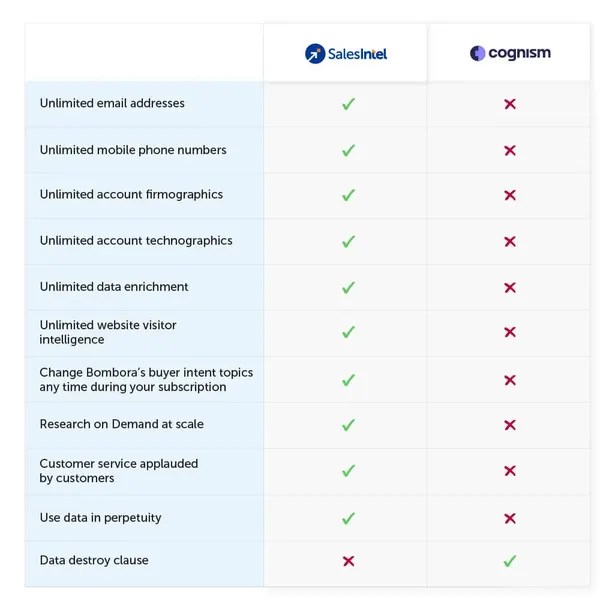
Overall, SalesIntel provides unlimited, accurate data with actionable contact information, supports the entire GTM team, and offers favorable contract terms, making it an attractive choice for businesses seeking a comprehensive and reliable data solution.
Compare SalesIntel with your existing data provider. Schedule a SalesIntel demo tailored to your ICP.
Cognism Alternative FAQs
What are the best alternatives to Cognism for B2B sales intelligence?
SalesIntel Offers highly accurate human-verified data, extensive integrations, powerful CRM integrations, PredictiveIntel, and strong customer support. It also offers flexible pricing plans to cater to businesses of all sizes.
Other Notable Alternatives:
- ZoomInfo: Comprehensive database with advanced filtering options.
- Clearbit: Real-time data enrichment and firmographic insights.
- Lusha: Easy-to-use platform with affordable pricing.
How to Choose the Right Cognism Alternative for Your Business?
Consider the following:
- Data Accuracy: Look for platforms with a reputation for high-quality, verified data.
- Features: Evaluate the specific tools you need, such as CRM integration, data enrichment, or intent data.
- Cost: Balance your budget with the value and features offered.
- Customer Support: Ensure robust support options for troubleshooting and training.
Features to Look for in a Cognism Alternative
The following are the features to consider to choose the best Cognism alternative:
- Verified Contact Data: Ensures accuracy and compliance.
- CRM Integrations: Seamless data transfer and management.
- Data Enrichment: Enhances existing data for better insights.
- User-Friendly Interface: Easy to navigate and use.
- Real-Time Updates: Keeps data current and relevant.
Best Cognism Alternative for Small Businesses
Top Options:
- SalesIntel: Best for its user-friendly interface and accurate data, ideal for small businesses needing reliable contact information with comprehensive data and advanced features like auto-enrichment, VisitorIntel, and PredectiveIntel.
- Lusha: Affordable and straightforward, suitable for startups and small teams.
- Clearbit: Offers real-time enrichment that is useful for growing businesses.
Are There Any Free Alternatives to Cognism?
Most alternatives like SalesIntel, ZoomInfo, and Lusha offer free trial versions.
Freemium Tool:
- RevDriver Chrome Extension: The best freemium tool for quick access to B2B contact information without any initial cost.
What are the main reasons businesses seek alternatives to Cognism?
Honestly, it usually comes down to a few key pain points. The pricing can be pretty steep, especially for smaller teams who feel like they’re not getting enough bang for their buck. A lot of companies also mention that while Cognism’s great for European data, it’s just not as strong once you venture outside that region. The annual contracts don’t help either—they’re pretty inflexible. And if you’re looking for an all-in-one solution, you’ll probably be disappointed since you’ll need to plug in other tools for things like outreach and automation.
What are the drawbacks of Cognism’s pricing model or automation features?
The pricing structure is… let’s just say it’s not straightforward. It’s credit-based, which sounds fine until you realize how fast those credits disappear as your team ramps up. Plus, getting access to their premium features means shelling out even more. The contracts don’t give you much wiggle room either.
As for automation? It’s pretty barebones. You’ll end up needing to connect it with other platforms just to run a proper sales workflow, which kind of defeats the purpose of having a “solution” in the first place.
Is Cognism worth it?
That really depends on who you are. If you’re a larger enterprise team that needs rock-solid, GDPR-compliant data in Europe, then yeah, Cognism makes sense. But if you’re a smaller business, or you need global coverage, or you just want something that won’t require a finance degree to understand the pricing, there are probably better options out there. Tools like SalesIntel or Apollo.io tend to be more budget-friendly and come with built-in features that actually help you close deals without jumping through hoops.