ICP Analysis & Lookalike Modeling
 Buying Signals & Intent
 AI Automation and Data
 SalesIntel Platform
 Marketing
 Sales
Sales Revenue Operations
 Advertising
 Resources
 Events
A quick AI-generated overview extracted directly from the content of this page.
Imagine you are the leader of a band performing in a rock concert. Would you play classical music in front of an audience who wants rock?
No, right?
Now back to reality – Mr.Smith is your potential customer and looking for a CRM. Will you try selling him an email marketing platform just because you think it might help him? If you are trying to sell the same thing to everyone then you are throwing spaghetti on the wall hoping a little might stick. The majority of your efforts will be wasted.
It’s all about knowing your audience as closely as possible. That’s where data comes in to help you with hitting right on the dartboard every time.
This article covers all that you need to know about B2B data. Whether you are just exploring B2B data or thinking about buying it, this article will help.
- What Type of Data is Right for Your Company?
- Firmographic Data
- Technographic Data
- Buyer Intent Data
- What is Data Enrichment, and Why is it Essential?
- Importance of Direct Dial in Your Data
- Data Quantity or Quality?
- Why Data Accuracy is Crucial
- Difference Between Machine-verified and Human-Verified Data
- How to Find The Best B2B Data Partner for Your Business
What Type of Data is Right for Your Company?
A solid B2B communication database is at the heart of any efficient marketing and sales plan. It doesn’t matter whether you have a small or big organization. It’s crucial to have the correct knowledge of your prospects and leads.
The more you understand your future clients, the more effectively you can sell to them, design goods and services that meet their demands, get strategic insight, proactively spot patterns in buying intent and behavior, and increase your chances of success.
Choosing the appropriate B2B data will have a direct impact on the efficacy of your marketing and sales approach. The B2B data categories listed below must be included in your database to guarantee a more concentrated approach in your marketing efforts as well as a tailored sales message to your prospects and leads.
Firmographic Data: Firmographic data contains important company details that help you categorize accounts (companies) suitable for you.
Contact Data: These are the key items– think of the contact details as the enabler or the real information that helps you contact the people behind the accounts on the list.
Technographic Data: Technographic data contains technologies that are used by the target accounts/companies.
Intent Data: Intent data analyzes the buying intent of the people in your target accounts.
The above mentioned are the must-have data sets to boost the sales process and close more B2B sales. You can dive deeper into each data set and its significance. Given that, you also need to make sure that the data you use is accurate and up-to-date.
Firmographic Data
A planned sales speech is likely to cause the prospect on the other end of the telephone to hang up on you mid-sentence in today’s hyper-competitive market climate. When it comes to dealing with poorly targeted sales efforts, company data is the way to go.
Identifying the correct prospects is one of the most difficult aspects of B2B sales. Businesses spend a lot of money to fill their sales funnel, but many of the leads are unqualified. Even if they are qualified, the efficacy of your outreach will suffer if you are unable to appropriately segment your targets. Segmenting your audience makes it far easier to develop relevant content that converts prospects into leads and leads into customers. “If you target everyone, you will target no one,” as the old marketing adage goes.
Firmographic information includes both company-wide and detailed user-level data. B2B segmentation with firmographics allows you to construct a picture of who your clients are so that you can target specific markets with relevant content.
Here’s an article that explains all you need to know about firmographic data and how you can use it for focused targeting.
Technographic Data
Technology is a catalyst for businesses to achieve revenue growth. As an acknowledgment of this data-driven phenomenon, technographics seek to partition technology into numerous factors at a granular level.
After Demographics, Firmographics, and Psychographics, Technographics is the next step in market research development. In the same way that demographics influence people’s actions, technographics influence the technologies that your prospects employ. With technographic data, you may acquire an in-depth understanding of a company’s technology stack and its possible plans to purchase technical solutions in the future.
If you don’t understand the function of technographic data in prospecting, a data source offering it as a value-add may not excite you. With the rising use of technology, technographic data has the potential to become an important prospecting tool.
Learn more about technographic data and how it can help you drive more sales.
Intent Data
A great grasp of customer needs backed up by data intelligence will not only provide you a competitive advantage but will also assist you in building a strong and consistent funnel for the sales team. However, only a few marketers and sales professionals understand how to use data wisely to genuinely benefit. Intent Data is one of the most significant pieces of data for driving sales and marketing insights.
Buyer Intent Data data helps you to identify prospects actively engaged in a buying decision based on the type of content they are consuming.

Once you’ve connected the dots between what your B2B consumers require and their buying signals, you can start distributing particular content that will assist them to reach their objectives while also creating an opportunity for you. Intent data is increasingly foundational to modern GTM strategy: 98% of marketers now consider intent data essential for successful demand generation, and organizations that leverage intent signals report 38% higher sales win rates and 36% higher customer retention compared to those that don’t (Landbase, 2025).
Intent Data might seem complex to understand and use. That’s why we have a detailed article on Intent Data that explains the concept in the simplest way and how to get the data.

What is Data Enrichment, and Why is It Essential?
To derive valid insights from company data, and ultimately improve sales, marketers and sales reps must be confident about their data’s accuracy and completeness.
Here’s an example:
Suppose Mr.Smith (your lead) has downloaded a case study from your website. You have tagged him as a TOFU (Top of Funnel) lead and started nurturing him through the funnel. You don’t have complete data on his organization as you kept the form limited to name and email address.
Now, you have all the necessary data to contact the lead. You nurtured the lead, did all the right things, but then you discovered he is not a sales-qualified lead. His company is too small to use your product. The reason behind ‘closed lost’ is incomplete data. And this is where enriching your CRM data becomes crucial.
Data enrichment is the method of integrating raw data from your internal resources with data from other internal or external data sets.
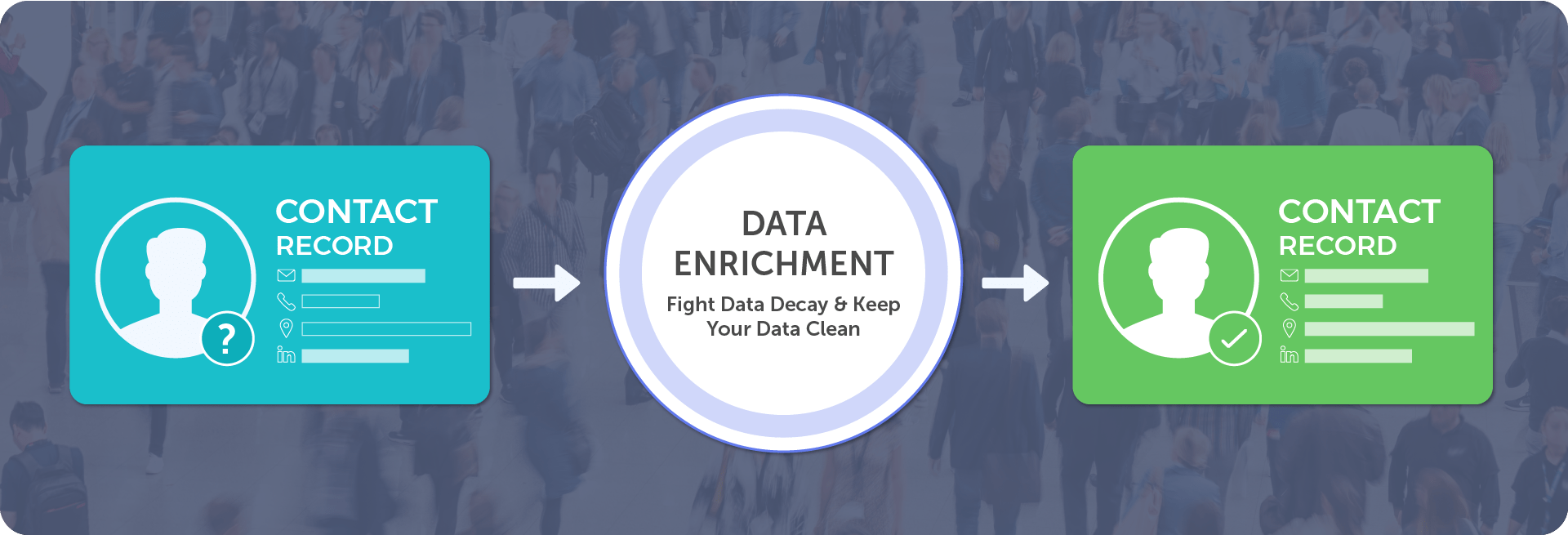
Data enrichment is a valuable commodity since it transforms raw data into useful and insightful details for any organization. The majority of brands enrich their raw data so that it may be used for informed decision-making.
The case for enrichment has never been stronger: poor data quality costs organizations an average of $12.9–$15 million per year (Gartner/IBM, 2025), and B2B contact data decays at 22.5–70.3% annually – with email decay accelerating to 3.6% in a single month in late 2024. Clean data drives 20% better campaign response rates, 15% higher close rates within six months, and 12% higher conversion rates compared to organizations working with stale or incomplete data.
Read the complete data enrichment guide for understanding the purpose and process of data enrichment
Importance of Direct Dials in Your Data
More than ever, sales efficiency is critical. Accurate direct dials save your sales reps time dialing to make relationships. They also aid in the expansion of your sales funnel and, as a result, your earnings. As a result, figuring out how to avoid calling switchboards and gatekeepers should be a top focus for any outbound team. Finding direct work mobile numbers is one of the best and simplest methods.
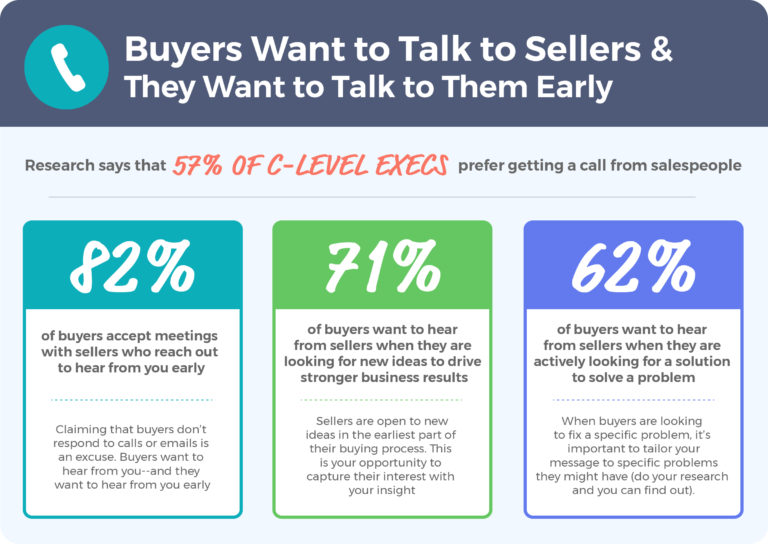
If you call a company’s switchboard and ask for a decision-maker from higher management, the gatekeeper is likely to refuse you access. It takes an average of 22 minutes to connect using switchboard numbers, but just five minutes using direct dial numbers. When using work mobile numbers, reps are up to 7x more likely to reach prospects than through a switchboard (SalesIntel/ScaleX, 2025). At the director level, a direct dial makes an SDR 46% more likely to connect; at the VP level, that figure jumps to 147% (ZoomInfo).
Work Mobile Numbers directly impact the amount of time it takes to identify and reach decision-makers. Sales reps end up using fewer resources in terms of calling time as well as managing numerous channels to pursue and convert decision-makers. Learn more about how direct work mobile dials can help you resolve the challenges throughout the sales process.
Data Quantity or Quality?
The traditional sales or marketing approach holds that the greater your reach, the more chances you may generate. With this approach, data volume takes the lead, while quality takes a back seat. However, we must reconsider and see that the consistency of our data is now the most important factor.
When it comes to numbers, quantity does not always equal profit. Obtaining a large database is insufficient. It has the potential to muddy the waters and make decision-making more complicated, leading to increased expenses and reduced production.
Suppose you receive 50 human-verified connections who are certain to buy anything from you this year. On the other hand, you are given 20,000 entirely random contacts who may or may not become your clients. So, would you rather have 50 ready-to-buy verified contacts than 20,000 contacts into which you have no visibility?
The answer is clear: 62% of organizations still deal with 20–40% incomplete or inaccurate data in their databases (2025 benchmarks). Yet high-growth companies are 66% more likely to rely on specialized, verified B2B contact data tools to stay accurate and outperform competitors.
Why Data Accuracy is Crucial
The success of your marketing efforts depends on three major factors: content, audience, and data health. Data health is the quality of the database used in your email campaigns. Maintaining data hygiene is a must when it comes to getting your emails delivered to your subscribers’ inboxes.
Top Reasons for Maintaining Data Hygiene:
- Inaccurate data wastes 27.3% of sales reps’ time. That’s 546 hours a year.
- 88% of companies believe data hygiene has a direct impact on ABM success
- The average company is losing 12% of its revenue.
- 21% of brands experienced reputational damage.
Poor data hygiene can have a huge impact on your email campaigns. For instance, poor data hygiene will reduce email delivery rates and have a negative influence on open, response, and click-through rates, resulting in a decrease in the amount of ROI you will generate from email marketing.
So, maintaining data accuracy should be your first priority before using it for your marketing and sales campaigns.
Difference Between Machine-verified and Human-Verified Data
Having an accurate list of data is a major challenge because numerous issues can be linked with B2B data, such as data completeness, dependability, consistency, timeliness, relevancy, redundancy, and so on. If your sales agents use data that has not been subjected to a rigorous verification process, they are potentially squandering 27.3 % of their time. The average B2B data provider delivers only around 50% accuracy – well below the 97%+ threshold that defines high-quality B2B contact data (RocketReach, 2026).
There are two major data verification processes of data collection – machine processed and human-verified.
Machine Processed Data: A machine learning algorithm is used to collect (and verify) machine-processed data. The data is collected in bulk.
Human-Verified: Human-verified, as the name suggests, is data verified by humans. The volume of human-verified data is frequently less than that of machine-processed data.
The quality gap is significant: phone-verified mobile numbers are 87% accurate, while AI-powered verification boosts that to 98%. SalesIntel’s human-verified approach maintains 95% accuracy across 54M+ verified mobile numbers – the largest human-verified mobile database in the industry.
Learn more details about the data battle between machine-processed and human-verified data.
How to Find The Best B2B Data Partner for Your Business
Preparing your database might take a significant amount of time and effort. The simplest method to accomplish this is to use a sales intelligence platform.
Many B2B organizations rely on a data partner to help them reach decision-makers to save time on database preparation and spend more time on execution.
However, with so many B2B data partners and sales intelligence systems to select from, it can be tough to choose one that meets your needs while also providing accurate data within your budget. Although deciding who to work with can be difficult, you can specify a few parameters when considering data partners.
Here’s a six-step process to choose the right B2B data partner for your business.
How SalesIntel’s Signal-First Platform Elevates Your B2B Data Strategy
Having accurate data is table stakes. The real competitive advantage in 2025 and beyond is knowing not just who to contact, but when – and why. That’s the shift from static data to signal-first intelligence.
SalesIntel is the first Signal-First Agentic Pipeline Generation Platform, powered by Signal360. Rather than simply delivering contact lists, SalesIntel transforms your data into coordinated pipeline generation by tracking thousands of buying signals across the entire buying journey.
Two Signal Timelines That Cover Your Full Pipeline
- Early Signals track pre-intent behaviors like job changes, funding announcements, hiring patterns, and technology installs – giving your team a head start before a prospect even begins evaluating vendors.
- Late Signals capture high-urgency triggers like website visits, content engagement, and surging intent topics – flagging accounts that are actively in a buying cycle and ready for immediate outreach.
The Capture, Qualify, Activate Methodology
SalesIntel transforms scattered signals into coordinated revenue action through three phases:
- Capture – Continuously monitor thousands of buying signals across your total addressable market, pulling in real-time data from first-party and third-party sources to surface accounts showing active interest.
- Qualify – Layer firmographic, technographic, and intent data on top of those signals to validate fit, prioritize accounts against your ICP, and separate high-value opportunities from background noise.
- Activate – Trigger automated, persona-specific outreach through your existing workflows and tools, ensuring your reps engage the right accounts with the right message at precisely the right moment.
Built on an Enterprise-Grade Data Foundation
All signal intelligence is powered by a comprehensive B2B data stack with 95% accuracy and 54M+ verified mobile numbers – because knowing someone is in-market doesn’t matter if you can’t reach them.
Frequently Asked Questions (FAQs)
What’s the difference between firmographic, technographic, and intent data – and do I need all three?
Yes, ideally you want all three working together. Firmographic data (company size, industry, revenue) tells you if an account fits your ICP. Technographic data reveals what tools they already use, helping you position against or alongside their existing stack. Intent data tells you when they’re actively researching solutions – so you reach out at the right moment. Used together, these three data types allow you to target the right companies, with the right message, at the right time.
How fast does B2B data decay, and how often should we refresh our database?
B2B contact data decays at 22.5–70.3% annually, with 70.8% of business contacts experiencing at least one change (email, phone, title, or company) within 12 months (2025 research). Email addresses decay at roughly 28% per year, while phone numbers change at 42.9% annually. This means quarterly database refreshes are the minimum – ideally, you want continuous, real-time enrichment at the point of outreach to ensure you’re always working with current data.
What should I look for when evaluating a B2B data provider?
Key criteria include: (1) Verified accuracy – 97%+ is the high-quality benchmark; the average provider delivers only ~50%. (2) Human verification for mobile numbers, which are 87%+ accurate phone-verified vs. lower accuracy for AI-only methods. (3) Data freshness – continuous enrichment vs. periodic batch updates. (4) Signal intelligence – does the provider go beyond contacts to deliver buying signals, intent, and technographic data? (5) GTM integrations – native connectors to your CRM, MAP, and SEP. (6) Compliance – SOC2 certification and GDPR/CCPA coverage are non-negotiable.
Why do human-verified mobile numbers matter more than a large contact database?
Quantity without quality is counterproductive. Research shows that work mobile numbers connect at up to 7x the rate of switchboard numbers, and sales reps are 46% more likely to reach director-level contacts and 147% more likely to reach VP-level contacts with direct dials vs. main lines. A smaller list of human-verified mobile numbers will consistently outperform a large, unverified database in both connect rate and conversion. SalesIntel’s 54M+ verified mobile numbers represent the largest human-verified mobile database in the B2B industry, maintained at 95% accuracy.
How does intent data fit into a modern signal-first GTM strategy?
Intent data is now foundational – 98% of marketers consider it essential for demand generation (2025). But traditional intent data only captures later-stage signals when prospects are already evaluating vendors. A signal-first approach goes further: it layers predictive signals (funding rounds, leadership changes, hiring patterns) on top of demand-capture signals (website visits, content downloads, competitor searches) to give you both early-mover advantage and real-time engagement triggers. Organizations using comprehensive signal intelligence report 38% higher win rates, 36% higher customer retention, and sales cycle reductions of 20–40% compared to teams relying on contact data alone.