ICP Analysis & Lookalike Modeling
 Buying Signals & Intent
 AI Automation and Data
 SalesIntel Platform
 Marketing
 Sales
Sales Revenue Operations
 Advertising
 Events
A quick AI-generated overview extracted directly from the content of this page.
They say sales is a game of numbers. Agreed. But there’s much more in sales beyond the numbers game in sales to help you hit actual numbers.
In sales, it’s easy to fall into the trap of chasing numbers, pushing for more leads, more calls, and more emails. But the reality is stark: a pipeline flooded with unqualified prospects does more harm than good. It drains resources, wastes time, and lowers team morale. The solution lies in a shift from quantity to quality, where every lead is intentional, relevant, and actionable.
This transformation – a market now valued at $4.85 billion in 2025 and projected to reach $10.25 billion by 2032 – hinges on sales intelligence, the ability to harness data-driven insights to refine strategies, optimize processes, and target the right prospects at the right time. Gone are the days of relying on gut instinct alone; today’s top-performing teams use sales intelligence to unlock high-quality pipeline generation. In fact, companies using AI-powered sales tools are 7x more likely to meet or exceed their revenue goals. By combining strategy, structure, and analytics, they achieve clarity in chaos and consistently deliver results. Here’s how you can do the same.
Cutting Through Complexity: Enterprise Sales Simplified
Enterprise sales can feel overwhelming with its long cycles, multi-layered decision-making, and high stakes. To succeed, simplification and structure are critical.
-
Stakeholder Mapping
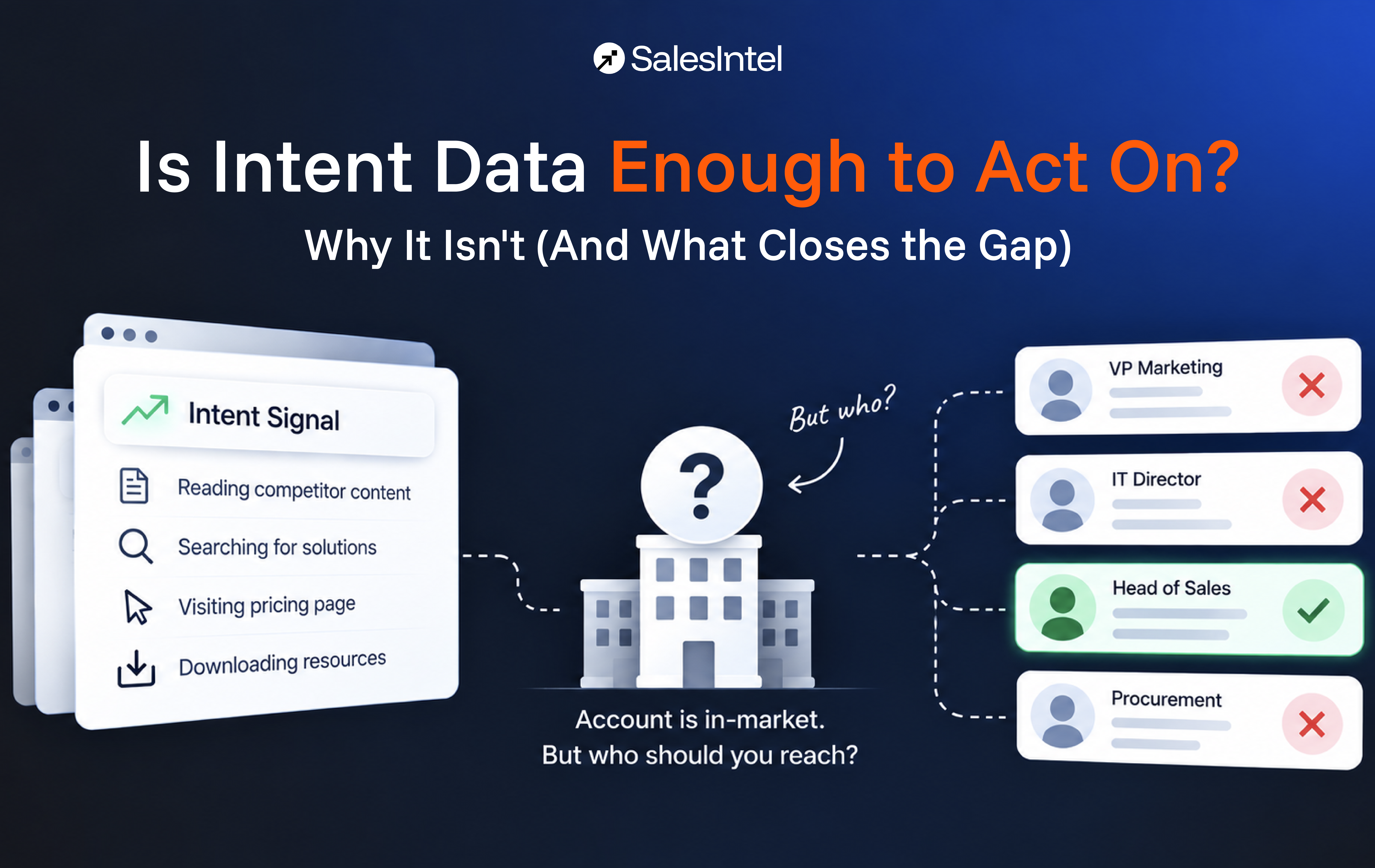
Stakeholder Mapping is the foundation. Enterprise deals involve multiple stakeholders, decision-makers, influencers, and gatekeepers. The average B2B deal now involves 13 decision-makers, making identifying these players is critical. Sales intelligence tools can pinpoint who holds sway within an organization, highlighting their roles and priorities. This knowledge helps tailor your approach, enabling you to speak directly to the concerns of a CFO, IT leader, or operations manager. By building a network of influence, you improve the likelihood of consensus among stakeholders.
-
Pain Point Discovery
Use data to uncover organizational pain points and competitive gaps. Tailor your messaging to show how your solution solves their unique challenges.
Next comes Pain Point Discovery. Winning enterprise deals isn’t about pitching features; it’s about solving problems. Use data to uncover organizational challenges, such as inefficiencies, competitive gaps, or regulatory issues. When you position your solution as the answer to their pain points, you demonstrate value. For instance, highlight how your product can reduce costs, improve productivity, or streamline workflows. Personalized, pain point-driven proposals resonate far more than one-size-fits-all pitches.
-
Relationship Building
Focus on Relationship Building. Enterprise sales cycles are long, requiring consistent, meaningful engagement. Keep in mind that today’s B2B buyers spend only 17% of their total buying time meeting with potential suppliers, Personalized follow-ups, sharing relevant insights, and being a reliable resource help establish trust. Remember, enterprise sales is not transactional; it thrives on strong relationships and mutual understanding. Trust is built over time through transparency, credibility, and proof of results via case studies or testimonials.
Enterprise sales isn’t just about closing deals; it’s about strategic navigation. By aligning resources and staying proactive, you can streamline the process and increase win rates.
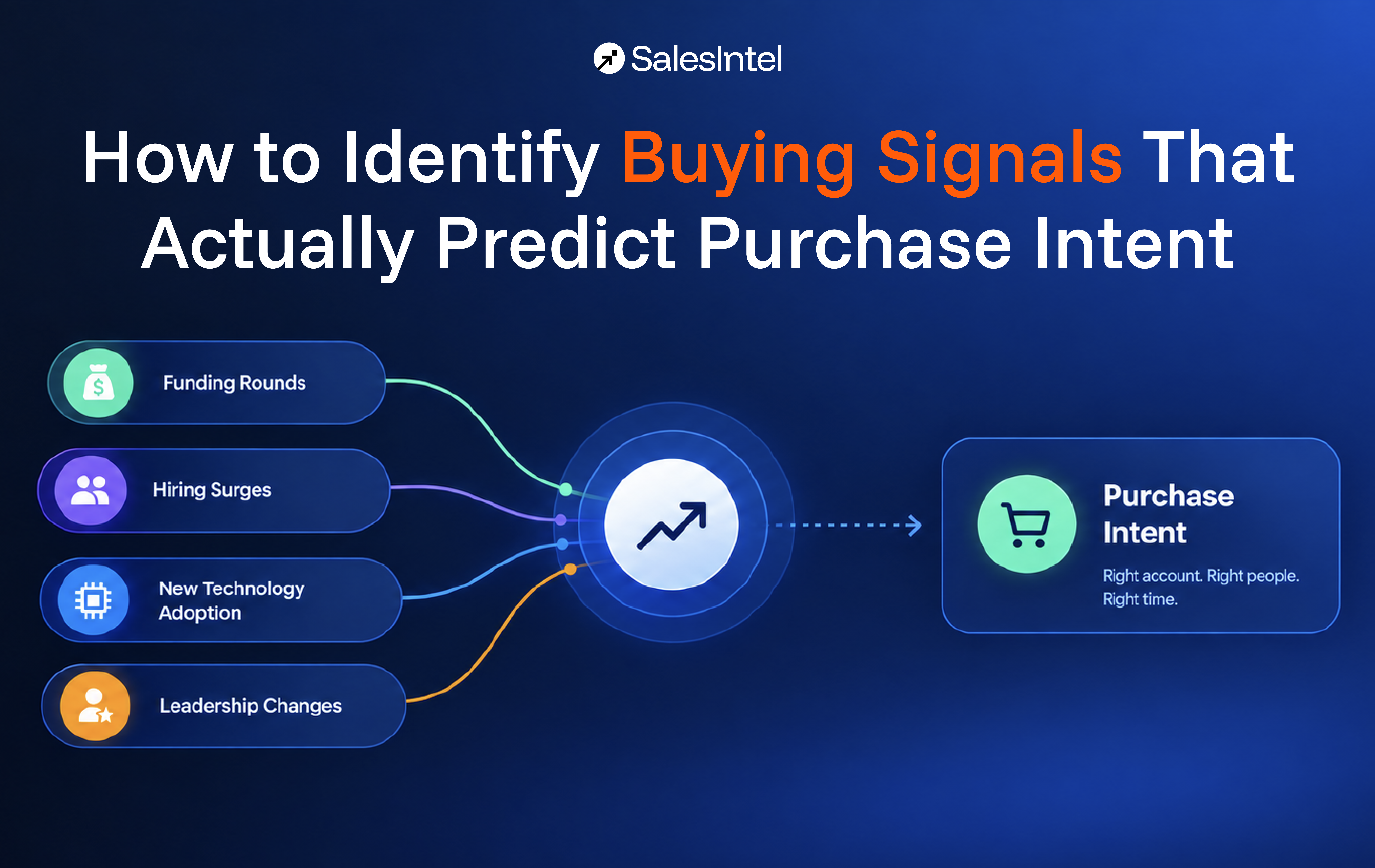
SalesIntel Tip: SalesIntel’s Signal360 surfaces real-time buying signals across job changes, funding events, tech installs, and intent data so your reps engage the right stakeholders before your competitors do. Instead of guessing who’s in-market, let the signals tell you.
Pipeline Success: Stage by Stage
A well-defined sales pipeline is more than a framework—it’s the backbone of deal progression, ensuring every prospect moves closer to conversion with precision and purpose. A successful pipeline isn’t just about adding leads; it’s about guiding them effectively through sales pipeline’s each stage.
Define Stages Clearly
Clarity is essential. Each stage, whether it’s Lead Qualification, Proposal Sent, or Negotiation, should be explicitly defined. Everyone on your sales team must understand the criteria for moving a deal from one stage to the next. This eliminates ambiguity, ensures accountability, and enables seamless handoffs between team members. A clear pipeline helps avoid bottlenecks, creating a consistent and predictable process.
Align with the Buyer’s Journey
Your pipeline should mirror your prospect’s decision-making process. For example, in the early stages, when prospects are exploring options, focus on providing educational content and answering questions. As they move into vendor evaluation, emphasize your unique value proposition and case studies that showcase your impact. Aligning your pipeline with the buyer’s journey ensures you’re delivering the right message at the right time, building trust and driving engagement.
Lead Scoring and Prioritization
Not all leads are created equal. Research shows that leading companies with high-quality lead data see 35% more leads in pipeline and 45% higher-quality leads overall. Implement a lead scoring model to identify high-value prospects that closely align with your Ideal Customer Profile (ICP). Factors like engagement levels, company size, and purchasing intent can help rank leads effectively. Prioritize these leads with tailored outreach and focused resources. This targeted approach ensures your efforts are concentrated on deals with the highest potential to close, optimizing both time and energy.
A well-structured pipeline doesn’t just track deals; it drives them forward. By defining stages, aligning with the buyer’s journey, and prioritizing high-value leads, your sales team will operate with clarity and focus, turning opportunities into successes.
From Chaos to Clarity: Data-Led Pipeline Management
Managing a sales pipeline can often feel like juggling too many tasks at once—deals stall, communication gaps arise, and forecasting turns into guesswork. The stakes are real: poor data quality costs businesses an estimated $700 billion annually in lost opportunities and wasted time, and sales reps lose roughly 500 hours a year – about 62 working days – chasing inaccurate prospect information. But with the right approach, pipeline management can be transformed into a smooth, data-driven process.
Embrace Real-Time Metrics
To gain control over your pipeline, track key metrics like deal velocity, stage duration, and close probabilities. Teams that maintain a 3:1 to 4:1 pipeline coverage ratio consistently hit quota targets, and those keeping sales cycles between 30 to 45 days achieve 38% higher velocity. These real-time insights help identify bottlenecks and inefficiencies, allowing you to take proactive action.
Collaboration Across Teams
A siloed approach leads to missed opportunities and misalignment. Organizations with a well-defined pipeline management process report 28% higher revenue growth compared to those without. When sales and marketing campaigns align with funnel stages, teams act in unison, keeping prospects engaged and progressing smoothly through the pipeline.
Actionable Dashboards
Sales intelligence platforms offer powerful tools for pipeline management. With visual, real-time dashboards, your team can access actionable insights at a glance. These dashboards allow for smarter, faster decision-making by providing a clear view of where each deal stands and highlighting which opportunities need immediate attention.
A data-driven pipeline eliminates the guesswork, enabling you to focus on opportunities that move the needle while minimizing inefficiencies. By embracing metrics, fostering collaboration, and leveraging intelligent dashboards, your sales team can operate with clarity and confidence, ultimately driving better results.
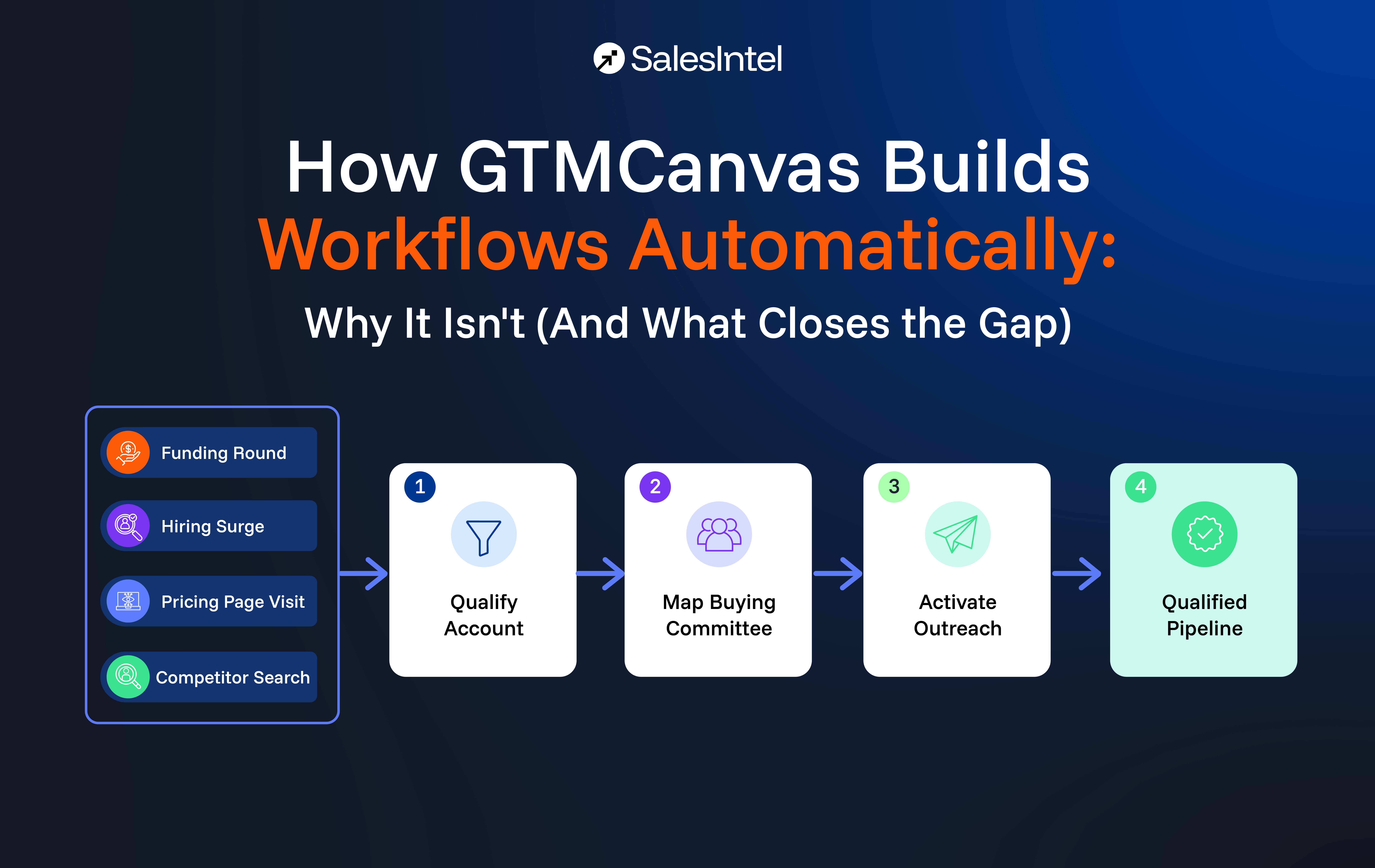
SalesIntel Tip: SalesIntel’s GTMCanvas gives revenue teams a unified view of account signals, pipeline stages, and buying committee activity – all in one workspace. No more toggling between tools to understand where a deal stands.
Amplifying Impact with Pipeline Analytics
Sales Pipeline analytics is not just about tracking numbers—it’s about using data to uncover hidden patterns, predict future outcomes, and implement strategic improvements that directly impact sales success.
Track Key Metrics
To gain actionable insights, focus on essential metrics like conversion rates, deal size, and sales cycle length. The average B2B win rate sits at just 21% across all qualified opportunities, and MQL-to-SQL conversion rates range from 10% to 30% for most teams, with top SaaS companies reaching 40%. If your conversion rate from demo to close is lower than expected, it’s crucial to identify the friction points in the demo process. By understanding where deals are getting stuck, you can implement targeted changes to optimize performance.
Predictive Insights
Sales intelligence platforms empower teams with predictive insights, allowing you to forecast which deals are most likely to close and which ones may stall. Companies that conduct regular pipeline reviews achieve a 15% higher win rate than those that don’t. This helps your reps prioritize high-value opportunities and allocate resources more effectively. By having an early understanding of potential deal outcomes, you can intervene strategically.
Iterative Optimization
Pipeline analytics is not a one-time exercise; it’s an ongoing process of refinement. Regularly review your performance, analyze past deals, and test new approaches. Sales teams should be agile and ready to adjust strategies in response to market shifts, changing buyer behaviors, or lessons learned from previous deals. By iterating and optimizing, you can continually improve your pipeline, making sure it remains aligned with current conditions and business goals.
Leveraging pipeline analytics shifts you from a reactive stance to a proactive one. By tracking key metrics, predicting outcomes, and optimizing iteratively, you can ensure consistent growth and greater sales efficiency, turning your pipeline into a powerful driver of success.
SalesIntel Tip: SalesIntel’s PredictiveIntent and RepIntel give revenue teams the forecasting layer they’re missing – surfacing which accounts are heating up, which reps need coaching, and where pipeline is most at risk – before it’s too late to act.
Pipeline Generation FAQs
What is the main purpose of a pipeline?
The main purpose of a sales pipeline is to visually track and manage the journey of potential buyers from initial interest to final purchase. It helps sales teams prioritize efforts, forecast revenue, and identify bottlenecks or opportunities in the sales process.
What does generating a pipeline mean?
Generating a pipeline means actively sourcing and nurturing leads through outbound prospecting, inbound marketing, referrals, events, or intent data, to build a pool of qualified prospects. The goal is to ensure that your sales team always has enough high-potential opportunities to meet or exceed revenue targets.
What is the difference between lead generation and pipeline generation?
Lead generation is the process of attracting and capturing interest from potential customers, typically through forms, content, ads, or outreach, to build a list of leads.
Pipeline generation, on the other hand, goes a step further. It’s about turning those leads into qualified sales opportunities that move through defined stages of the sales funnel. While lead gen fills the top of the funnel, pipeline gen ensures those leads are nurtured, validated, and positioned to drive revenue.
In short:
> Lead generation = quantity
> Pipeline generation = quality + progress toward a sale.
What is the difference between leads and pipeline?
A lead is an individual or organization that has shown some level of interest in your product or service but may not yet be qualified or ready to buy.
A pipeline consists of leads that have been vetted, qualified, and are now actively being worked by sales, moving through stages like discovery, demo, proposal, and close.
Think of leads as raw inquiries and pipeline as sales-ready opportunities.
What is meant by lead pipeline?
A lead pipeline refers to the structured progression of leads from initial contact to becoming a customer. It outlines the journey leads take through various stages such as MQL (Marketing Qualified Lead), SQL (Sales Qualified Lead), and Opportunity, before closing.
It helps sales and marketing teams visualize how effectively leads are being converted into deals and where improvements are needed.
How to do pipeline generation?
Pipeline generation is the process of creating a steady flow of qualified sales opportunities. To do this effectively, you need to identify your ideal customer, engage them through targeted outreach, qualify their intent and fit, and nurture them through the buying journey.
Steps to generate a pipeline:
- Define your Ideal Customer Profile (ICP)
- Use tools like intent data and firmographics to identify prospects
- Execute personalized outbound and inbound campaigns
- Qualify leads with discovery and lead scoring
- Track and manage opportunities through your CRM
What are the pipeline generation activities?
Pipeline generation activities include both marketing and sales-led efforts designed to attract and convert prospects:
- Outbound prospecting (cold calling, emailing, LinkedIn outreach)
- Inbound content (blogs, gated eBooks, webinars)
- Intent data tracking to find buyers already in-market
- Account-based marketing (ABM) for high-value targets
- Events and trade shows to generate interest
- Referral programs to bring in warm leads
- Lead nurturing campaigns to stay top of mind
These activities work together to build a pipeline full of sales-ready opportunities.
What are the five pipeline stages?
While stages can vary slightly by company or CRM, the five most common sales pipeline stages are:
- Prospecting – Identifying potential customers (leads)
- Qualification – Assessing fit, intent, and readiness to buy
- Proposal/Demo – Presenting your solution and value
- Negotiation – Finalizing pricing, terms, and objections
- Closed/Won or Lost – Deal is either successfully closed or exited
Each stage helps sales teams forecast revenue and guide opportunities toward conversion.
How does sales intelligence improve pipeline quality?
Sales intelligence improves pipeline quality by replacing guesswork with verified, real-time data. Instead of prospecting broad, unqualified lists, sales teams can use firmographic filters, technographic signals, and intent data to identify accounts that match their ICP and are actively showing buying behavior. Platforms like SalesIntel provide human-verified contact data with a 95% accuracy guarantee, ensuring reps reach the right person with the right message at the right time. The result: fewer wasted touches, shorter sales cycles, and higher conversion rates.
What role does intent data play in pipeline generation?
Intent data identifies companies that are actively researching solutions like yours – before they ever fill out a form or respond to outreach. By tracking topics, content consumption, and buying signals across the web, intent data lets you prioritize accounts that are already in-market. This means your team focuses energy where deal velocity is highest. SalesIntel’s PredictiveIntent aggregates these signals so reps can act on real demand rather than hoping cold outreach lands at the right moment.
How do you prevent pipeline from stalling mid-funnel?
Mid-funnel stalls typically happen for three reasons: lack of multi-threading across the buying committee, slow follow-up, or misaligned messaging. To prevent stalling, sales teams should map all key stakeholders early, automate timely follow-ups triggered by engagement signals, and tailor content to each decision-maker’s priorities. Champion Tracking tools like SalesIntel’s Champions on the Move alert you when your internal champions change roles or leave – giving you a critical window to re-engage and protect pipeline before it goes cold.
What is the right pipeline-to-quota coverage ratio?
Most sales organizations need a 3:1 to 4:1 pipeline coverage ratio to reliably hit quota. This means if your quota is $1M, you should carry $3M to $4M in active pipeline at any given time, accounting for typical win rates and deal slippage. However, coverage alone isn’t enough – pipeline quality matters just as much as volume. A bloated pipeline full of stalled or unqualified deals skews forecasts and burns rep bandwidth. Healthy pipeline generation combines sufficient coverage with high-quality, signal-qualified opportunities.
How does an agentic pipeline generation platform differ from a traditional CRM?
A traditional CRM is a system of record – it stores what already happened. An agentic pipeline generation platform like SalesIntel is a system of action – it surfaces what should happen next. SalesIntel’s Signal-First Agentic Pipeline Generation platform continuously monitors buying signals (job changes, funding events, tech installs, intent spikes) across your target accounts and triggers AI-assisted workflows to qualify, prioritize, and activate the right opportunities at the right time. The result is a pipeline that builds itself around real demand, not just rep activity.