ICP Analysis & Lookalike Modeling
 Buying Signals & Intent
 AI Automation and Data
 SalesIntel Platform
 Marketing
 Sales
Sales Revenue Operations
 Advertising
 Resources
 Events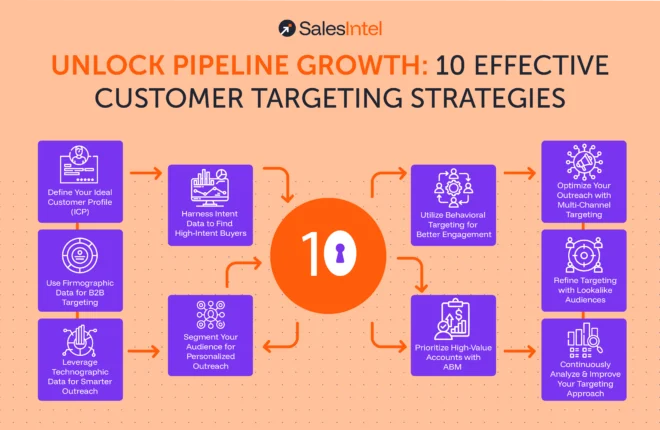
A quick AI-generated overview extracted directly from the content of this page.
Finding the right customers isn’t just about casting a wide net and hoping for the best. It’s about precision. If you’ve ever felt like your sales and marketing efforts are getting lost in a sea of unqualified leads, you’re not alone. The key to sustainable growth is targeting the right customers who not only need your product but are also ready to buy.
This guide walks through 10 effective customer targeting strategies to help you refine your approach, engage high-value prospects, and ultimately unlock pipeline growth.
What is Customer Targeting?
Customer targeting is the art of identifying, segmenting, and engaging the right customers for your business. Instead of marketing to everyone, you focus on prospects who are most likely to benefit from your product or service.
Think of it like fishing. You wouldn’t use the same bait for every type of fish, right? The same logic applies here. The more refined your targeting, the better your chances of catching the right customers. That too without wasting time and resources.
1. Define Your Ideal Customer Profile (ICP)
Not all leads are created equal. Some will be a perfect fit, while others will drain your time and budget. The Ideal Customer Profile (ICP) helps you define which prospects are worth pursuing.
An ICP typically includes:
- Industry and company size
- Revenue and growth potential
- Pain points and business challenges
- Decision-making process
For example, if you sell B2B SaaS solutions, your ICP might be mid-sized companies in the finance sector that struggle with data security and compliance. Instead of pitching to everyone, you narrow your focus to companies that actually need what you offer.
2. Use Firmographic Data for B2B Targeting
In B2B sales, firmographic data is a game-changer. It includes company-specific details such as:
- Industry vertical
- Company size (employee count, revenue)
- Geographic location
- Technology stack
Let’s say you offer cloud-based IT solutions. Instead of targeting all businesses, you can refine your search to companies with over 500 employees that haven’t yet adopted cloud technology. This makes your outreach more relevant and impactful.
Firmographic insights ensure that your marketing team doesn’t waste time pitching to businesses that simply don’t fit your offering. It’s like knowing which restaurants serve your favorite dish before making a reservation.
3. Leverage Technographic Data for Smarter Outreach
If you know what tools your prospects are already using, you can tailor your pitch accordingly. Technographic data helps you understand a company’s tech stack, revealing potential opportunities or gaps in their setup.
Understanding the technology stack of your prospective clients allows for more tailored and effective outreach. A recent study highlighted that leveraging technographic data can boost brand awareness by 40%, reduce cart abandonment by 50%, and enhance the likelihood of future purchases by 33%.
For instance, if a company is using a competing CRM tool that lacks certain automation features, your sales team can highlight how your product fills that gap. Instead of generic outreach, you’re addressing a specific need.
This approach makes your outreach more personalized and less like a cold sales pitch. After all, no one likes being sold to, but everyone appreciates a solution to a problem they already have.
4. Adopt a Signal-First Strategy for Complete Buying Journey Visibility
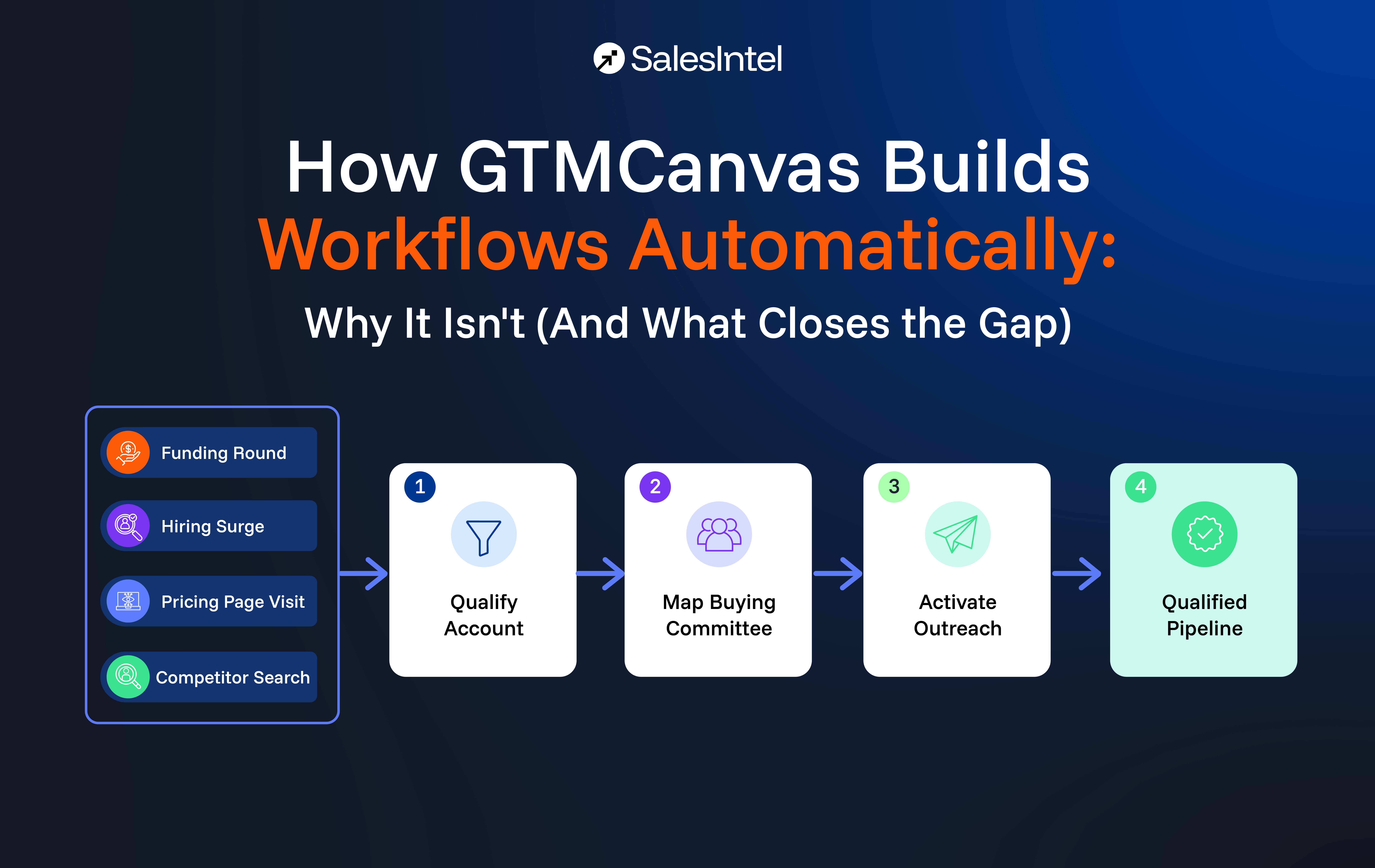
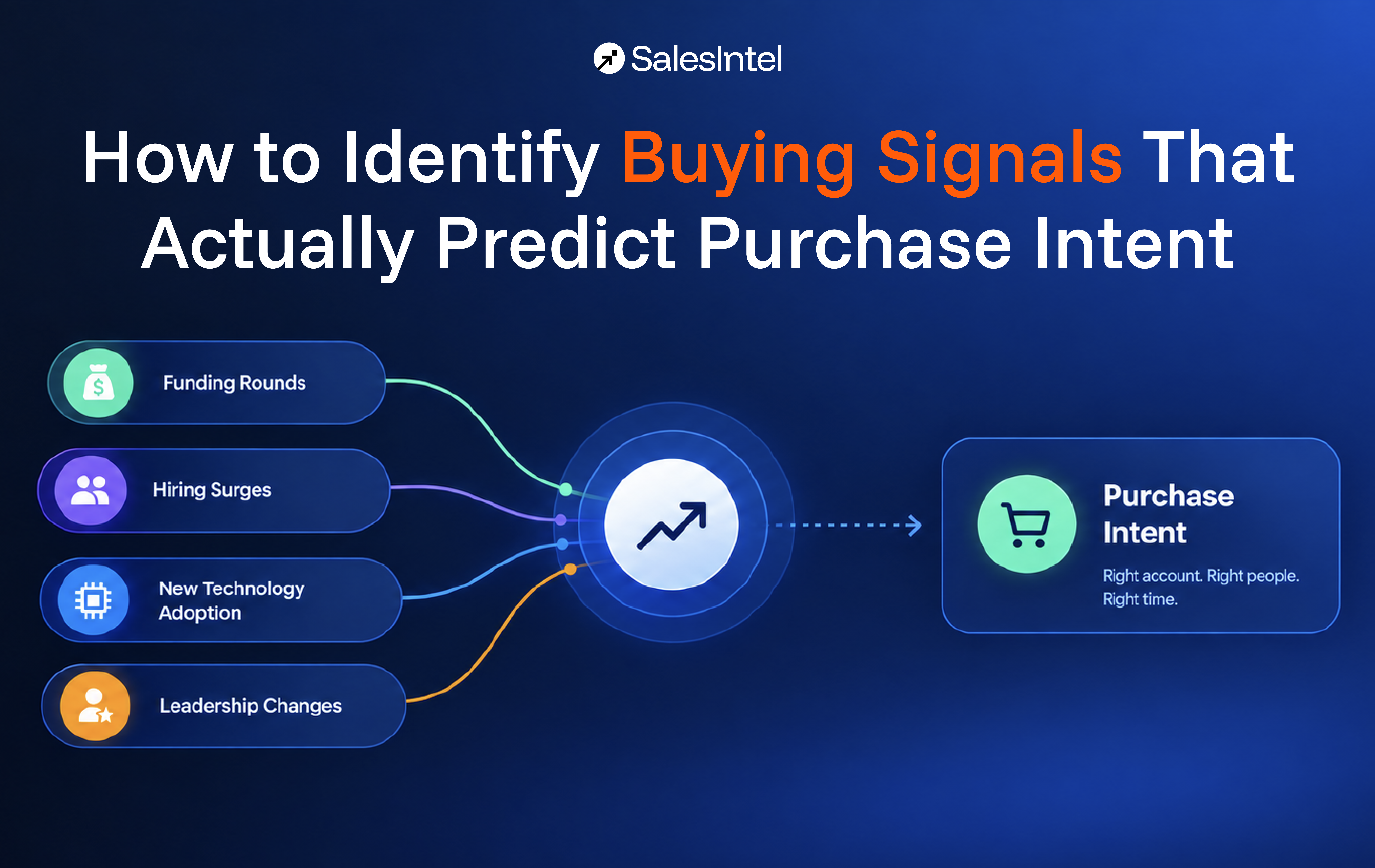
Traditional intent data only shows you part of the picture, typically when prospects are already comparing solutions. A signal-first approach monitors the entire buying journey across two critical timelines: predictive signals for future opportunities and demand-capture signals for immediate action.
Predictive signals help you identify accounts before they enter active evaluation:
- Funding announcements and financial events
- Leadership changes and new executive hires
- Team expansion patterns
- Technology stack changes or new software adoptions
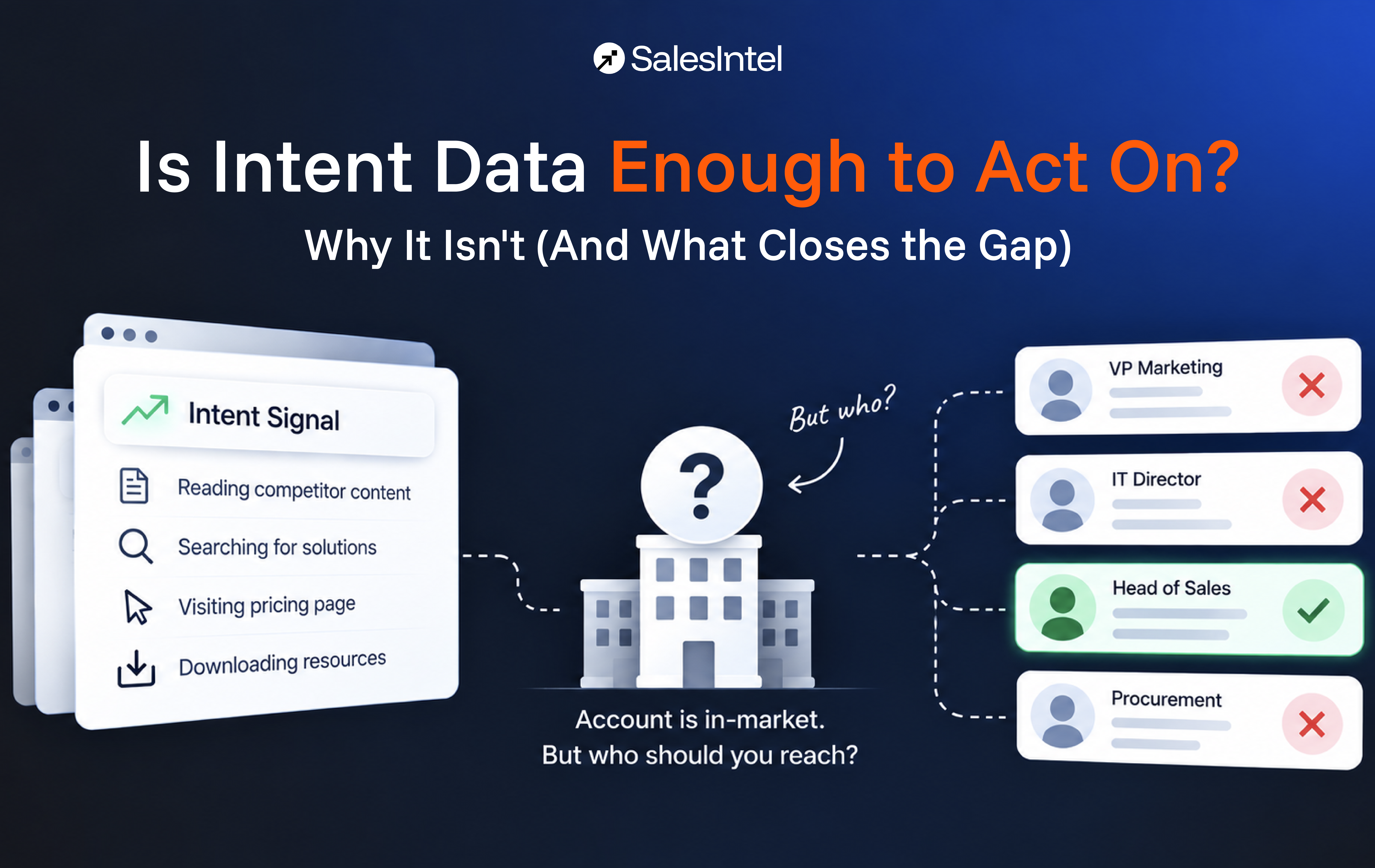
Demand-capture signals reveal accounts actively evaluating solutions now:
- Website visits and pricing page views
- Content downloads and resource engagement
- Competitor comparison searches
- Sudden increases in topic research activity
For example, if a company just secured Series B funding and hired a new VP of Sales, that’s a predictive signal that they’ll likely invest in sales tools within 3-6 months. You can start building a relationship now. If that same company then visits your pricing page multiple times, that demand-capture signal tells you to reach out immediately.
The key advantage is timing flexibility. You’re not limited to striking only when prospects are already deep in their buying process – often already engaged with competitors. Instead, you can engage early (when you have less competition) or late (when urgency is high), depending on which signals fire.
Think of it as having both a weather forecast and a storm alert system. The forecast helps you prepare for what’s coming; the alert tells you to act right now.
5. Segment Your Audience for Personalized Outreach
Mass marketing is outdated. Customers expect personalization, and segmentation is the way to achieve it.
Segmentation can be based on:
- Industry: Healthcare, Finance, SaaS, etc.
- Job Role: Decision-makers vs. influencers
- Pain Points: Specific challenges they face
For instance, an HR software company might segment its audience into:
- Large enterprises needing automated payroll solutions
- Startups looking for cost-effective HR tools
- Remote-first businesses prioritizing employee engagement software
Instead of sending the same email to everyone, you tailor messaging based on what matters most to each segment.
6. Utilize Behavioral Targeting for Better Engagement
Customers leave behind digital footprints. Behavioral targeting analyzes these footprints to refine your outreach.
Key behaviors to track:
- Website interactions – Pages visited, time spent, actions taken.
- Email engagement – Open and response rates
- Ad interactions – Clicks, form submissions, downloads
If a prospect repeatedly visits your pricing page but doesn’t sign up, it signals interest but hesitation. This is a great opportunity for a follow-up email with a limited-time offer or a personalized demo invitation.
It’s like seeing someone return to a car dealership multiple times. At some point, a well-timed conversation can turn their interest into a sale.
7. Prioritize High-Value Accounts with ABM (Account-Based Marketing)
ABM isn’t about quantity. It’s about quality. Instead of reaching out to thousands of leads, you focus on a select group of high-value accounts that offer the best revenue potential.
Steps to execute ABM:
- Identify top-tier accounts based on revenue potential and fit
- Personalize messaging for key decision-makers
- Align sales and marketing teams for a unified approach
For example, if you sell enterprise-level cybersecurity software, targeting Fortune 500 companies with a dedicated security team makes more sense than reaching out to every SMB.
8. Optimize Your Outreach with Multi-Channel Targeting
Relying on just one channel is risky. Customers interact with brands across multiple platforms, and your outreach should reflect that.
A multi-channel strategy can include:
- Email marketing for direct communication
- Cold calling with firmographic insights
- Social outreach to engage decision-makers
- Content marketing to nurture leads
Some prospects prefer emails, while others engage more on social platform. Meeting them where they are increases your chances of success.
9. Refine Targeting with Lookalike Audiences
Lookalike modeling helps you find prospects similar to your best customers. If you already have high-value clients, why not replicate that success?
Social and digital advertising platforms allow you to create lookalike audiences based on:
- Demographics
- Purchase behaviors
- Online interactions
If your top customers are fast-growing tech startups, targeting similar companies increases your chances of conversions.
10. Continuously Analyze & Improve Your Targeting Approach
Customer targeting isn’t a one-and-done process. The market evolves, and so should your strategy.
Regularly analyze:
- Which channels generate the best leads
- Whether your campaigns reach decision-makers
- How conversion rates are improving
A/B testing, customer feedback analysis, and analytics help refine your approach. In marketing, what worked yesterday might not work tomorrow, so staying adaptive is key.
Final Thoughts: Unlock Growth with Smart Targeting
Unlock Growth with Smart Targeting
Growing your sales pipeline isn’t about casting a wide net, it’s about casting the right one. By implementing these 10 customer targeting strategies, you can refine your outreach, engage high-intent buyers, and optimize your sales process.
When you focus on the right audience, you’re not just increasing your chances of conversion, you’re making every interaction more meaningful. Instead of chasing leads that may never convert, you’ll be connecting with decision-makers who are actively looking for solutions.
Smart targeting doesn’t just make sales easier; it makes growth more predictable. The better you understand your ideal customer, the smoother your path to success.
FAQs
What is customer targeting?
Customer targeting is the process of identifying the specific groups of buyers who are most likely to need and purchase your product. It involves analyzing data, segmenting audiences, and focusing outreach on high-value prospects. The goal is to improve conversion rates by engaging the right customers with the right message.
What are the key components of a successful customer targeting strategy?
A strong targeting strategy starts with defining your ideal customer profile, understanding their pain points, and analyzing firmographic and behavioral data. It also involves segmenting audiences, prioritizing accounts, and personalizing messaging for each segment. Successful targeting ensures resources are focused on prospects with the highest revenue potential.
What problems do ideal customers have that you can solve?
Ideal customers usually face challenges that align directly with your product’s strengths, such as inefficiencies, data gaps, or operational bottlenecks. These pain points help define who benefits most from your offering. Understanding these problems allows teams to tailor messaging that resonates and drives interest.
What would drive customers to choose your products or services?
Customers choose solutions that clearly address their needs, offer measurable value, and reduce risk. Factors such as accuracy, speed, reliability, and better ROI often influence their decision. When your solution solves their top priorities better than alternatives, it becomes the natural choice.