ICP Analysis & Lookalike Modeling
 Buying Signals & Intent
 AI Automation and Data
 SalesIntel Platform
 Marketing
 Sales
Sales Revenue Operations
 Advertising
 Events
A quick AI-generated overview extracted directly from the content of this page.
Launching a new product or expanding in a new region requires significant research and investment. No matter how innovative your product is, its success depends on how you market and sell it. Developing a go-to-market (GTM) plan ensures that you avoid costly mistakes, such as selling your product to the incorrect audience or in a market that’s already saturated with comparable offers.
What is a Go-To-Market (GTM) Team?
A Go-to-Market (GTM) team is a cross-functional organizational unit that coordinates the efforts of sales, marketing, product, and customer success to launch products and drive sustainable revenue growth. By synchronizing these departments under a single strategic framework, a GTM team functions as an operational bridge that ensures a company’s product value proposition aligns with its target audience’s needs. This unified structure replaces traditional departmental silos with a shared responsibility for the entire customer lifecycle, from initial market entry to long-term retention.
GTM was previously considered a subset of B2B marketing strategies. However, defining a GTM strategy is now a group effort. Cross-functional working and alignment are core foundations of an effective GTM strategy. It’s a team sport!
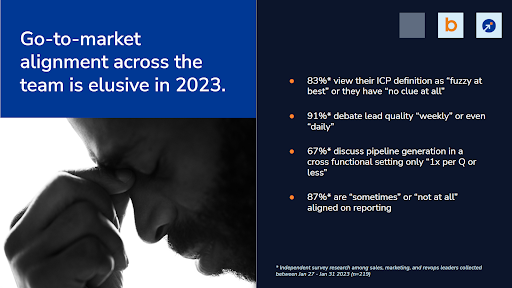
The success of your GTM success depends on how you generate your revenue pipeline. According to a survey by Bombora, go-to-market alignment across teams is elusive in 2023. The challenge is that 67% of the surveyed companies discuss pipeline cross functionally just once a quarter or less. The cross function is your sales, your marketing, your revenue leaders, and your product leaders coming together to discuss pipeline generation.
You must develop a deliberate, practical, and effective go-to-market strategy involving all four pillars of your company – sales, marketing, revenue team, and customer success. Here’s a checklist you can follow to build a killer GTM strategy.
What are the Five Key Things B2B Marketing Strategies Miss?
Developing a killer GTM strategy is a deliberate, practical, and effective process involving the four pillars of a company—sales, marketing, revenue team, and customer success. To avoid costly mistakes like selling to the wrong audience, this strategy must go beyond surface-level profiles. It requires a cross-functional alignment where pipeline generation is discussed frequently by all leaders to ensure the product success depends on how it is marketed and sold.
1. Get the Right ICP Across Departments for GTM Efficiency
An ICP (Ideal Customer Profile) is a quantifiable target market description that decides how you go to market, who you sell to, and how your product team designs the product. Rather than a set of disjointed profiles, an effective ICP is a data-driven vision owned by RevOps to standardize lead scoring and guide company priorities. This foundation ensures all revenue efforts, from data acquisition to sales call prioritization, are focused on accounts most likely to convert.
Your ICP decides how you go to market, who you sell to, how your product team designs the product, and how your executives lead.
If you aim to develop an effective GTM strategy, throwing together a couple of profiles for your sales and marketing team will not make much impact. Both sales and marketing want to have as many qualified and closed leads as possible, so there is a natural bias toward wanting the definition that best suits them.
RevOps teams should own the ICP process, standardize your lead scoring, and guide company priorities. By having RevOps handle the process to create a data-driven vision of what your best target account is, you’ll stop the debate and refocus on revenue.
Once you’re aligned, the magic of an ICP is always to target the right accounts. Your ABM strategies will pay off faster. Data acquisition and maintenance are targeted. Your content can be tailored to the audience most likely to convert rather than the one most likely to click.
A well-defined, quantifiable target market (ICP) is foundational to predictable revenue forecasting and growth. You are building the foundation for all your revenue efforts, from data acquisition to workflow management to sales call prioritization.
2. Customer Segmentation
Customer segmentation is the practice of categorizing your consumers based on common characteristics such as demographics, firmographics, or behaviors to sell to them more effectively. By figuring out your customers’ goals, challenges, and technographics, businesses can simplify and sharpen their target marketing. Using these relevant groups allows sales teams to target more precisely based on the specific technology or tools a company already uses.
Customer segmentation is the practice of categorizing your consumers based on common characteristics such as demographics or behaviors to sell to them more effectively.
There are several options for segmenting accounts to target for marketing campaigns or sales activity. So, how can you simplify, sharpen, and increase the effectiveness of segmenting?
To segment your customers into relevant groups, you will need to figure out your customers’ demographics, firmographics, technographics, goals, challenges, and necessities.
Firmographic segmentation is the grouping of B2B customers based on company characteristics. Considering technographic data while segmenting your audience will help you target more precisely based on the technology or tools they use. Firmographics and technographics segmentation can give you a clearer picture of who you should target and how.
3. Understand the Buying Center and Target Right People
The buying center is a group of six to ten decision-makers involved in a complex B2B solution, including roles such as initiators, influencers, and approvers. Because companies don’t buy people do the buying center functions as the specific group of stakeholders that sales teams must get in front of to be effective. Identifying these individuals and their job titles is the critical step in filling the gaps of an ABM strategy.
Now that you’ve defined your ICP and worked on segmentation using the firmographic, demographic, and company technographics. What’s next? So far, you have identified the companies. However, companies don’t buy, people do. That’s the third step.
Understand the buying center and find your people. In buying companies, as we all know, depending on which research you look at, it’s 7.2 or 8.5, 9.2, users/buyers involved in any B2B buying decision.
Gartner estimates that the average buying group for a complex B2B solution includes six to ten decision-makers. This group of people is referred to as the “buying center.”
Each of the purchasers often fulfills one of the responsibilities listed below.
- Initiator
- User
- Influencer
- Decision Maker
- Approver
- Buyer
- Gatekeepers
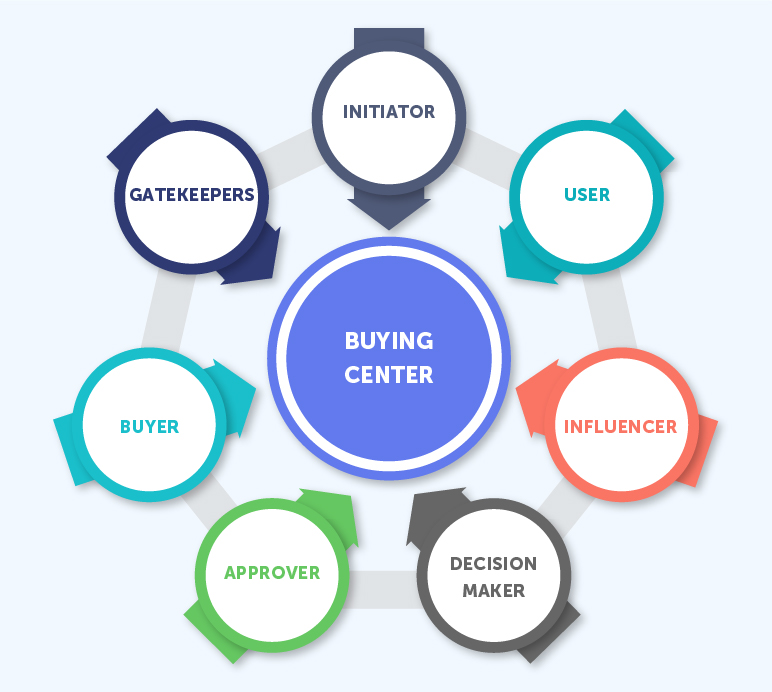
These roles differ according to the product, industry, and sector. Gather your team and brainstorm what job titles make up the buying center for your prospective customers.
Most systems will show you that if your buying committee is made up of, say, six people, you will have access to one buyer and two influencers. The others are simply not present.
You can’t make the ABM and ABX strategy work if you don’t know your key prospects. Your marketing has done the hard work to discover the accounts that are a good fit for you or the market. But, salespeople can only be effective if they can get in front of the right decision-makers and influencers and have the correct interactions.
What steps do you take to fill in the blanks? How can you ensure the folks you’re speaking with are the appropriate people? How do you know you have the correct contact information for those individuals?
With SalesIntel, you can use Research on Demand (ROD) to fill in the gaps while verifying the data. Your sellers will have access to persons they need to contact thanks to our actionable data. Actionable data is data that you can utilize to have a meaningful conversation about your product or services with firms in your ICP who are currently demonstrating intent to buy.
Schedule a demo to learn more about how our ROD team can work as your extended data research team.

4. Understand Your Customers’ Buyer Journey
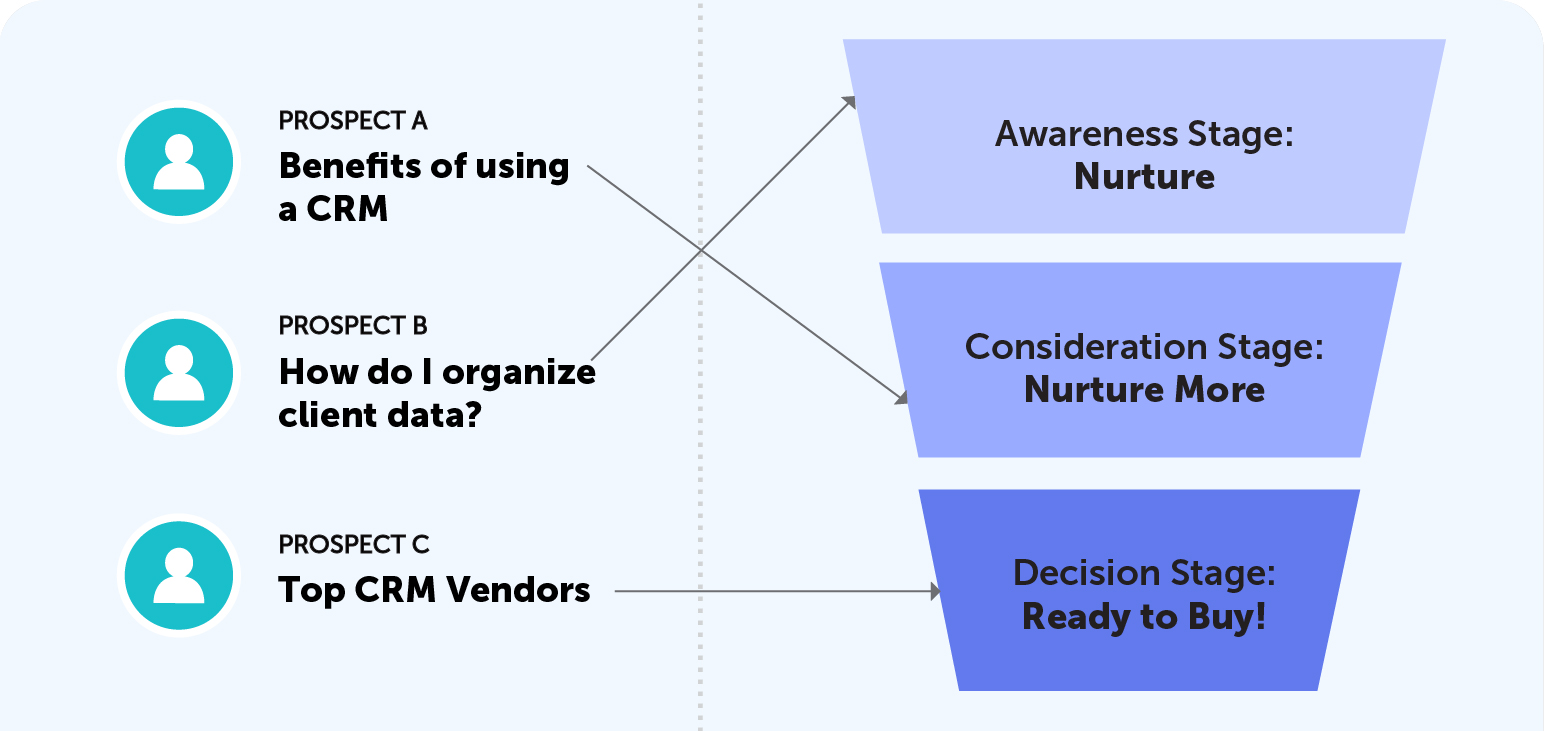
The buyer’s journey is a multi-stage process where potential customers discover a business problem, identify solutions, and compare vendors to reach a final decision. Currently more self-guided and digital than ever, the journey consists of three primary stages: Awareness, Consideration, and Decision. Understanding this journey is essential for delivering the right messaging to the right audience and staying ahead of the competition.
Understand the journey a potential customer will take both from the buyer’s and your company’s perspectives.
Here is a typical buyer’s journey:
- The customer discovers they have a business problem and does research on the subject.
- The customer identifies viable solutions.
- The list of solutions is narrowed down to a shortlist, and the customer meets with the vendors on that list.
- The customer compares features, pricing, and other factors to reach a final decision.
The B2B buyer’s journey is more self-guided and digital than ever. To be successful, marketers must discover their in-market consumers early in their buying journey by initiating sales dialogues and staying ahead of the competition.
When creating a GTM strategy, identifying new clients to target can be difficult. This is where understanding the buyer’s journey becomes essential for delivering the right messaging to the right audience.
There are three primary stages of a buyer’s journey:
- Awareness
- Consideration
- Decision/ Purchase
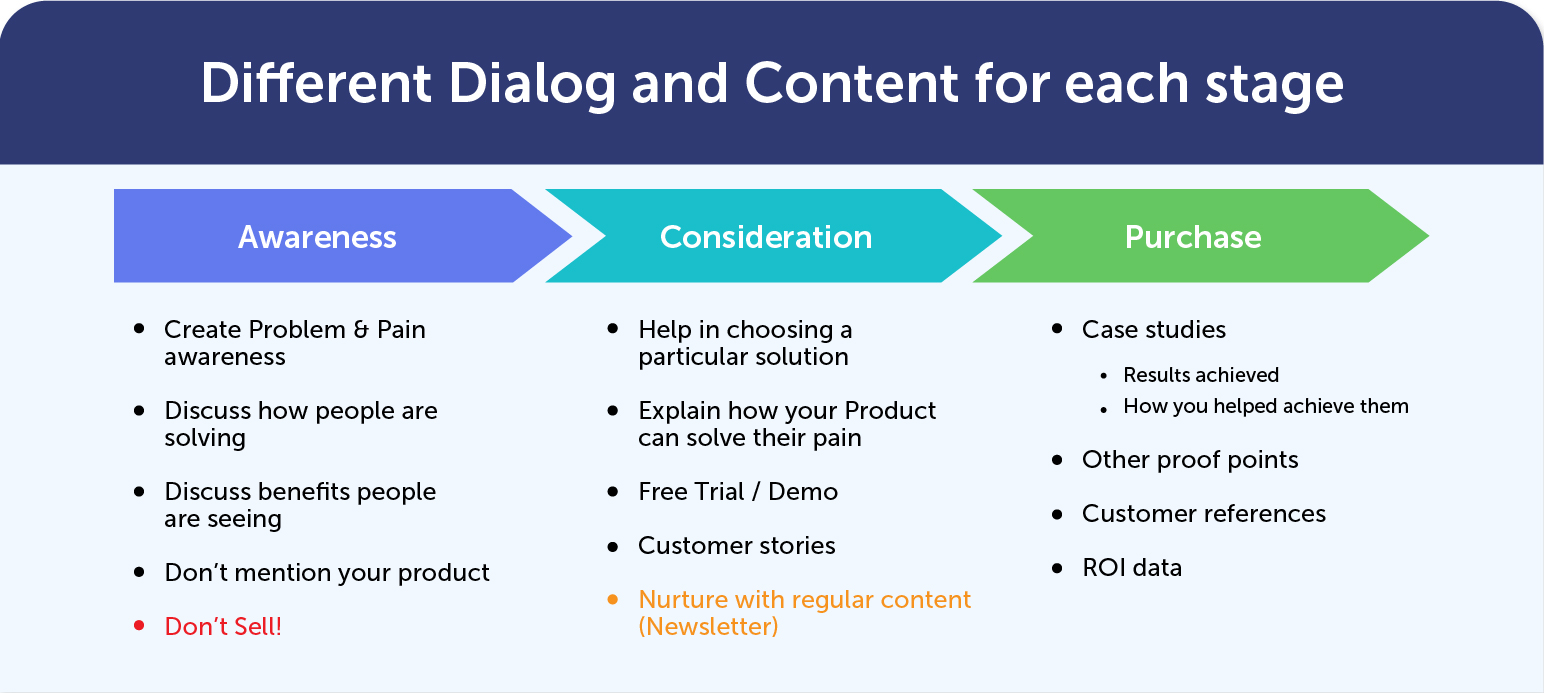
Here’s an image that shows the approach you should take in each stage of the buyer’s journey.
5. Right Message, Right Time
Sending the right message at the right time is a data-directed strategy focused on reaching out to specific leads based on their current business activities and tech stack. This approach identifies potential opportunities such as a company expanding to new locations or installing a certain technology and delivers a message tailored to that specific context. By surfacing these hidden details within B2B data, marketers can nurture prospects to the bottom of the funnel.
Sending the right message at the right time is all about – who should I care about right now, this week, on this day? Who should I reach out to? Your data also directs your messaging. You might work at a multi-product company. Sending the right message at the right time using B2B data should be at the core of your B2B marketing strategies.
For example, a telephony company loves selling to businesses expanding into new office locations. The telephony company must know how many and which companies are actively searching for telephony. The other way to search the potential opportunities for the telephony company is by identifying companies planning to expand to other locations. That’s the kind of information that’s hidden within the data that, when properly surfaced, you can take advantage of.
Being able to segment your list by those ready for a branding message versus those ready for a more down-funnel demand-oriented message is highly efficient.
Additionally, if we know companies that have installed a certain technology, they could get a different message if your product aligns with that technology differently. Not only can you automate a message that aligns with their tech stack, but you can also measure that cohort against other cohorts. Applying this data on the lead level and building processes around it’s very powerful.
With SalesIntel, you get access to 300 million technographic data points and over 12,000 intent data topics. Given the situation where our clients were thinking of B2B marketing strategies to enter the new market, our data relevancy clicked for them. It has helped our client’s marketing team to nurture their prospects to the bottom of the funnel and helped their sales team to put all their efforts into the ready-to-buy leads.
Schedule a demo tailored to your ICP and see if you are missing potential clients.
Execute Your GTM Strategy Using SalesIntel
A successful GTM approach requires precise and accurate data. SalesIntel delivers 95% accurate human-verified contacts, allowing you to create company and contact lists in only a few minutes.
Search Contacts
Contact information is a core component of a sales intelligence tool.
With SalesIntel, you get the most up-to-date B2B contact data, from direct dialing to verified email addresses, to connect with buyers when it counts. You can save hours by searching contacts using job roles, career experience, education, and social media profile links.
You can also perform a quick company search by name or by domain.
You can save your searches for future reference or export the filtered data in your CRM or email marketing tool.
Enrich Data
Data sits at the center of every business. Businesses must be able to feel confident in their data to ultimately act upon it — this means the data needs to be thorough, trustworthy, accurate, and up-to-date.
SalesIntel enables you to integrate disparate data pieces and complete your prospecting lists. You can find missing contact information such as the email addresses of your target personas from an existing list of contact records or track and find information about your anonymous website visitors. SalesIntel will also provide you with the crucial missing and/or additional data such as demographics, firmographics, phone numbers, buyer intent data, and technographic data.
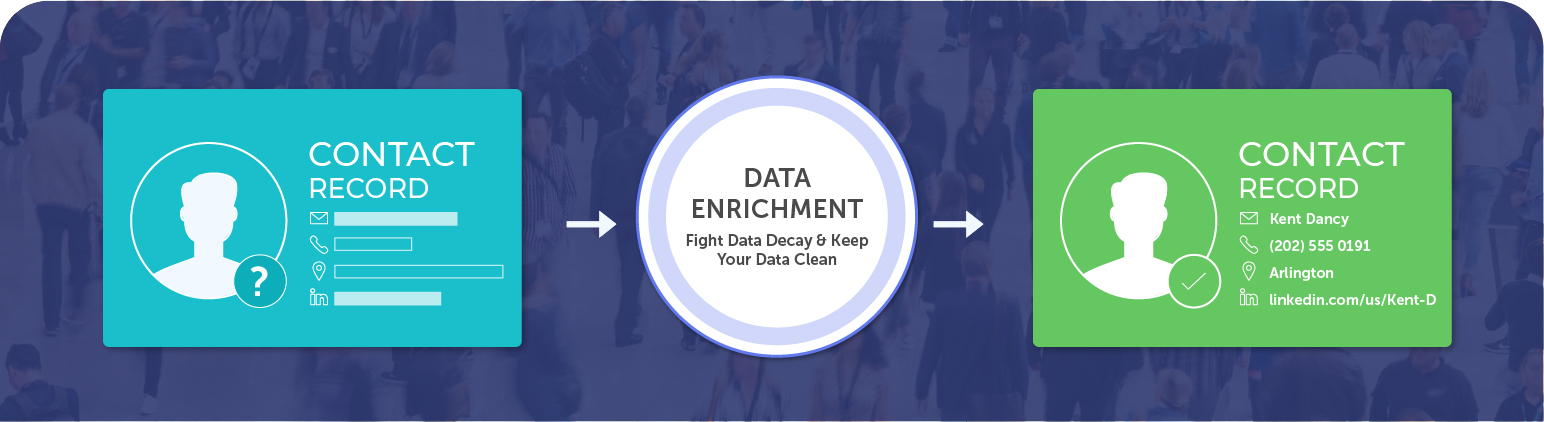
Benefits of Data Enrichment
Here are some benefits of data enrichment that make your prospecting more accurate and faster.
Get Advanced-Level B2B Data: Either manually enrich your data with focused, specified enrichment jobs or automatically enrich your whole database regularly.
More Submission of a Form with Fewer Fields: Ask for as little as an email address in your forms, and we’ll assist you with filling in the blanks, so you receive more form submissions with fewer fields.
Including data enrichment into your tech stack and mastering data-driven features like lead scoring, segmentation, and personalization is a game changer. With SalesIntel, you can easily enrich the data to ensure data completeness and accuracy and take action from this data confidently.
Create Hyper-focused Segmentation
Using firmographic and technographic data allows you to better target and reach out to customers. The more information you have about your target market, the better decisions you can make while segmenting qualified prospects.
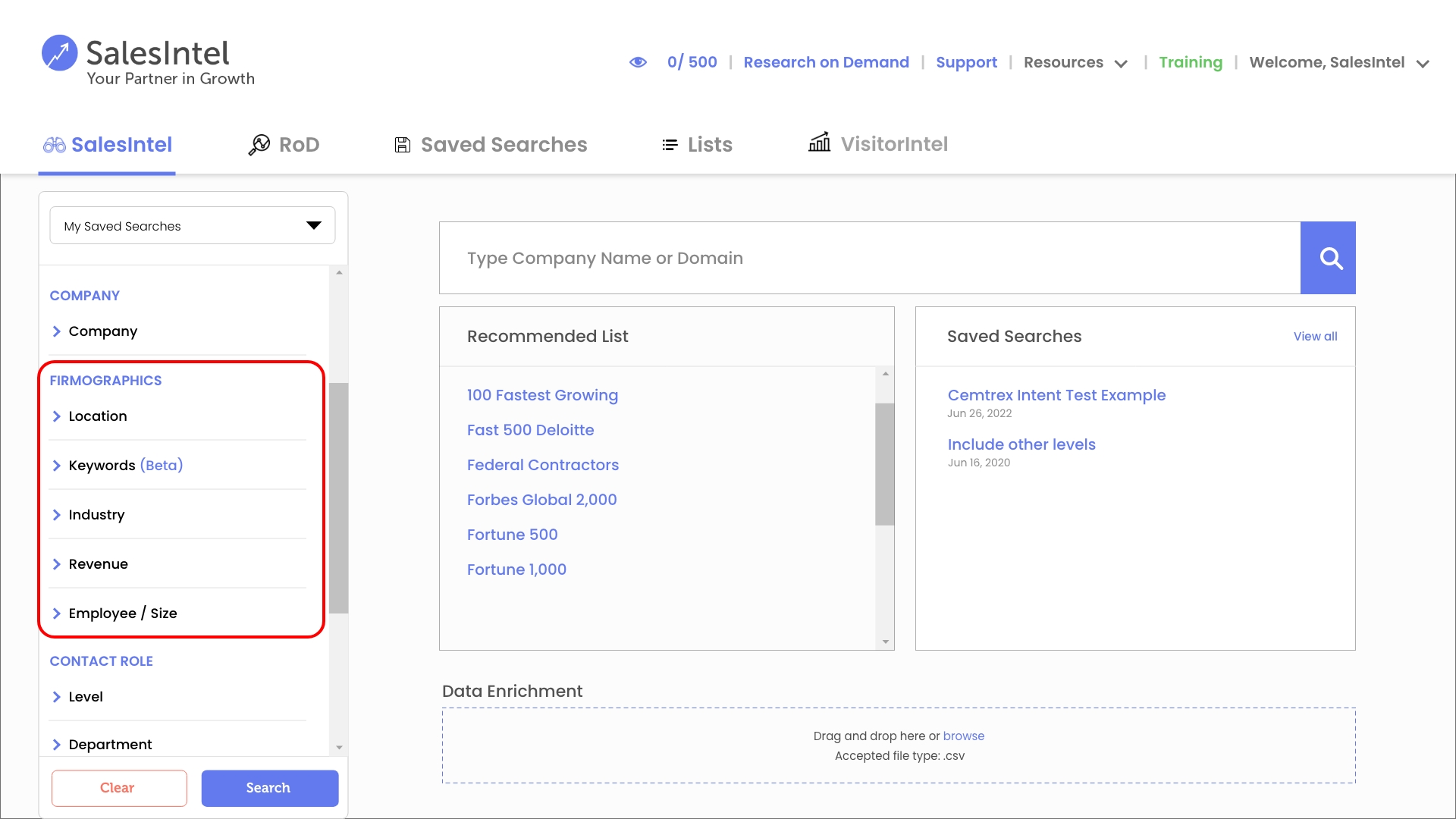
SalesIntel delivers “must-have” data filters used by B2B marketers to construct a focused group based on firmographic and technographic data. Here are some of the filters offered, along with tips on how to utilize them effectively:
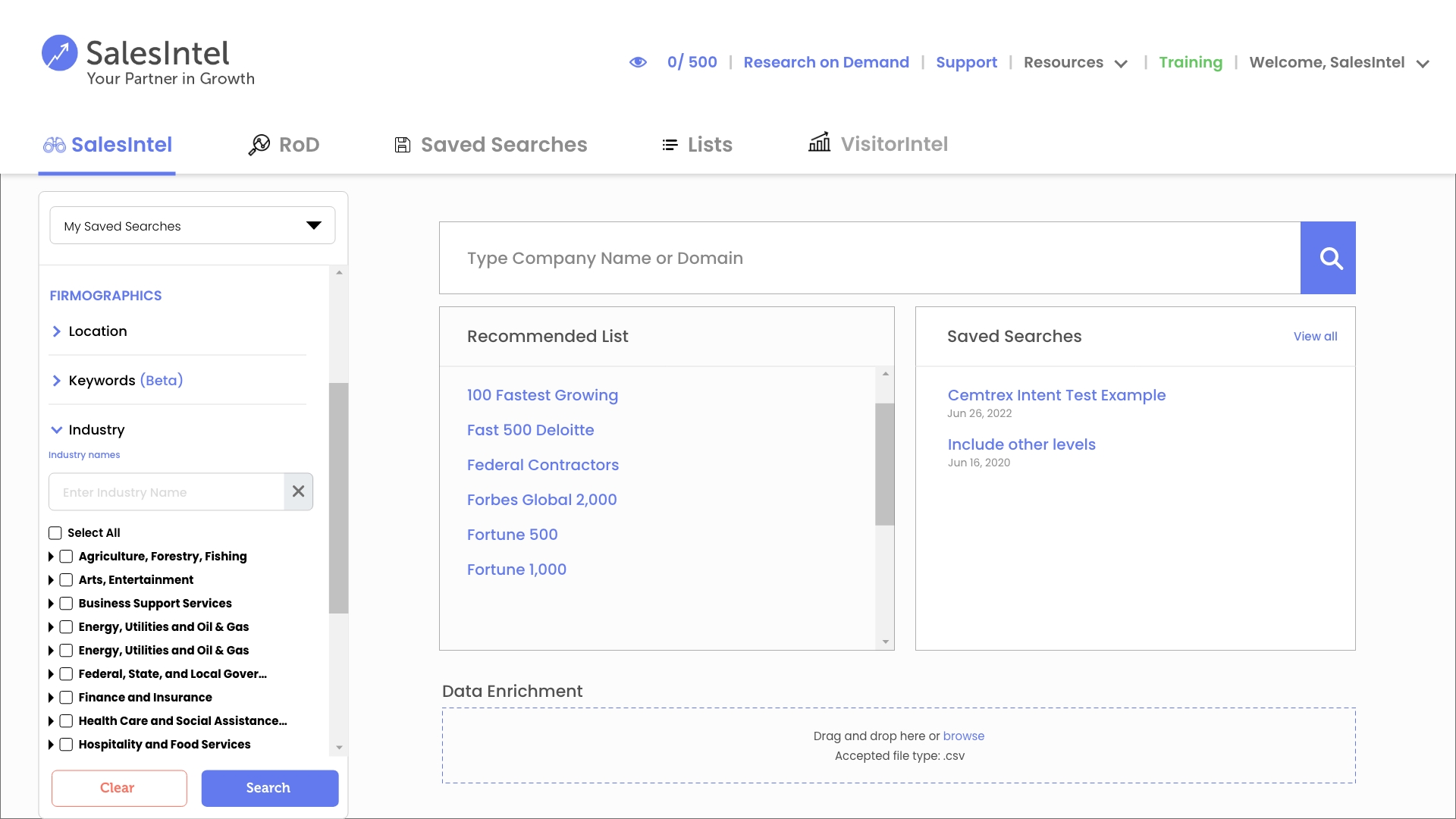
Industry
Industry segmentation helps you personalize your messaging based on the types of companies you’re targeting.
Additionally, industry data helps you understand the potential business opportunities of that specific industry. To help you get a wider view of all the industry data and then go specific, SalesIntel offers a wide spectrum of industries for you to choose from.
Revenue
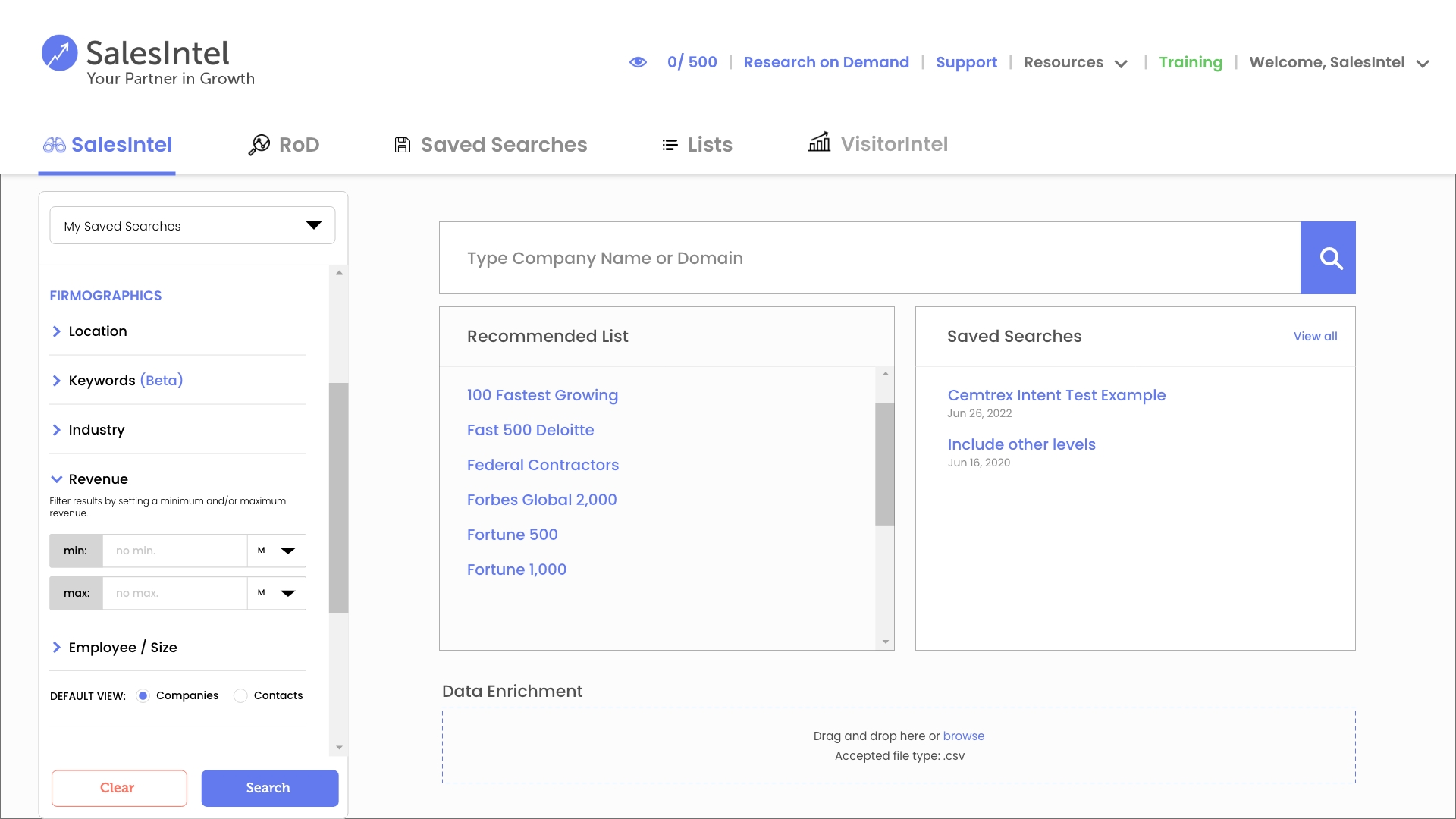
Looking at revenue is vital since you want to market to organizations that can afford what you’re selling rather than wasting advertising dollars on prospects who can’t.
Location
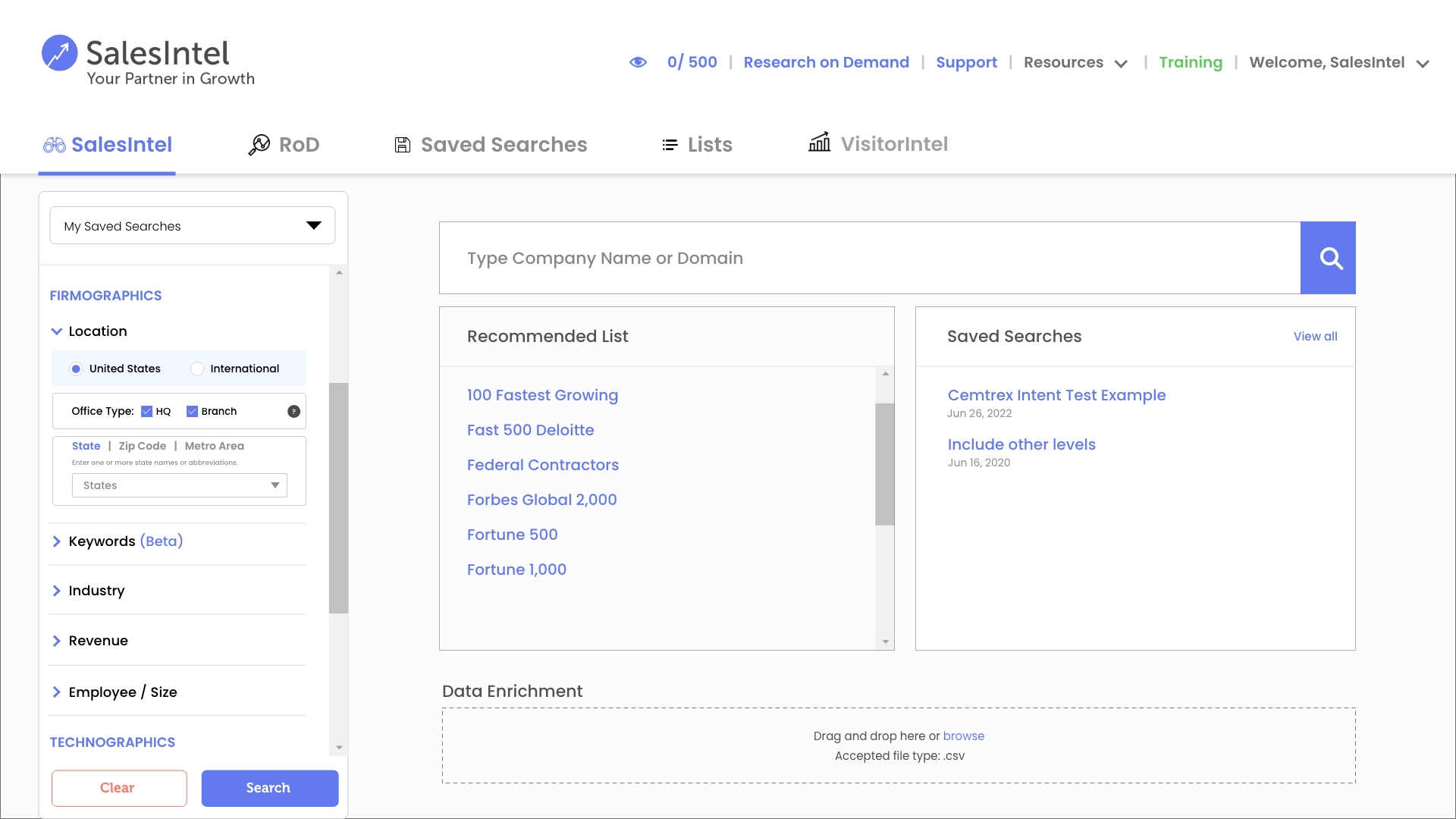
Location is a straightforward filter that can help with sales assignments and prioritization.
For example, an ed-tech firm may target cities or areas with a high concentration of universities and/or educational institutions. Alternatively, a firm attending an exhibition in another city may run online advertisements throughout the event.
Company size
The number of employees in a firm is important since different-sized organizations will respond differently to your marketing and promotional efforts. Employee size is also often an easy proxy for understanding the complexity of the prospects’ needs.
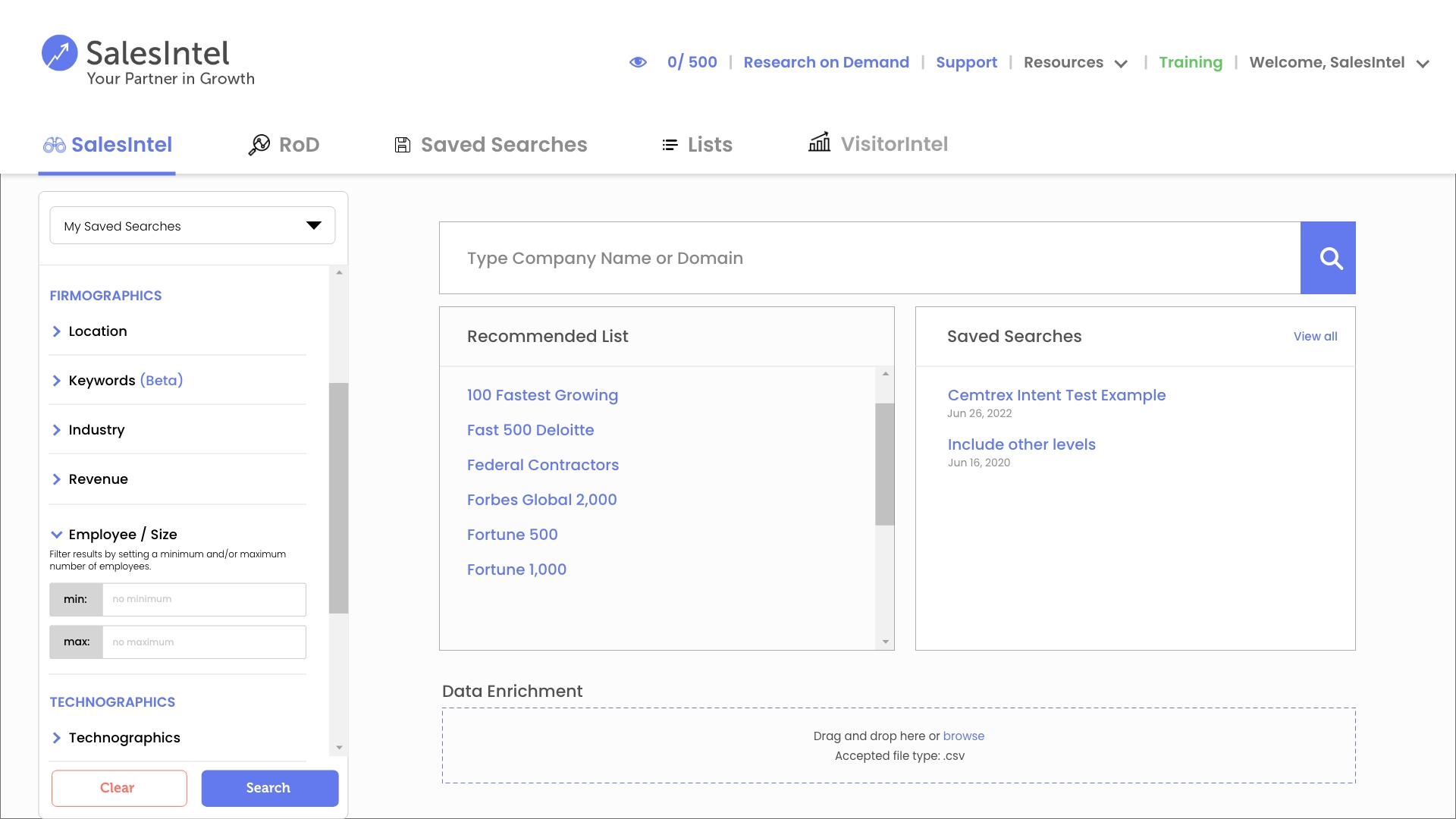
Technology Used
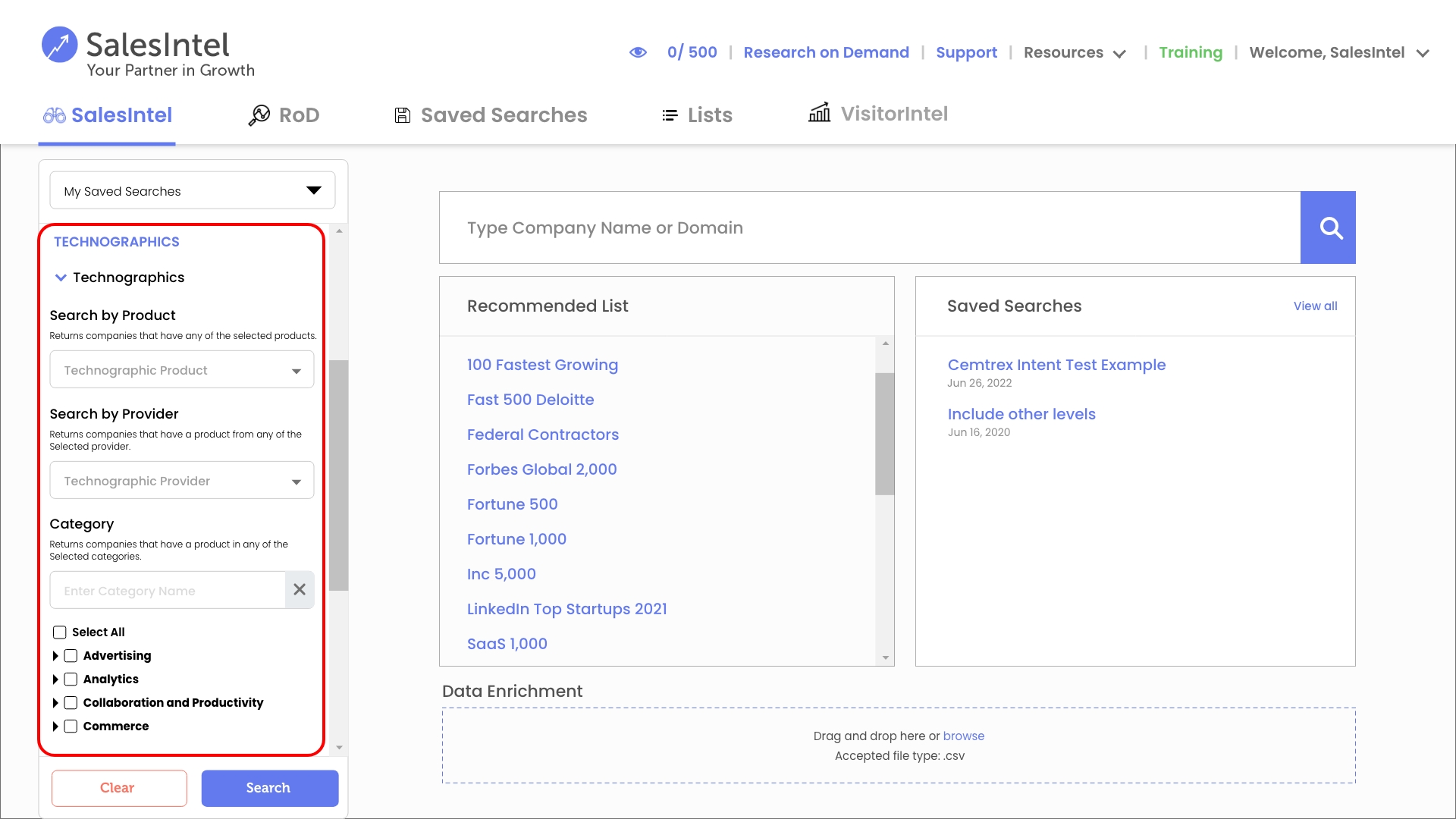
The term ‘technographics’ refers to the data about existing tools and technology used by your potential accounts.
You may get a more accurate picture of the Total Addressable Market (TAM) by including technographic data in account profiling processes.
By customizing your message specific to how your solution can gel with your prospects’ existing tools or technology, you increase the probability of receiving a positive response from them.
How do you Identify Ready-to-buy Leads in a New Market?
Ready-to-buy leads are prospects in the decision stage who are actively engaged in a purchasing decision based on the type of material they consume. Identifying these leads involves using Buyer Intent Data to uncover organizations showing genuine interest in a solution. This data-driven approach allows sales teams to put all their effort into prospects who are currently demonstrating a high intent to buy, rather than wasting time on inactive accounts.
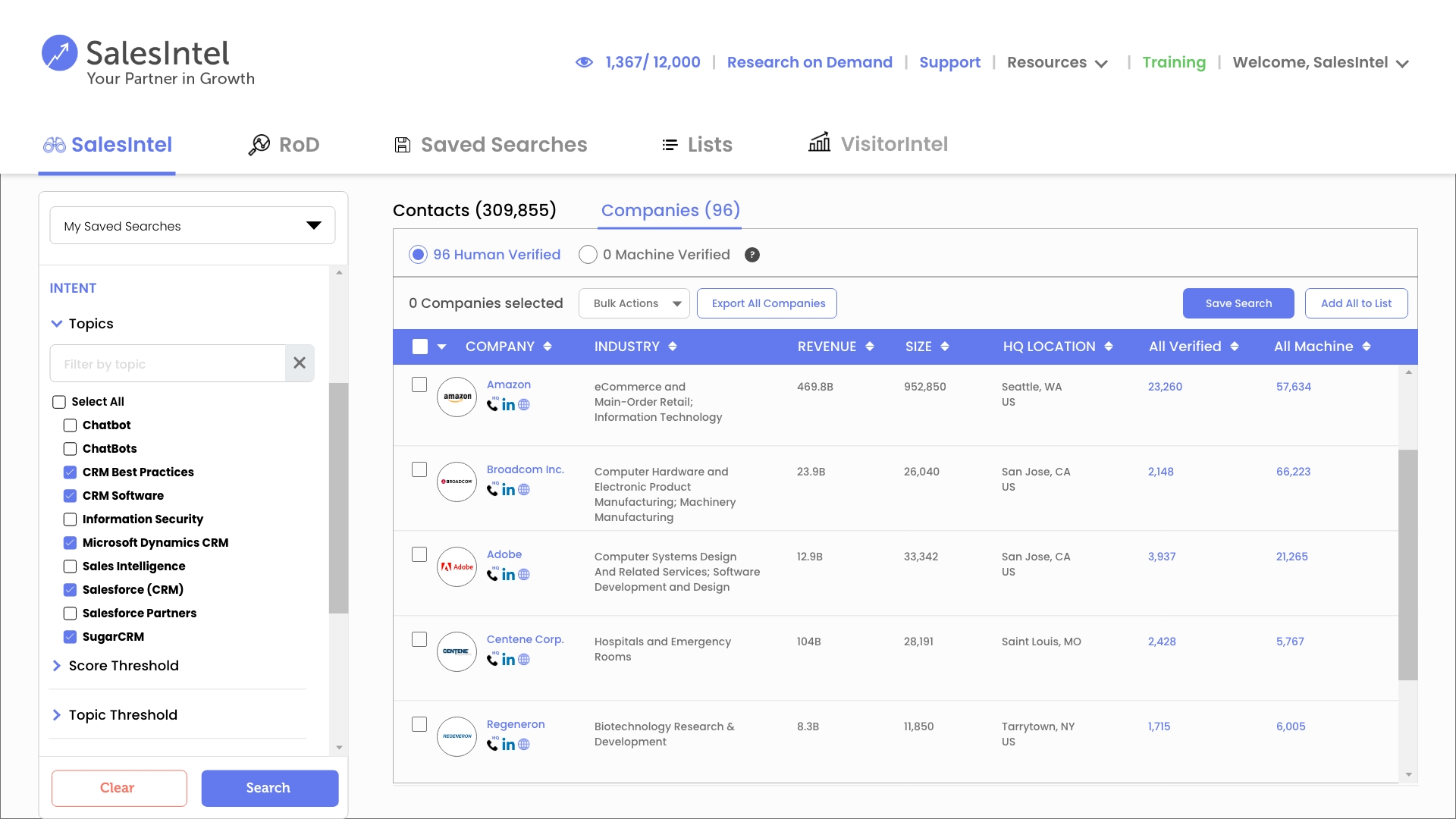
SalesIntel’s Intent Data kicks off the process of finding ready-to-buy prospects in the decision stage. Buyer Intent Data data enables you to identify prospects actively engaged in a purchasing decision based on the sort of material they consume.
In our B2B data platform, SalesIntel has streamlined the search for intent data. You can quickly obtain the necessary data to improve lead creation.
SalesIntel aims to provide the data and insights to help you develop a data-driven, fool-proof GTM strategy. This can be achieved best when you can confidently rely on the data (and you aren’t wasting time chasing after missing pieces).
Request a customized demo to see how everything fits together.