ICP Analysis & Lookalike Modeling
 Buying Signals & Intent
 AI Automation and Data
 SalesIntel Platform
 Marketing
 Sales
Sales Revenue Operations
 Advertising
 Resources
 Events
A quick AI-generated overview extracted directly from the content of this page.
In the relentless pursuit of growth, many B2B sales organizations still rely on a broad, almost scattergun approach to prospecting. They cast a wide net, hoping to snag a few interested parties amidst a sea of disinterest. This method, however, is a relic of the past, a drain on resources, and a sure-fire way to dampen team morale. The true competitive edge in today’s landscape isn’t just about having a remarkable product; it’s about knowing who needs it, when they need it, and, crucially, why. This understanding transforms the art of identifying companies ready to buy into a sophisticated science, meticulously powered by cutting-edge lead intelligence software.
Forget the days of generic cold calls and mass emails. Modern sales success hinges on precision targeting, where every outreach is informed and relevant. Consider the evolving B2B buyer: research indicates that a significant portion of B2B buyers are already well into their buying research before they ever consider engaging with a sales rep. (Source: Demand Gen Report’s Key Challenges for B2B Marketers, Corporate Visions).
This behavioral shift fundamentally reshapes the sales and marketing playbook. If your team isn’t equipped to identify and engage with companies already showing clear intent, you’re not just missing out; you’re actively falling behind. Understanding your potential customer – their needs, their challenges, and their readiness to buy, particularly through their intent – is paramount.
At SalesIntel, our aim is to help you build a smart pipeline, and that includes helping you identify companies ready to buy your product.
Decoding Buyer Readiness: The Unmistakable Power of Intent Signals
In B2B sales, success hinges on knowing precisely who needs your product, when, and why. Traditional broad prospecting methods are outdated. Today’s B2B buyers conduct extensive online research, often completing 69% to 95% of their journey anonymously before engaging a sales rep (Source: Demand Gen Report, Corporate Visions). This shift makes identifying clear intent signals paramount for staying competitive and building a smart sales pipeline.
Buyer readiness transcends basic firmographics like industry or size. It’s a dynamic interplay of factors where intent signals are key. These digital breadcrumbs reveal a company’s active interest in solving problems or achieving goals.
Unearthing Pain Points Driven by Implicit Intent
Every significant business purchase addresses a problem or goal. Companies invest in solutions to pressing challenges, often indicated by their intent to research. Observing dynamic research behaviors, not just static data, is crucial. Intent data can surface organizational needs that are driven by factors such as:
- Systemic Industry Challenges: Widespread regulatory changes or technological shifts can trigger urgent research for solutions. For instance, new data privacy laws can cause a surge in online searches and content consumption for compliance software, signaling strong intent.
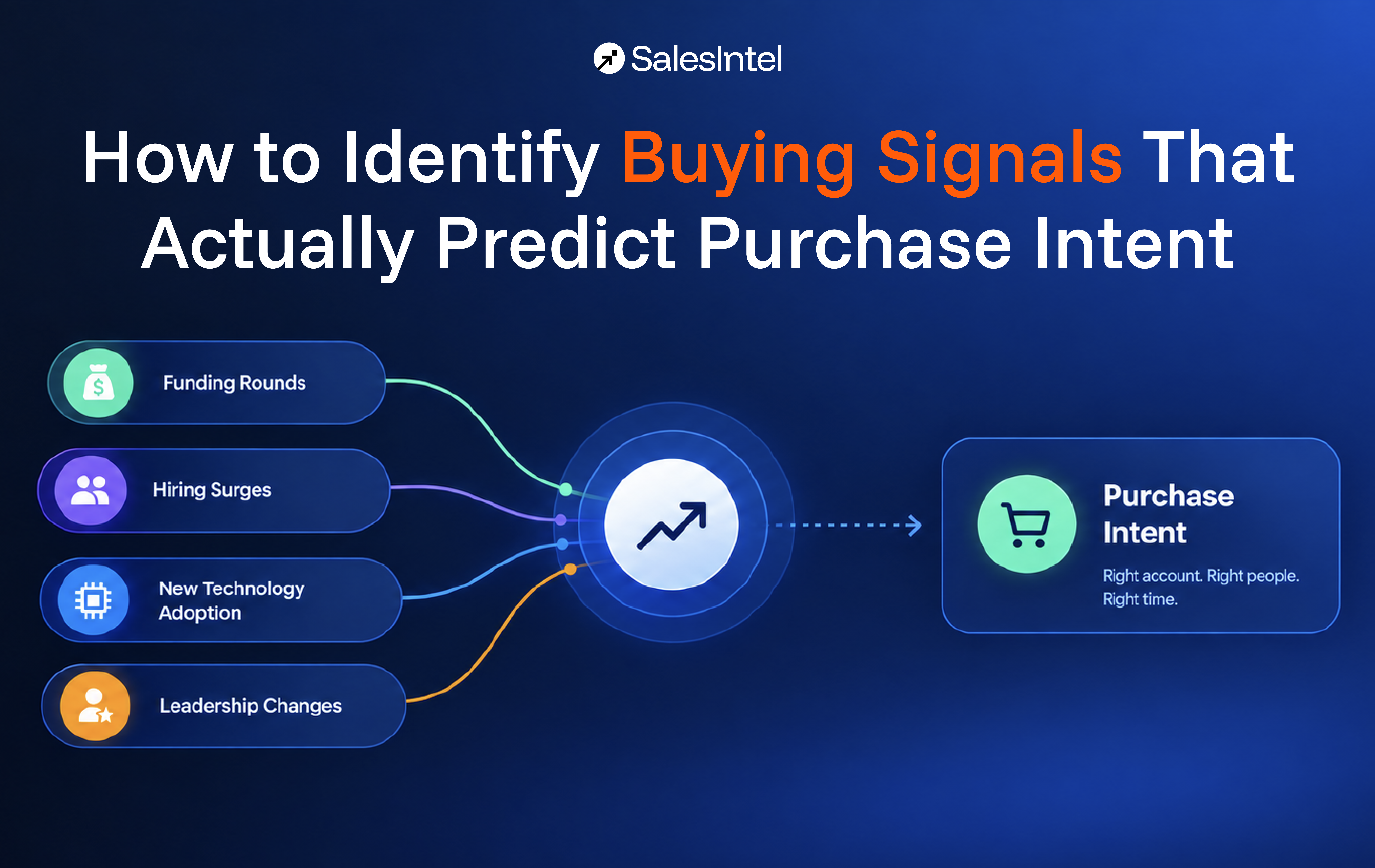
- Companies in Flux: Mergers, acquisitions, new executives, or funding rounds often spark new initiatives and needs. A company with recent Series B funding will likely invest in scaling, expanding, or improving tech, leading to specific research patterns that reveal their intent to invest and grow.
- Public Strategic Objectives: Announcements about aggressive expansion or digital transformation indicate underlying needs. A commitment to digital transformation signals an immediate need for related software and services, leading to specific research patterns that reveal strategic intent to evolve.
Recognizing Explicit Digital Whispers: The Footprint of Buyer Intent
Companies leave digital trails indicating their buying intent. These “buying signals” are invaluable for proactive sales teams, revealing what a company is actively looking for and when.
- Website Visitor Intelligence (First-Party Intent): Tools like SalesIntel’s VisitorIntel identify anonymous website visitors, showing which companies are browsing your product pages or case studies. This transforms passive curiosity into actionable first-party intent, enabling timely, relevant outreach.
- Content Consumption Patterns (Direct Intent): Actively downloading whitepapers, attending webinars, or engaging with articles on relevant solutions indicates active research. Consistent content consumption around a solution area shows clear buyer intent and readiness to evaluate vendors.
- Third-Party Intent Data (Ultimate Signal): Lead intelligence software, like SalesIntel, aggregates and analyzes vast, anonymized datasets from external websites, publishers, and forums. This powerful intent data reveals companies actively searching for specific solutions or researching competitors. This crucial predictive layer illuminates which companies are in-market, leading to significant increases in conversion rates and pipeline velocity (Source: SiriusDecisions, TOPO/Gartner research suggests 20-30% improvements).
- Technographics Revealing Intent Gaps: Understanding a company’s existing tech stack can reveal opportunities. A company researching “cloud migration services” while using on-premises infrastructure signals intent driven by technical limitations.
Gauging Organizational Maturity and Budgetary Alignment for Intent Fulfillment
Even with strong intent, a company’s readiness depends on its internal structure and budget.
- Ideal Customer Profile (ICP) Alignment: Beyond firmographics, your ICP should include cultural fit and decision processes. SalesIntel helps evaluate if an account is the “right fit.” Aligning intent with ICP ensures efficient resource allocation.
- Budgetary Indicators: While direct budget insight is rare, recent funding rounds or strong financials signal readiness to invest in fulfilling expressed intent.
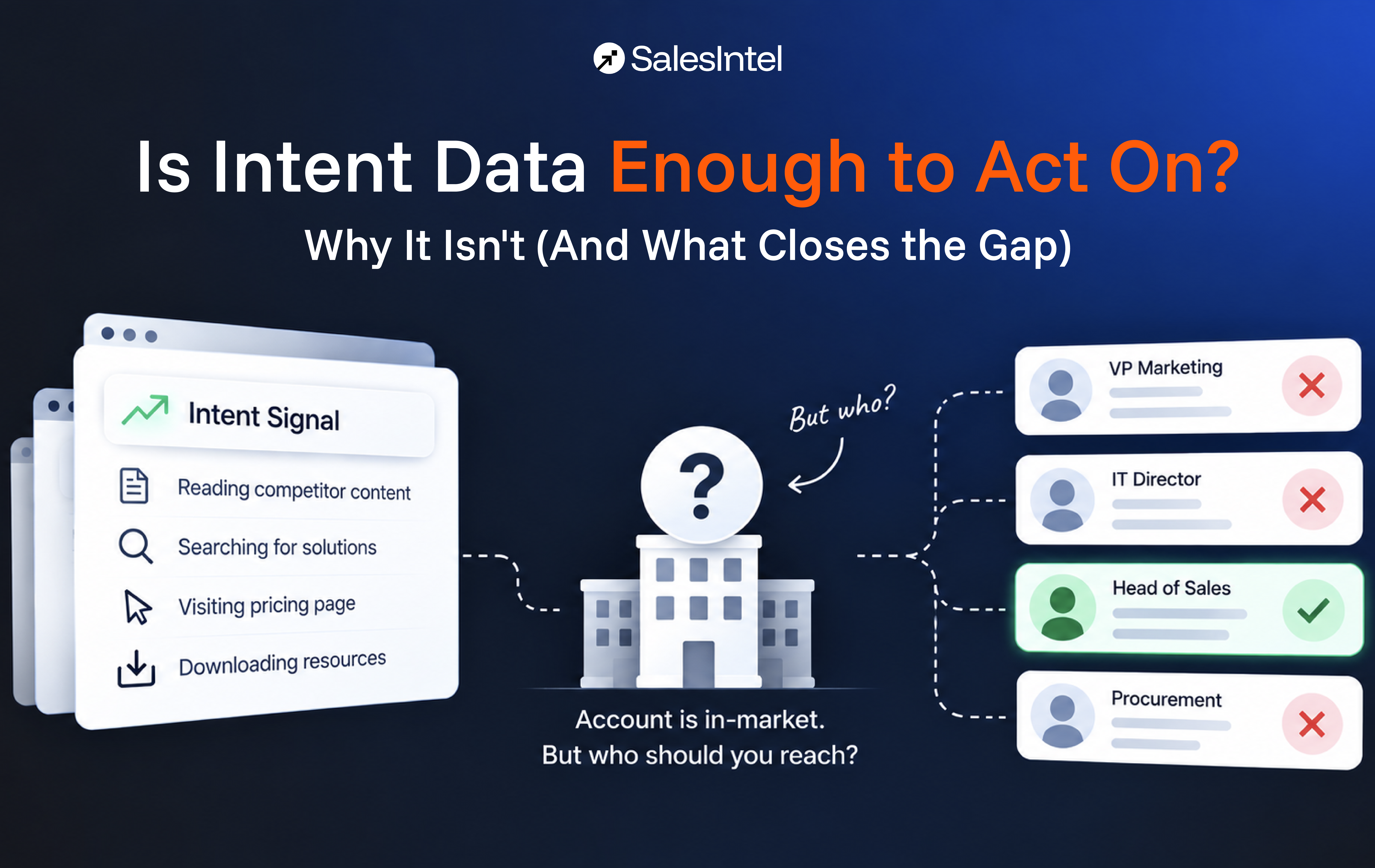
- Decision-Maker Identification: In B2B, multiple stakeholders are involved. Identifying the “buying center” (influencers, approvers, decision-makers) is critical. SalesIntel helps pinpoint key decision-makers, reducing wasted effort and accelerating the sales cycle by targeting the right individuals with intent-informed outreach.
Lead Intelligence Software: Catalyst for Intent-Driven Awareness
Lead intelligence software like SalesIntel transforms raw data into actionable insights, empowering sales and marketing teams. It’s not just data aggregation; it’s sophisticated analysis focused on intent signals. SalesIntel provides:
- Comprehensive Firmographic & Technographic Data: Contextualizes intent signals by showing company size, industry, revenue, and technologies, explaining why their intent is strong (e.g., outdated tech drives “modernization” searches).
- Human-Verified Contact Data: 95% data accuracy ensures you reach the right people in companies showing intent, improving deliverability for intent-driven messages.
- Cutting-Edge Intent Data: SalesIntel’s core differentiator, revealing real-time market activity and enabling engagement at peak evaluation times, significantly increasing close rates.
- VisitorIntel: Captures first-party intent by identifying anonymous website visitors, turning passive interest into immediate opportunities.
- Automated Data Enrichment: Continuously updates CRM/marketing platforms with fresh data, ensuring intent understanding is always current.
By embracing sophisticated lead intelligence software like SalesIntel, businesses move from guesswork to a precise, impactful strategy. This leads to dramatically increased conversion rates, predictable revenue growth, and more efficient, successful sales cycles by focusing on buyers whose intent signals their readiness to purchase.
Know More: How to Increase Conversion Rates by 200% with Intent Data
How Are These Crucial Intent Signals Collected?
The ability to leverage intent data stems from sophisticated data collection methodologies. These digital breadcrumbs are gathered from various sources, each offering a unique layer of insight into a company’s real-time needs. Understanding these methods is key to appreciating the depth and reliability of lead intelligence software.
There are primarily two types of intent data, categorized by their source:
- First-Party Intent Data: This is the data you collect directly from your own digital properties and interactions. It’s unique to your business and provides direct insights into how prospects interact with your brand.
- Website Analytics: Tools like SalesIntel’s VisitorIntel (or Google Analytics, etc.) track which companies visit your site, what pages they view, how long they stay, what content they download (e.g., whitepapers, ebooks), and what forms they fill out. When an anonymous IP address is identified and mapped to a company name, it reveals a specific company’s direct interest in your offerings.
- CRM & Marketing Automation: Data from your CRM (e.g., Salesforce, HubSpot) and marketing automation platforms (e.g., Marketo, HubSpot) tracks email opens, click-through rates, webinar registrations, demo requests, and interactions with your sales team. These are explicit signals of engagement and interest.
- Customer Interactions: Support tickets, product usage data (for existing customers), and direct survey responses can also provide invaluable first-party intent.
2. Third-Party Intent Data: This is data collected from a vast network of external websites and online sources that you do not own or operate. It provides a broader, market-wide view of a company’s research interests, even if they haven’t directly interacted with your brand yet. This is often where specialized data providers become indispensable.
- Publisher Co-ops: One of the most common and robust methods for third-party intent data collection involves “publisher co-operatives.” Data providers partner with thousands of B2B publishers, industry news sites, forums, and content platforms. When a user at a company consumes content on any site within this cooperative, their anonymized behavior (like content topics consumed, search queries on the site, dwell time, frequency of visits to related themes) is aggregated. This method, exemplified by partners like Bombora, provides a highly ethical and comprehensive view of surging interest in specific topics by particular companies. The co-op model ensures consent-based data collection, respecting user privacy.
- Search Engines & Bidstream Data: Some providers collect intent signals by analyzing search engine queries or leveraging “bidstream data” from ad exchanges. When an ad is placed on a webpage, certain data points about the page content and the visitor are available for advertisers. While bidstream can provide volume, its quality and contextual understanding can vary, and ethical considerations regarding user consent are paramount. Reputable providers prioritize methods that ensure compliance and provide deeper, contextual insights.
- Review Sites & Forums: Monitoring activity on B2B software review platforms (like G2, Capterra) or industry-specific forums can reveal companies actively comparing solutions or discussing challenges. This shows direct intent to evaluate or find solutions.
Lead intelligence software platforms like SalesIntel integrate and synthesize these diverse data streams. SalesIntel, for instance, leverages its own first-party data (via VisitorIntel) combined with robust third-party intent data partnerships and proprietary AI-driven analysis of hundreds of thousands of topics. This multi-layered approach provides a holistic and accurate picture of buyer intent, allowing businesses to pinpoint accounts demonstrating surging interest in topics relevant to their offerings. The sophistication lies not just in collection, but in the intelligent processing and surfacing of these signals to sales and marketing teams.
Why Our Clients Trust Intent Signals by SalesIntel
Integrate this video here https://vimeo.com/1069557584?
One of our clients, ASB Business Services, led by Adele S. Busch, significantly transformed its operations and client outcomes through a partnership with SalesIntel. Facing challenges with manual research and data reliability, ASB leveraged SalesIntel’s comprehensive solution, which included human-verified contact data, a Research-on-Demand service, and the RevDriver Chrome Extension.
Crucially, SalesIntel’s intent data empowered ASB’s clients to identify and engage with prospects actively researching solutions, providing a significant competitive advantage. This led to remarkable results for ASB, including:
- 50% growth in inbound leads
- 22% increase in total sales
- Clients closing deals 30% faster
These successes allowed ASB to evolve into a trusted consultant and drive substantial growth.
Learn About: The Strategy That Increased Inbound Pipeline by 50%
From Ambiguity to Actionable Intent-Driven Growth
Relying on guesswork or hopeful speculation is not a viable strategy. Identifying companies that are genuinely ready to buy your product demands a strategic, meticulously data-driven approach centered around intent signals. By embracing sophisticated lead intelligence software like SalesIntel, you empower your sales and marketing teams with the profound insights needed to transcend traditional prospecting methods and engage directly with truly in-market accounts.
The unparalleled ability to uncover explicit buying signals, deeply understand a company’s nuanced needs through their expressed intent, and connect with the exact right decision-makers at the opportune moment transforms your entire sales process. It shifts it from an indiscriminate shot in the dark to a highly precise, impactful strike. This strategic pivot invariably leads not only to dramatically increased conversion rates and predictable revenue growth but also to significantly more efficient sales cycles and a highly motivated, consistently successful sales force. Invest in cultivating profound awareness of your buyers through their intent, and witness your pipeline transform into a remarkably predictable and potent engine of sustained growth.
Frequently Ask Questions
What are the key signs that a company is ready to buy a product?
Ready-to-buy companies leave clear signals across multiple channels. These include surging content consumption around solution-related topics, visits to your pricing or product pages, recent company events like new funding rounds or executive hires, and active research on competitor platforms. The combination of firmographic fit with these behavioral signals is what separates a truly in-market account from a passive one.
How can I identify high-intent prospects for my product?
High-intent prospects are best identified by layering multiple data signals together. Start with your ICP criteria, then layer in third-party intent data to find companies actively researching relevant topics across external publishers and forums. Add first-party signals like anonymous website visitors from tools like SalesIntel’s VisitorIntel, and you get a precise, prioritized list of accounts that are actively evaluating solutions like yours, not just loosely fitting your target profile.
What role does intent data play in identifying ready-to-buy companies?
Intent data is the clearest window into a company’s buying timeline. Since B2B buyers complete a significant portion of their research before ever speaking to a vendor, intent data captures those anonymous research behaviors and surfaces the accounts that are actively in-market. SalesIntel’s Signal360 aggregates intent signals across thousands of topics, helping sales and marketing teams engage accounts at the precise moment they’re evaluating solutions rather than after the fact.
How can I use firmographic data to find potential buyers?
Firmographic data gives you the foundational filters to define your ICP: company size, industry, revenue, location, and growth stage. It helps you eliminate accounts that structurally can’t buy your product and focus resources on those that can. That said, firmographics alone don’t tell you when a company is ready to buy. They work best when combined with intent signals and technographic data to identify accounts that fit your profile and are actively looking for a solution.
Why is timing important when targeting potential customers?
In B2B sales, being early or late matters as much as being relevant. A company that recently closed a funding round, made a key leadership hire, or began researching your solution category is in a fundamentally different buying posture than the same company six months later. Engaging with intent-based signals lets your team reach prospects during their active evaluation window, which significantly improves conversion rates and shortens the sales cycle.
What tools can help identify companies that are ready to buy?
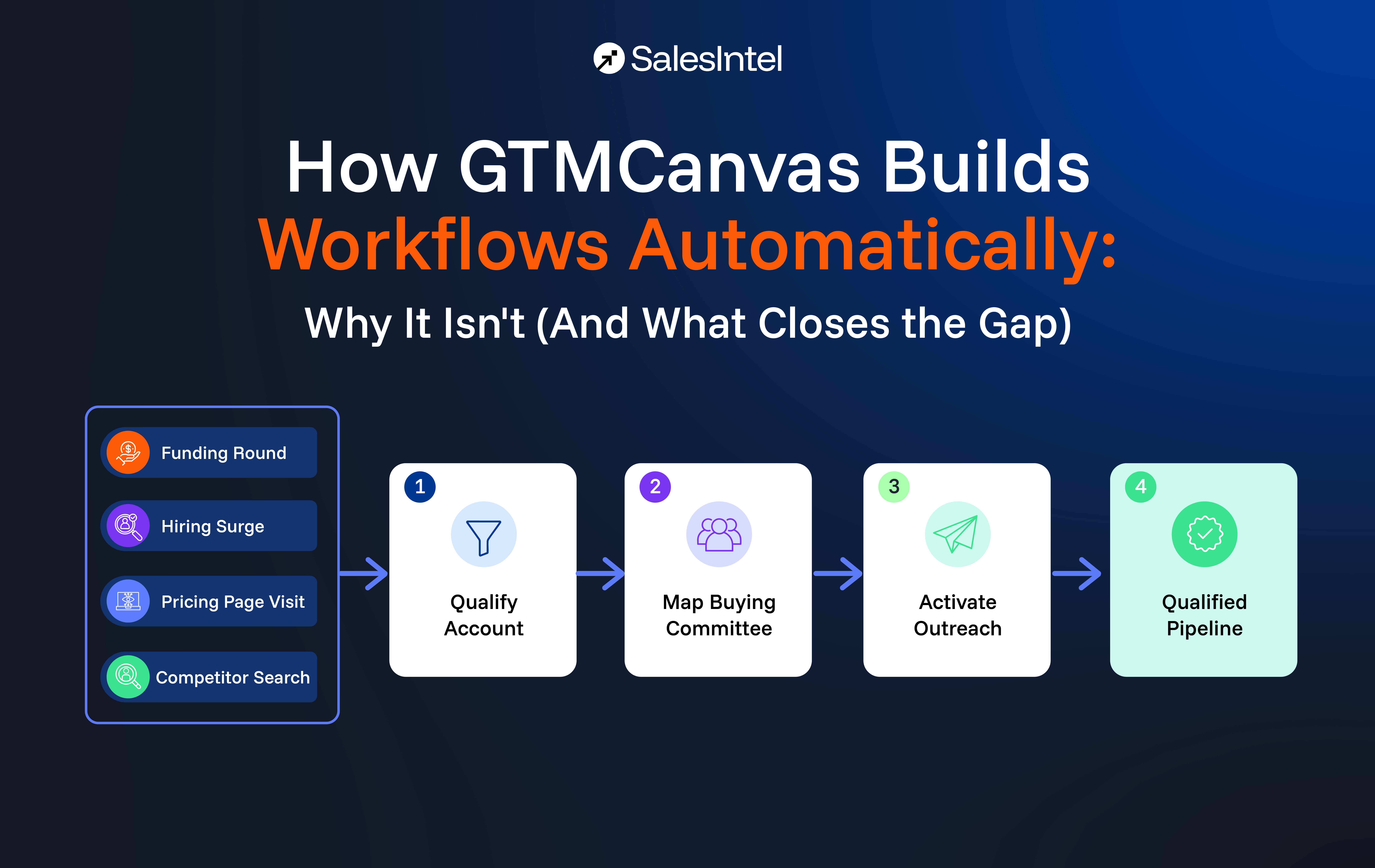
SalesIntel is built specifically for this. VisitorIntel identifies anonymous visitors to your website and maps them back to companies. Signal360 tracks intent signals across 30+ categories so you can spot accounts researching your solution before they raise their hand. ICPIntel helps you define and prioritize your best-fit accounts, and ProspectConnect activates signal-based outreach automatically. Together, these tools replace guesswork with a signal-first approach to pipeline generation.
How can sales and marketing teams collaborate to identify buying-ready companies?
Sales and marketing alignment starts with a shared definition of what “ready to buy” looks like. Both teams should agree on ICP criteria, intent thresholds, and lead scoring rules. Marketing can use intent data and VisitorIntel to surface in-market accounts early and hand them off to sales with full context, while sales feeds back intelligence on which signals are converting. Platforms like GTMCanvas help operationalize this collaboration with shared signal-based workflows across both functions.