ICP Analysis & Lookalike Modeling
 Buying Signals & Intent
 AI Automation and Data
 SalesIntel Platform
 Marketing
 Sales
Sales Revenue Operations
 Advertising
 Resources
 Events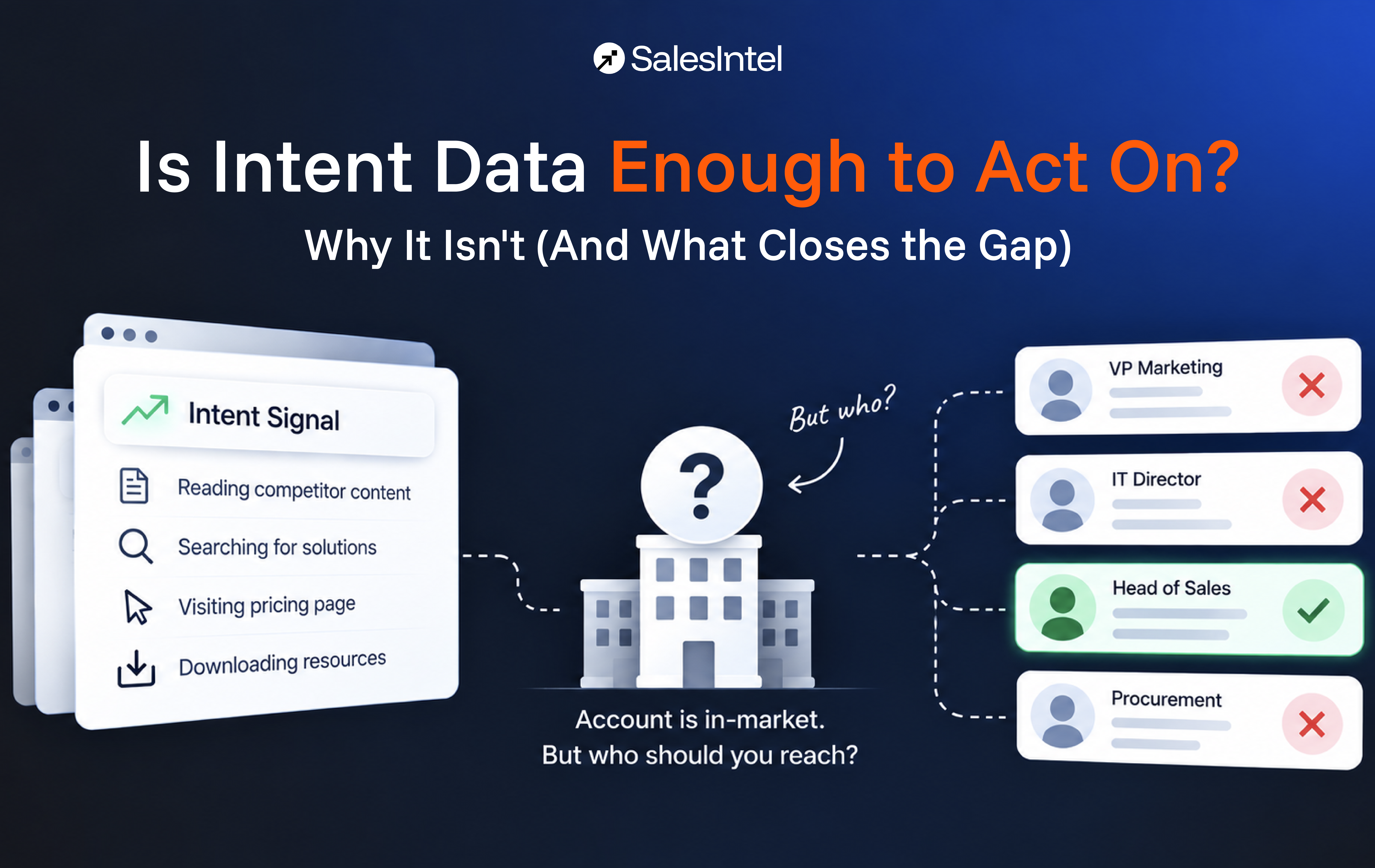
No. Intent data alone is not enough to act on. It tells a team that an account is researching a category, but not who inside that account is doing the research, what authority they hold, or whether they can move a purchase forward. Closing that gap takes contact-level intelligence, specifically the verified buying-committee members behind the signal, paired with the signal itself.
Quick answer: Intent data shows that an account is showing buying behavior, but it doesn’t identify the person behind that behavior, their role, or their purchasing authority, which is why teams that rely on it alone often stall at “now what?” A widely cited rule of thumb holds that only a small share of any given market is actively in-market at once, meaning an intent-only strategy also ignores most of the addressable market by design. SalesIntel, an end-to-end pipeline generation and activation platform, tracks 32+ signal categories and 60,000+ intent topics through its Signal Intelligence capability (2026) and pairs each qualifying signal with verified buying-committee contacts, so a team knows not just that an account is researching, but who to call about it. Intent data still has real value under the right conditions (long buying cycles, strong brand awareness, broad account coverage), it just isn’t a complete strategy by itself.
The 5% Rule: Why Most of the Market Isn’t Showing Intent
At any given moment, only a small slice of a company’s total addressable market is actively in-market and generating research behavior an intent tool can detect. A strategy built exclusively on intent signals is, by definition, only ever targeting that narrow band and ignoring the much larger pool of accounts that will become in-market next quarter, or the ones already in-market that a single-source tool simply didn’t catch. That isn’t an argument against intent data, it’s the reason intent data was never designed to be a complete go-to-market strategy on its own.
The Execution Gap: Knowing Isn’t the Same as Acting
Knowing an account is in-market and knowing what to do about it are two different problems, and most teams only solve the first one. An intent platform flags that a target account is researching a category. That’s useful, but it doesn’t say who inside the account is doing the research, what role they hold, or whether they have any say in the purchase.
Without contact-level intelligence tied to that signal, a team can’t start the right conversation, reach the right persona, or align messaging to an actual decision-maker. That gap doesn’t just slow a go-to-market motion down, it hands the deal to whichever competitor reaches the real buying committee first.
Where Intent Data Breaks Down
Intent data has structural weaknesses that exist independently of the execution gap above, and they show up in four places:
- Source coverage. Single-source providers create blind spots (false positives and missed opportunities); combining differentiated sources gives a fuller read on buyer priorities.
- Signal weighting. Most platforms treat a homepage visit the same as a pricing-page visit or competitor-comparison read, and many teams lack a scoring system to tell them apart.
- Persona blindness. A signal doesn’t say who generated it, an intern, a consultant, or an actual economic buyer, so outreach built without that context becomes a guessing game aimed at whoever is easiest to find, not whoever can approve the purchase.
- Timing and budget disconnect. Interest doesn’t equal readiness. An account can show strong signals while lacking budget or facing internal roadblocks that intent data can’t see.
When Intent Data Actually Works
Intent data earns its keep under three specific conditions. Long buying cycles (six months or longer) give a signal enough runway to translate into awareness and demand capture; shorter cycles don’t leave time to act on an early signal. Strong brand awareness means a company is already on day-one consideration lists, so a signal helps prioritize outreach that would otherwise land cold. Broad target account coverage matters too, since a narrow ABM list limits how many meaningful signals can even materialize. See SalesIntel’s related breakdown of buying signals vs. intent data for how the two categories differ in practice.
The Buying Signals Intent Data Misses
Intent data captures research behavior, but it misses several other signal types that a revenue team needs for full context on an account:
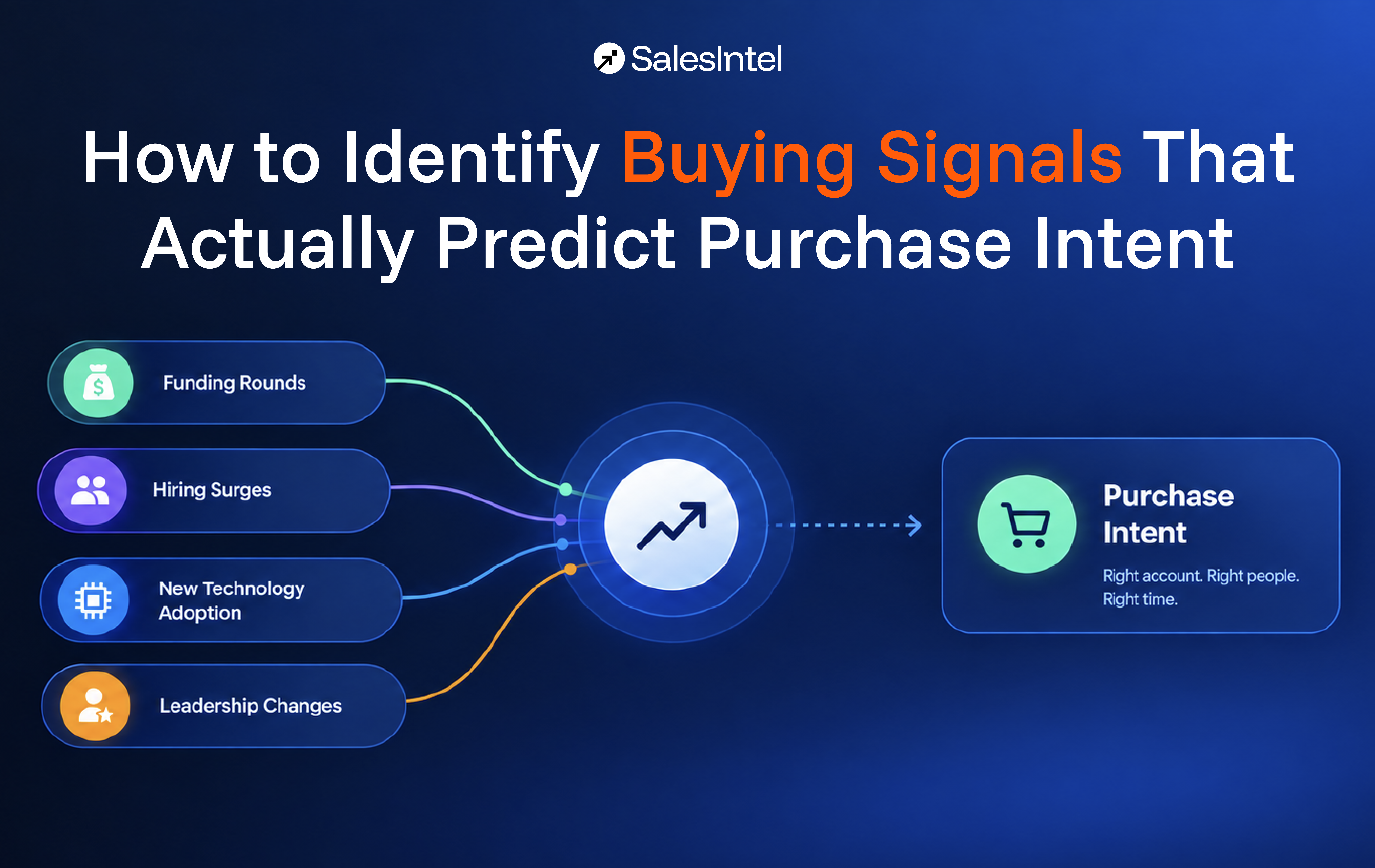
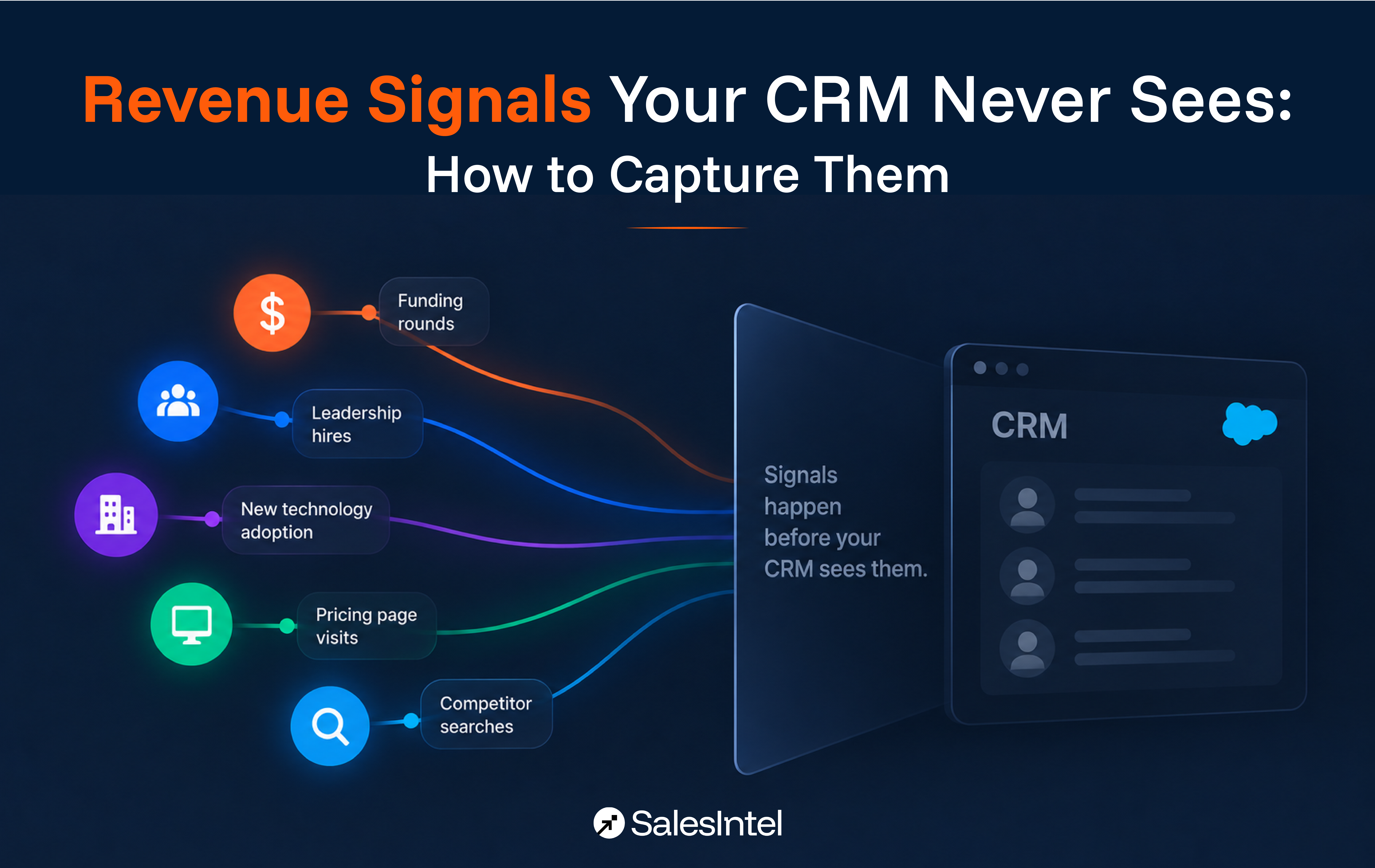
- Pain indicators: rapid hiring in a specific department, leadership changes, funding announcements, or system migrations that point to a problem a product solves.
- Budget and resourcing signals: public project announcements, funding rounds, and job postings that often reveal planned investment before any official statement.
- Decision-making authority: who actually holds budget and influence, since identifying this early materially improves conversion rates.
- Adjacent technology and install base: what complementary tools an account already runs, which shapes how a solution should be positioned.
- Buying committee composition: the full mix of technical evaluators, business stakeholders, and end users, which is what makes multi-threaded outreach possible instead of single-threading through one contact. Complex B2B purchases commonly involve somewhere around six to ten stakeholders across departments, each with different research patterns.
How Contact-Level Activation Closes the Gap
Signal-first intelligence solves the execution gap by connecting buying behavior directly to the people behind it, not just the account. Instead of an alert that says “Acme Corp is researching,” a signal-first system says which specific people at Acme Corp are engaging, what roles they hold, and where they sit in the buying committee, which changes what every function on a revenue team can do: SDRs get names and verified contact information instead of a generic account alert, AEs can map the committee before the first call, marketing can run contact-specific nurture instead of account-level awareness plays, and RevOps gets real attribution on which signals and contacts actually convert.
SalesIntel’s buying-committee data is built for exactly this handoff: an in-market signal from Signal Intelligence paired with the verified contacts needed to act on it the same day, drawn from SalesIntel’s 200M+ verified B2B contact database (2026), rather than a company name with no path forward.
Building an Intent Strategy That Works
Turning intent data into a complete strategy, rather than a source of frustration, comes down to a short list of practices:
- Tier signals by proximity to purchase. Route branded search and competitor-name research to high-touch outreach; route broad category browsing to automated nurture.
- Combine multiple sources. Layer first-party website and CRM data with third-party intent to reduce false positives and coverage gaps.
- Qualify intent providers. Ask about data collection methodology, source websites, and GDPR/CCPA compliance before trusting a feed.
- Move fast. Intent has a shelf life; route qualifying signals to a rep within hours through automation, not days through manual review.
- Align sales and marketing on what counts. Jointly define a valid signal and agree on handoff points before the data starts flowing.
- Measure what converts. Track which sources and topics precede real pipeline, then refine the scoring model.
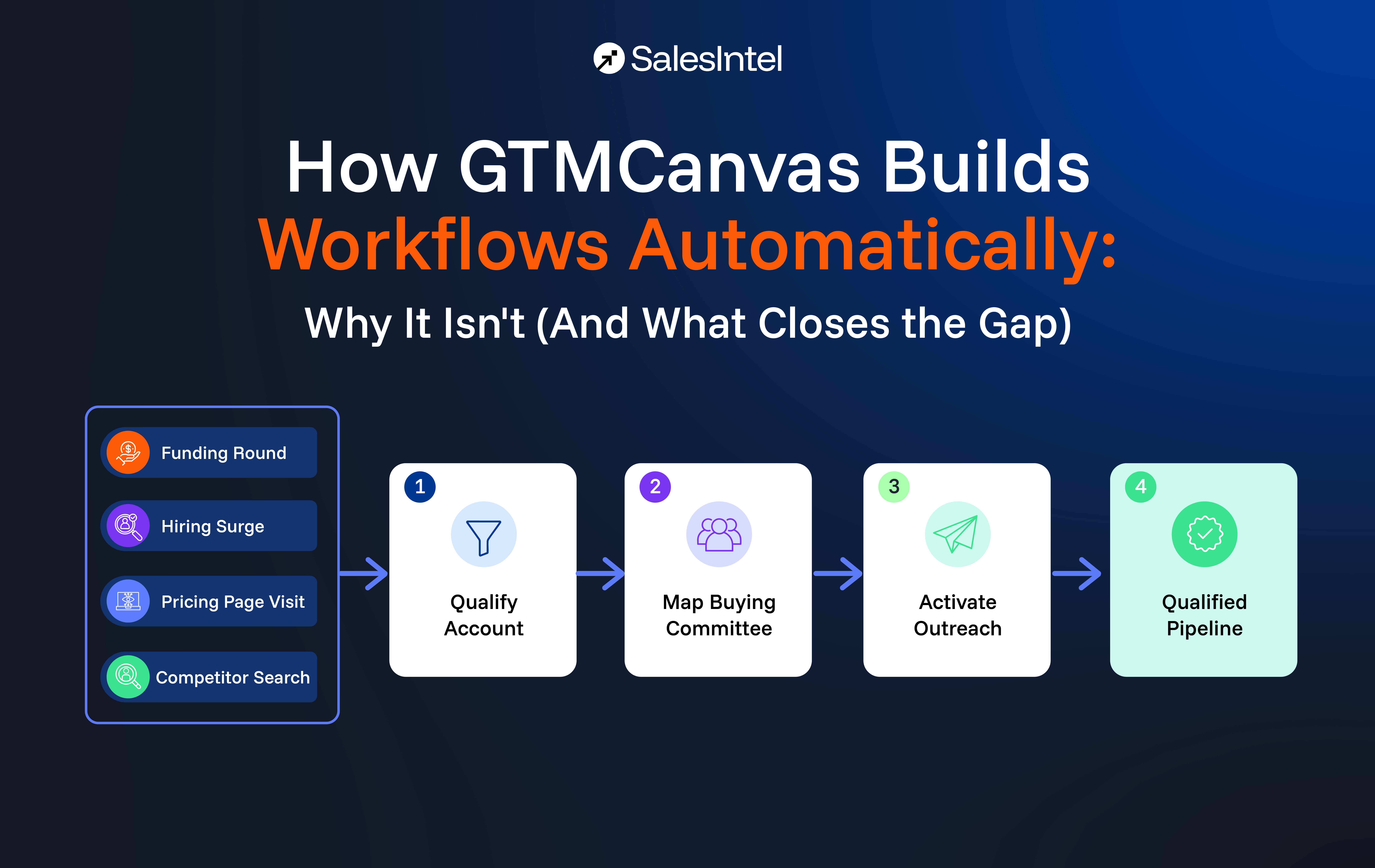
SalesIntel’s GTMCanvas automations turn a qualifying signal into a live outreach workflow the moment it fires, closing the gap between “we saw a signal” and “a rep is reaching the right person.” Explore SalesIntel pricing to see how that pairing works for a specific account list.
Frequently Asked Questions
Is intent data alone enough to generate pipeline?
No. Intent data shows that an account is exhibiting research behavior, but it doesn’t identify the specific person behind that behavior or their purchasing authority. Pipeline requires pairing the signal with verified contact-level data on the buying committee.
What’s the biggest weakness of intent data on its own?
The execution gap: knowing an account is in-market without knowing who inside it to contact. A team can see the signal and still have no way to start the right conversation with the right person.
When does intent data work best?
Intent data performs best with long buying cycles (six months or more), strong existing brand awareness, and a broad enough target account list for signals to materialize meaningfully across it.
What should a team pair with intent data to make it actionable?
Verified buying-committee contacts tied to each signal, plus supplementary signals like funding announcements, leadership changes, and technology adoption that show budget and authority, not just research interest.