ICP Analysis & Lookalike Modeling
 Buying Signals & Intent
 AI Automation and Data
 SalesIntel Platform
 Marketing
 Sales
Sales Revenue Operations
 Advertising
 Events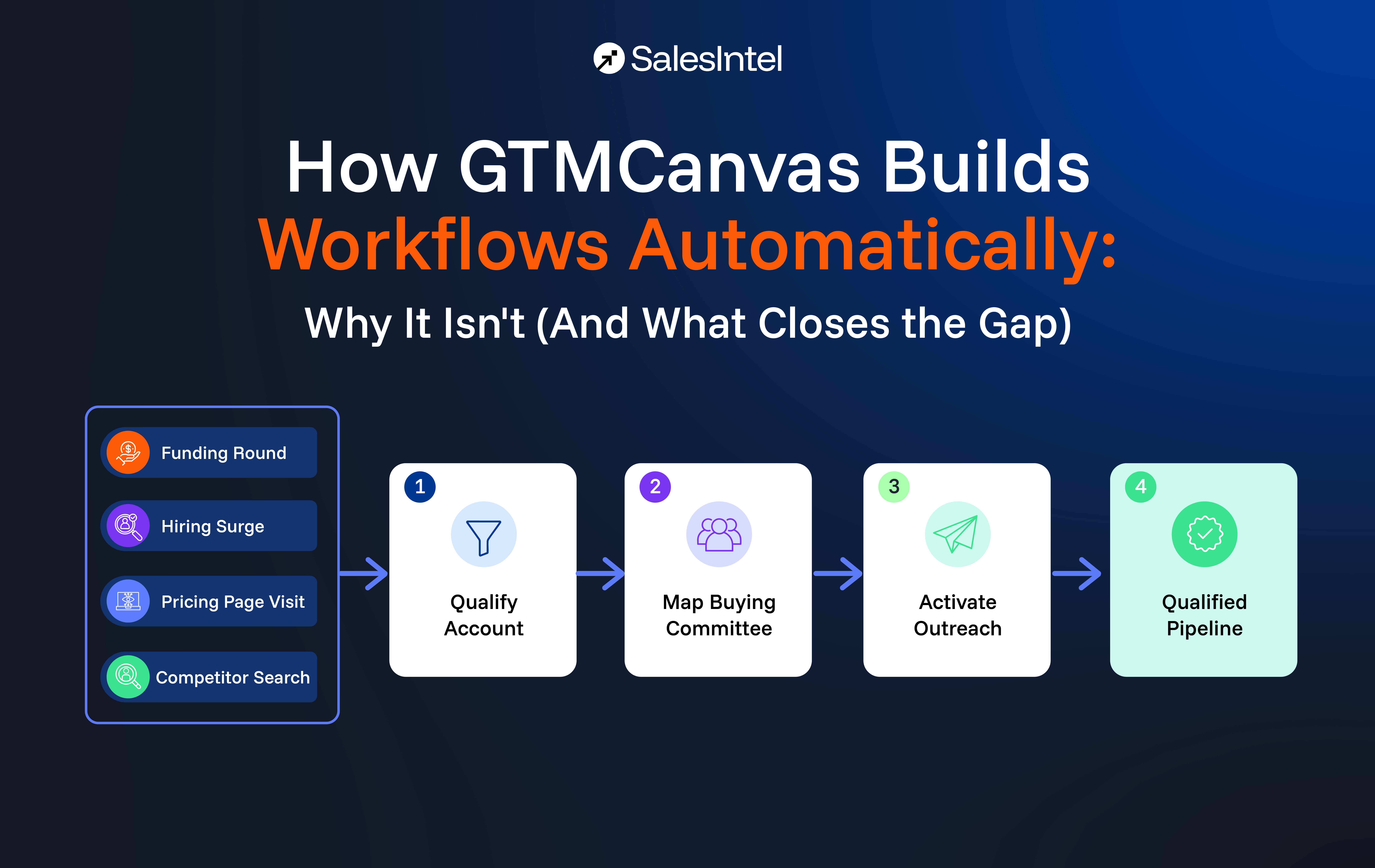
GTMCanvas is SalesIntel’s no-code workflow builder, and it turns a buying signal into fully qualified, buying-committee-mapped outreach without a rep manually building a list. Every workflow runs through three automations, capture the signal, qualify the account, activate the buying group, so pipeline gets built while the signal is still fresh instead of days later, after a manual relay race through a spreadsheet, a CRM, and a Slack message.
SalesIntel, an end-to-end pipeline generation and activation platform, built GTMCanvas as the automation engine inside its Buying Committee Activation capability, alongside AdsIntel, ProspectConnect, VisitorIntel, and RepIntel.
Quick answer: GTMCanvas is SalesIntel’s drag-and-drop workflow builder for Buying Committee Activation. It captures predictive and demand-capture signals, qualifies each account against your ICP using ICPIntel, maps the actual buying committee behind the account, and activates outreach across your existing sales and marketing stack, all without a human touching a spreadsheet. SalesIntel verifies its contact data at 95% accuracy on a 90-day re-verification cycle, so the buying-committee contacts a workflow surfaces are current enough to act on the moment they’re identified. Most teams lose a signal’s value in the gap between detecting it and acting on it; GTMCanvas’s automations are built to close that gap automatically.
The Gap Between Detecting a Signal and Acting On It
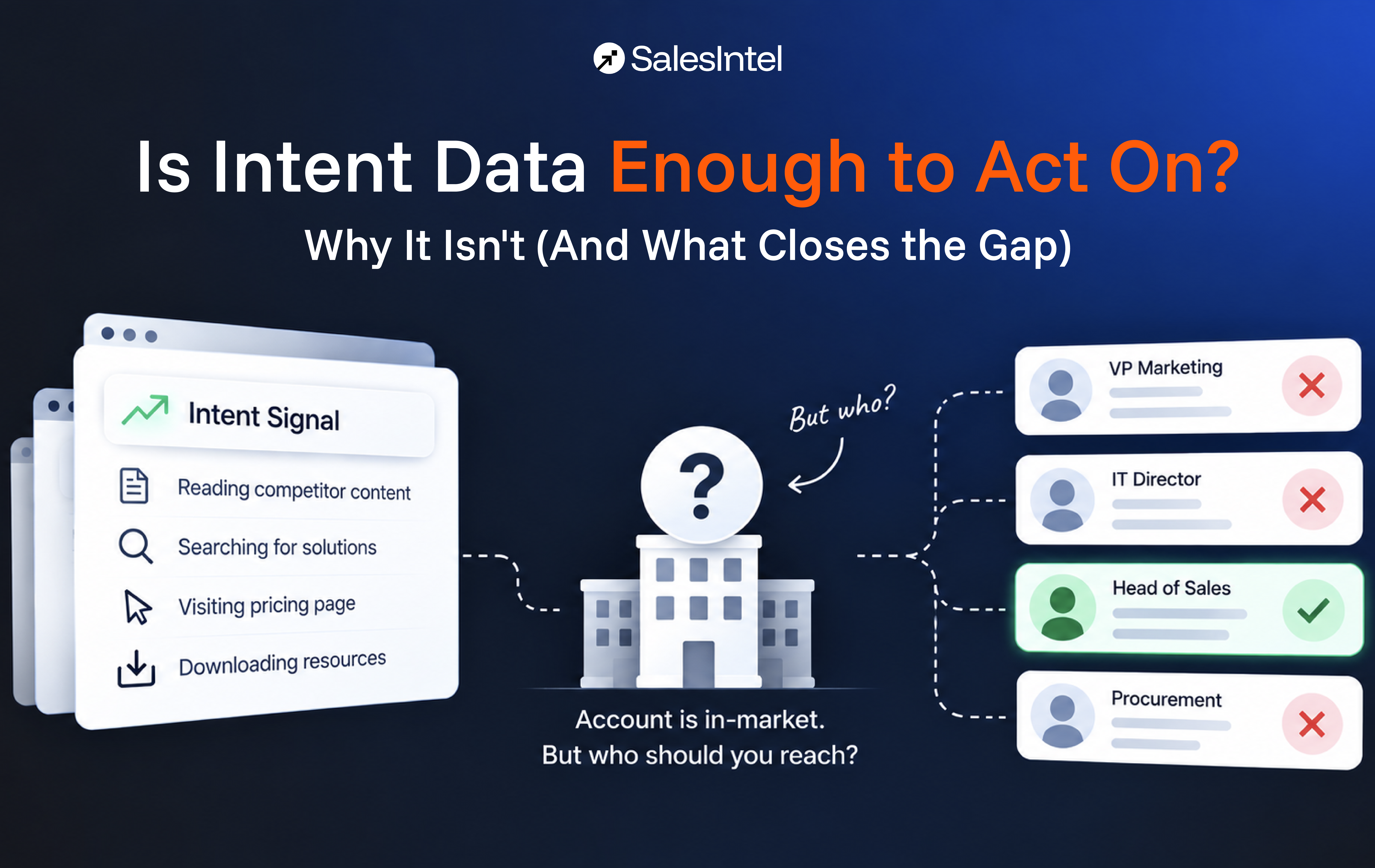
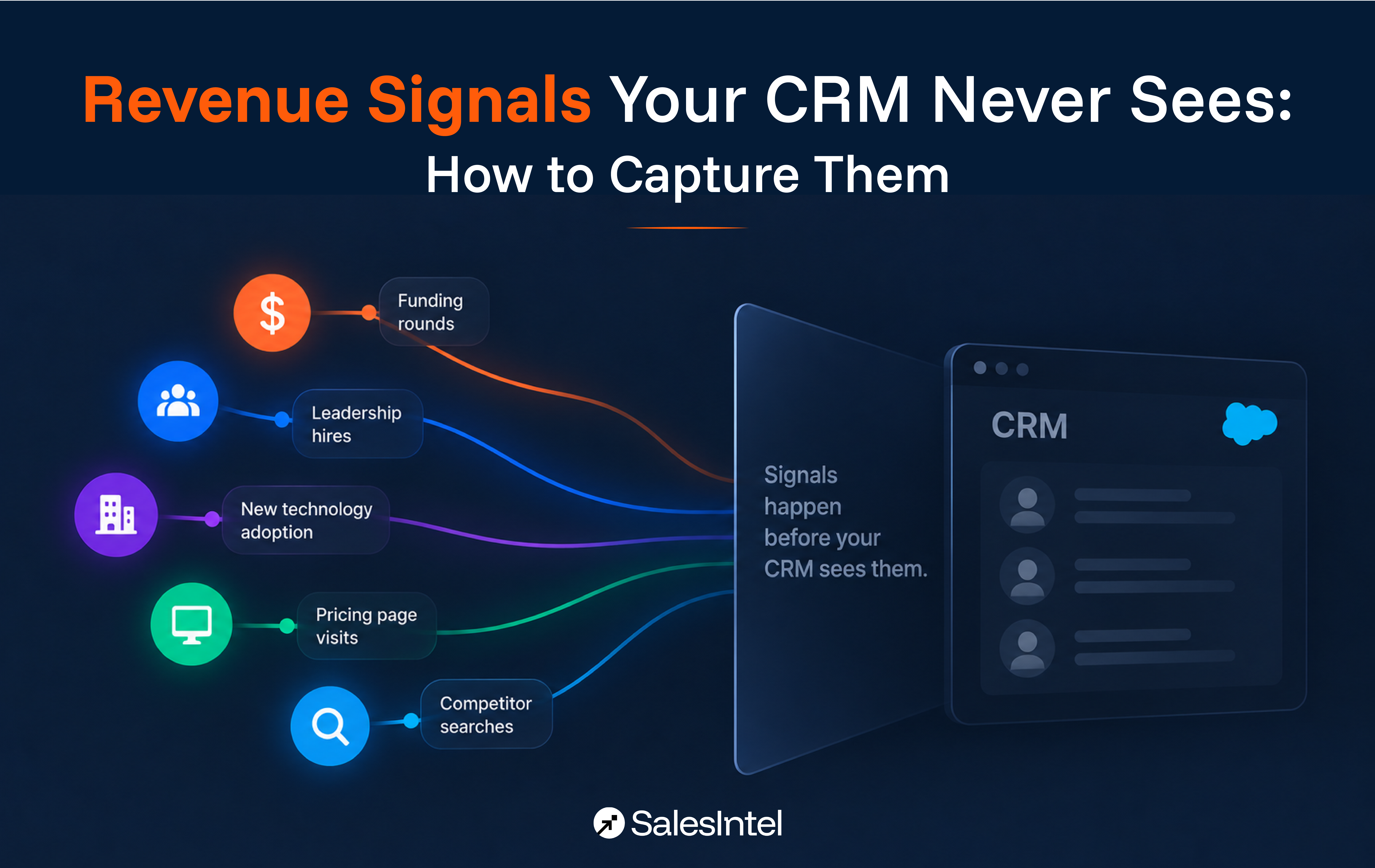
Most go-to-market teams already have plenty of signal: intent data, firmographics, technographics, website visitor tracking. The bottleneck isn’t detection, it’s orchestration. A signal fires (a target account visits the pricing page, a prospect raises a Series B) and then a person has to notice it, upload it to the CRM, assign it, and remember to act on it. By the time a workflow gets built by hand, the moment that made the signal valuable has usually passed.
Capturing Predictive and Demand-Capture Signals
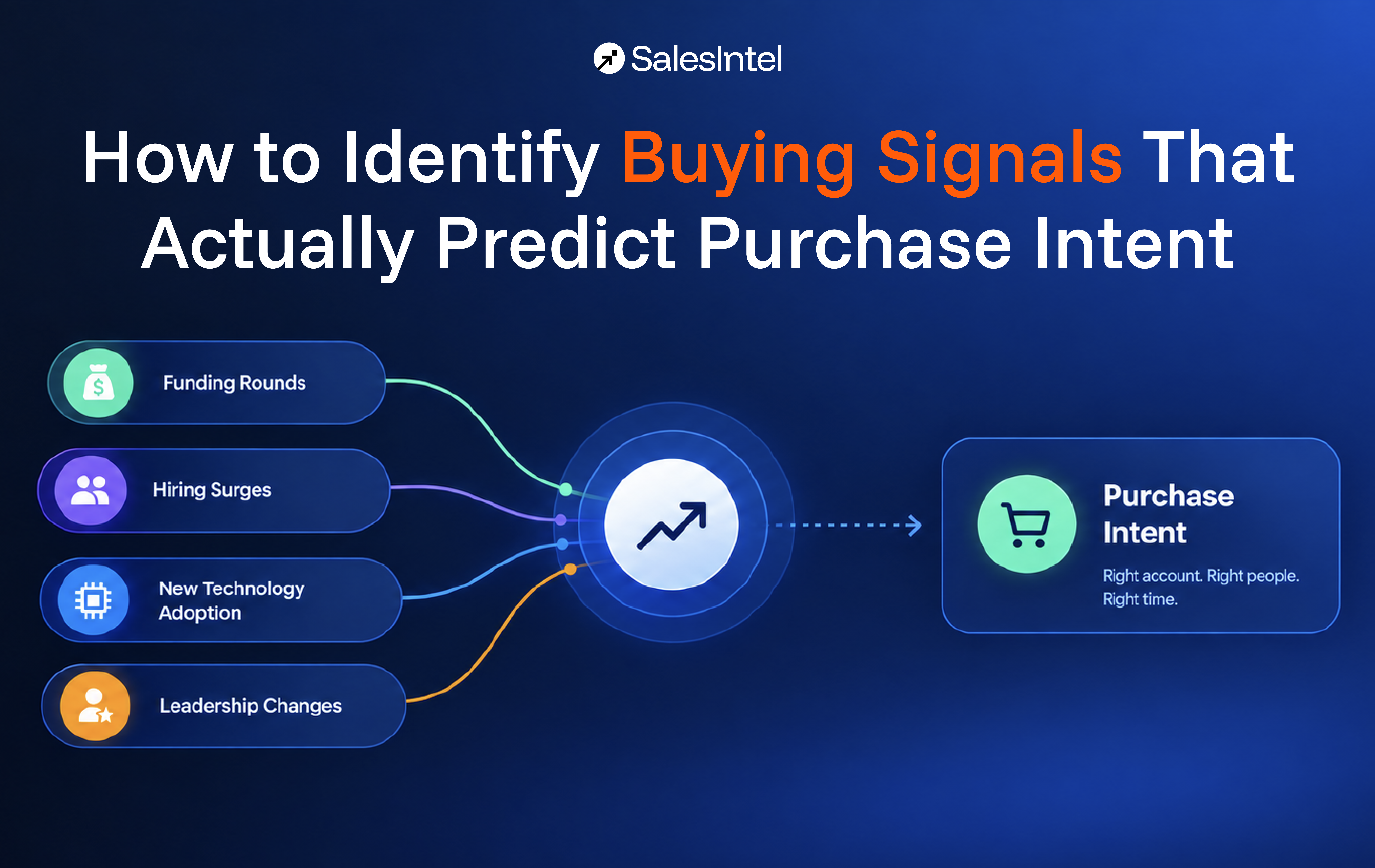
GTMCanvas automations trigger off two different timelines of intent, so a team can act before a formal evaluation starts, not only after. Predictive signals flag accounts entering conditions that will drive a buying cycle weeks out: a funding round, a new CRO, a hiring surge in SDR roles, or a competitor’s tag showing up on a prospect’s site. Demand-capture signals flag accounts evaluating right now: pricing-page visits, intent topic surges, and competitor searches. Across both timelines, SalesIntel’s Signal Intelligence tracks 32+ signal categories and 60,000+ intent topics, so a workflow can run off either timeline (or both) and build pipeline from the whole market instead of only from inbound hand-raisers.
Qualifying the Account Before Any Action Fires
A signal alone isn’t a reason to reach out, so GTMCanvas routes every triggered signal through an ICPIntel filter node before anything gets sent. That node checks firmographics (revenue, headcount, industry), technographics (what’s already in the account’s stack), and exclusion lists (existing customers, competitors). If the account doesn’t match, the workflow stops there and the signal gets logged, not acted on. That qualification step is what keeps automation from turning into spam.
Mapping the Buying Committee, Not Just a Lead
GTMCanvas treats a qualified account as a committee to map, not a single lead to hand off. B2B purchases get decided by several people in different roles, so a workflow’s logic defines which personas matter for that play (an Economic Buyer, a Technical Buyer, a Champion) before the signal ever fires. When the signal hits (a target account visiting the pricing page, for example), GTMCanvas scans the account, identifies the people matching those roles, verifies their contact data at 95% accuracy on SalesIntel’s 90-day re-verification cycle, and attaches them to the opportunity automatically. The output is a populated org chart of the specific people to contact, not just a company name to research.
Activating Outreach Across the Stack
Once GTMCanvas maps the buying committee behind an account, it routes the play into whatever system owns the next step. For marketing, that can mean pushing contacts into a HubSpot or Marketo nurture stream, or into a LinkedIn Matched Audience through AdsIntel. For sales, it can mean creating the contacts in Salesforce, assigning territory, and enrolling them in a priority sequence in Outreach or Salesloft. For RevOps, it can mean updating the account score and flagging a Slack alert when a Tier 1 opportunity enters market. Because the whole path from trigger to action is built visually (a signal node connects to a filter node connects to an action node), a RevOps or sales leader can change the logic without filing an engineering ticket.
See what a workflow like this would look like against your own pipeline:
Frequently Asked Questions
What is GTMCanvas?
GTMCanvas is SalesIntel’s no-code workflow builder within its Buying Committee Activation capability. It automates the path from a buying signal to a qualified, buying-committee-mapped outreach action, without manual list-building.
How is GTMCanvas different from a standard intent data feed?
An intent data feed only detects a signal; a person still has to qualify the account, find the right contacts, and build the outreach by hand. GTMCanvas adds the qualification (through ICPIntel), the buying-committee mapping, and the activation into a team’s existing tools as one automated workflow.
Does GTMCanvas replace tools like Salesforce or Outreach?
No. GTMCanvas is built to trigger actions inside the tools a team already uses, including Salesforce, HubSpot, Outreach, Salesloft, and Marketo, rather than replace them.
How accurate is the contact data GTMCanvas uses to map a buying committee?
SalesIntel verifies its contact data at 95% accuracy on a 90-day re-verification cycle, combining AI matching with human research, so the contacts a workflow surfaces are current enough to act on immediately.