ICP Analysis & Lookalike Modeling
 Buying Signals & Intent
 AI Automation and Data
 SalesIntel Platform
 Marketing
 Sales
Sales Revenue Operations
 Advertising
 Resources
 Events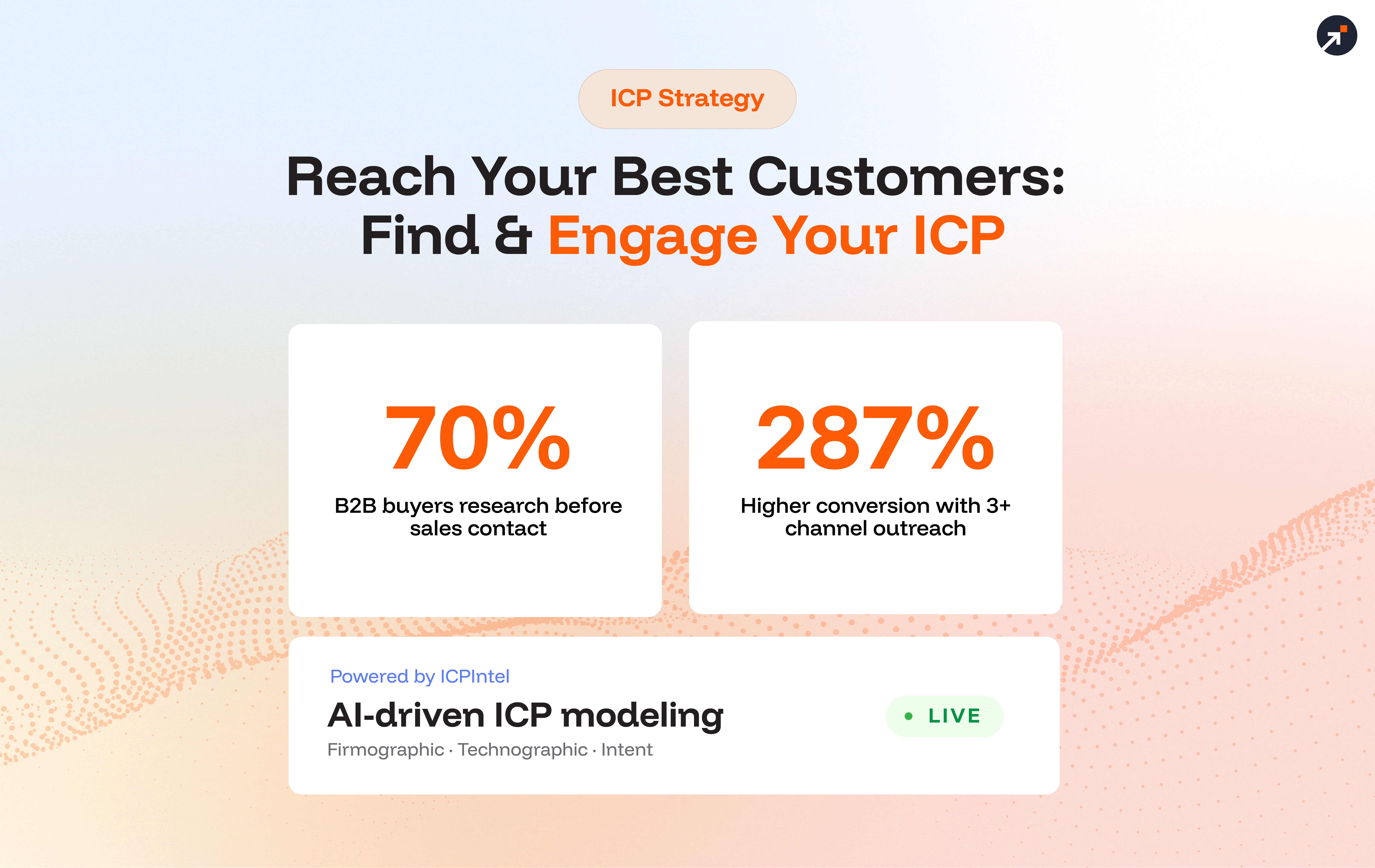
A quick AI-generated overview extracted directly from the content of this page.
Finding the right customers is not just about casting a wide net and hoping for the best. It’s about precision. It’s about knowing exactly who is most likely to buy from you and focusing your efforts on engaging them effectively.
Many businesses struggle to define their Ideal Customer Profile (ICP) because they rely on outdated assumptions or surface-level demographic data. But in a world where data drives success, an accurate and dynamic ICP is the foundation of every high-performing sales and marketing strategy.
Let’s break down how you can find and engage your best customers, and later, how ICPIntel takes this process to the next level.
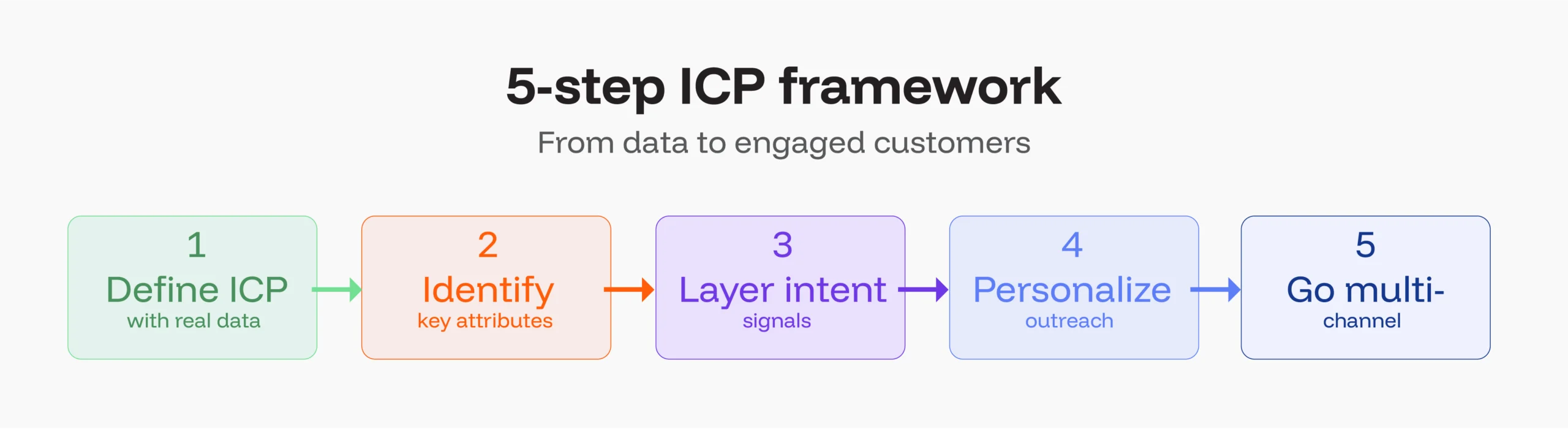
1. Define Your Ideal Customer Profile (ICP) with Data, Not Assumptions
Not all prospects are created equal. Some are an ideal fit for your product, while others will never convert, no matter how many emails you send or demos you offer. So, how do you separate the best from the rest?
Instead of relying on gut feeling or outdated persona templates, businesses should use data-driven insights to define their ICP. This means looking at:
- Firmographics: Company size, industry, revenue, and location help determine whether a business is a good match.
- Technographics: Understanding the software and technology a company already uses can help tailor your approach.
- Behavioral and Intent Data: Monitoring online activity, such as whitepaper downloads or competitor research, reveals who is actively looking for a solution.
Example: If you’re selling an enterprise-level cybersecurity solution, a 10-person startup may not be your best prospect. But a mid-market company that recently hired a CISO and started searching for “best enterprise security solutions” is a prime target.
2. Identify High-Value Customer Attributes
Once you have a broad sense of your ICP, it’s time to refine it by identifying the specific attributes of your best customers. Who generates the most revenue? Who has the shortest sales cycle? Who renews contracts year after year?
Patterns emerge when you analyze your most successful clients. Maybe they all use the same type of CRM, or they tend to be in a specific stage of business growth. These insights allow you to refine your ICP even further and focus on the customers who truly drive business success.
Example: A B2B SaaS company might find that their highest-paying customers are mid-sized tech firms using Salesforce and HubSpot, rather than small businesses using spreadsheets.
3. Use Intent Data to Find Customers Who Are Already Interested
Knowing your ICP is one thing, but finding companies actively searching for a solution like yours is where the real magic happens. Intent data tracks online behaviors such as searches, content downloads, and competitor website visits to identify prospects who are in-market.
This allows sales teams to focus their efforts on leads that are most likely to convert. Instead of cold outreach, reps can engage prospects at the right time, with the right message.

Example: If a prospect is frequently visiting pages about “best lead intelligence tools” and downloading comparison reports, they are showing strong buying intent far more than someone who simply visited your homepage once.
4. Personalize Your Outreach for Maximum Engagement
Once you’ve identified high-intent leads, generic outreach won’t cut it. If your message sounds like a copy-paste job, your prospects will ignore it. Personalization based on ICP attributes, intent signals, and past engagement is key.
Fact Check:

Effective personalization goes beyond using a first name. It involves:
- Referencing specific intent signals – “I noticed your team is researching lead intelligence tools…”
- Aligning messaging with pain points – “Companies like yours struggle with outdated prospect data. Here’s how we solve that.”
- Suggesting relevant integrations – “Since you use HubSpot, here’s how our platform seamlessly connects.”
Example: A prospect who has been reading about ABM strategies shouldn’t receive a generic cold email about “improving sales.” Instead, the outreach should highlight how your solution supports ABM efforts.
5. Use Multi-Channel Engagement to Stay Top of Mind
Reaching your ICP requires a multi-channel approach. Email alone isn’t enough, and neither is social outreach. The best engagement strategies combine multiple touchpoints to reinforce the message.
Fact:

A well-rounded strategy includes:
- Email campaigns: Tailored, value-driven outreach.
- Social engagement: Connection requests, comments, and messages.
- Webinars and events: Educating potential customers while establishing credibility.
- Targeted ads: Reinforcing messaging across platforms.
Example: A prospect might ignore an email but engage with a social media post on the same topic. When they later see a webinar invite, they might decide to join. Each touchpoint builds familiarity and trust.
Introducing ICPIntel: The AI-Powered Way to Refine Your ICP
Building an accurate ICP isn’t a one-and-done process. Markets shift, businesses evolve, and customer needs change. Many companies struggle because they rely on outdated data or misaligned assumptions. That’s where ICPIntel comes in.
How ICPIntel Helps Businesses Build a Data-Driven ICP
1. Eliminates Guesswork – Replaces assumptions with real customer data, ensuring that ICPs are built on accurate insights.
2. Identifies High-Value Customer Attributes – Uses AI-driven analytics to pinpoint the common characteristics of top-performing customers.
3. Provides Comprehensive Customer Insights – Integrates firmographic, technographic, and intent data for a deeper understanding of target customers.
4. Enables Targeted Prospecting – Helps sales teams build highly refined prospect lists and prioritize leads with the highest conversion potential.
5. Supports Continuous Optimization – Adapts ICPs based on market shifts and changing customer behaviors to maintain effectiveness over time.
With ICPIntel, businesses can move beyond static ICP models and embrace a dynamic, data-driven approach that maximizes sales efficiency and revenue growth.
Conclusion: The Power of a Well-Defined ICP
A well-defined Ideal Customer Profile isn’t just a nice-to-have—it’s the foundation of every successful marketing and sales strategy. By leveraging firmographics, technographics, and intent data, companies can pinpoint their best customers and engage them in meaningful ways.
And with tools like ICPIntel, businesses can ensure that their ICP evolves with real-world data, keeping them ahead of the competition.
The question is no longer who to target, but how effectively you can engage the right customers. With a data-driven ICP, the answer becomes clear.
Frequently Asked Questions
What is an Ideal Customer Profile (ICP)?
An Ideal Customer Profile is a data-driven description of the type of company most likely to buy from you, generate the highest revenue, and stay the longest. It goes beyond surface-level demographics and pulls together firmographic data like company size, industry, and revenue, technographic data about the tools a company uses, and behavioral intent signals that reveal who is actively researching solutions like yours. The goal is precision: knowing exactly who to target so your sales and marketing efforts are not wasted on accounts that will never convert.
What is the difference between an Ideal Customer Profile and a buyer persona?
An Ideal Customer Profile describes the type of company or account that would benefit most from your product, focusing on firmographic and technographic data. A buyer persona represents the specific individual within that ICP company who makes buying decisions, detailing their job role, responsibilities, challenges, and motivations. The ICP defines who to target at a company level, while the buyer persona defines who to target at an individual level. In practice, you need both. The ICP tells you which accounts to go after; buyer personas tell you who to talk to once you’re inside those accounts.
How do you identify your ideal customer profile?
Start with your existing customer base, not assumptions. Look at which customers generate the most revenue, have the shortest sales cycles, and renew contracts year after year. Patterns will emerge. Maybe they all use the same CRM, or they tend to be in a specific stage of business growth. From there, layer in firmographic filters (company size, industry, revenue), technographic data (what tools they use), and intent signals (what they’re researching online). The accounts that match across all three dimensions are your highest-probability targets.
Why is an Ideal Customer Profile important for sales and marketing?
Without a well-defined ICP, sales reps spend time chasing prospects who will never buy, and marketing spends budget reaching audiences that will never convert. A precise ICP ensures every outreach effort, every campaign, and every dollar is focused on the accounts most likely to generate revenue. It also improves personalization, shortens sales cycles, and creates tighter alignment between sales and marketing because both teams are working from the same definition of who the right customer actually is. According to HubSpot, organizations with a strong ICP achieve 68% higher account win rates than their peers.
How often should you update your Ideal Customer Profile?
Your ICP should be treated as a living document, not a one-time exercise. Markets shift, businesses evolve, and customer needs change. Many companies struggle because they rely on outdated data or misaligned assumptions. As a general rule, revisit your ICP any time you launch a new product, expand into a new segment, notice a pattern shift in your wins or losses, or see meaningful changes in your competitive landscape. The best-performing teams treat ICP refinement as a continuous process driven by real customer data rather than a quarterly checkbox.
What data should be included in an Ideal Customer Profile?
A strong ICP typically draws from three core data categories. Firmographics cover industry, company size, revenue, and headquarters location, as well as growth trajectory and organizational structure. Technographics reveal the software and platforms a company currently uses, including CRM adoption, cloud tools, and competitor product usage. Intent data captures real-time online behavior, including research patterns, content engagement, and signals indicating active interest in your product category. Together, these three dimensions give you a full-picture view of whether an account is a true fit, and whether the timing is right to reach out.
Can small businesses benefit from creating an Ideal Customer Profile?
Yes. The ICP is not a tool reserved for enterprise sales teams with large databases. Without a clear customer profile, you can end up putting too much effort into too many different areas of the market. Your salespeople might waste time chasing down prospects who will never buy. That is money squandered. For small businesses, a well-defined ICP is actually more valuable because resources are limited and every conversation matters. Even a basic ICP built from your first 10 to 20 customers will sharpen your targeting, improve your messaging, and help you avoid the costly mistake of pursuing every inbound lead equally.
How can intent data improve Ideal Customer Profile targeting?
Intent data turns your ICP from a static list of attributes into an active targeting signal. It tracks online behaviors such as searches, content downloads, and competitor website visits to identify prospects who are in-market right now. This allows sales teams to focus their efforts on leads that are most likely to convert. Instead of cold outreach, reps can engage prospects at the right time, with the right message. For example, a company that matches your ICP firmographics but shows no active research signals is a very different priority than one that is downloading comparison guides and visiting competitor pricing pages. Intent data tells you which accounts to call today, not just which ones might buy someday.