ICP Analysis & Lookalike Modeling
 Buying Signals & Intent
 AI Automation and Data
 SalesIntel Platform
 Marketing
 Sales
Sales Revenue Operations
 Advertising
 Resources
 Events
A quick AI-generated overview extracted directly from the content of this page.
Most businesses think they know their ideal customer. But how often do their campaigns miss the mark? How many emails go unanswered? How much budget is wasted on prospects who never convert?
The problem isn’t the lack of effort. It’s the lack of precision.
Buyer personas aren’t just customer profiles. When built on real, verified data, they become a roadmap for sales and marketing success guiding outreach, messaging, and product development. They help businesses understand not just who they’re selling to, but how and why their prospects make purchasing decisions.
So, what makes a great buyer persona? Let’s break it down step by step.
What Is a Buyer Persona?
A buyer persona is a semi-fictional but data-driven representation of your ideal customer. It captures their challenges, goals, decision-making process, and preferred engagement channels.
Why Buyer Personas Matter
- Most sales and marketing teams struggle not because they lack prospects but because they lack clarity on who to target and how to engage them effectively.
- With strong buyer personas, businesses can:
- Personalize marketing campaigns for maximum engagement.
- Improve sales outreach by tailoring messaging to specific pain points.
- Refine product development by aligning features with actual customer needs.
- Increase conversion rates by targeting the right prospects from the start.
Without clear personas, teams rely on guesswork, wasting time and resources on the wrong prospects.
Comparison of Two Marketing Campaigns: Persona-Driven vs. Generic Approach
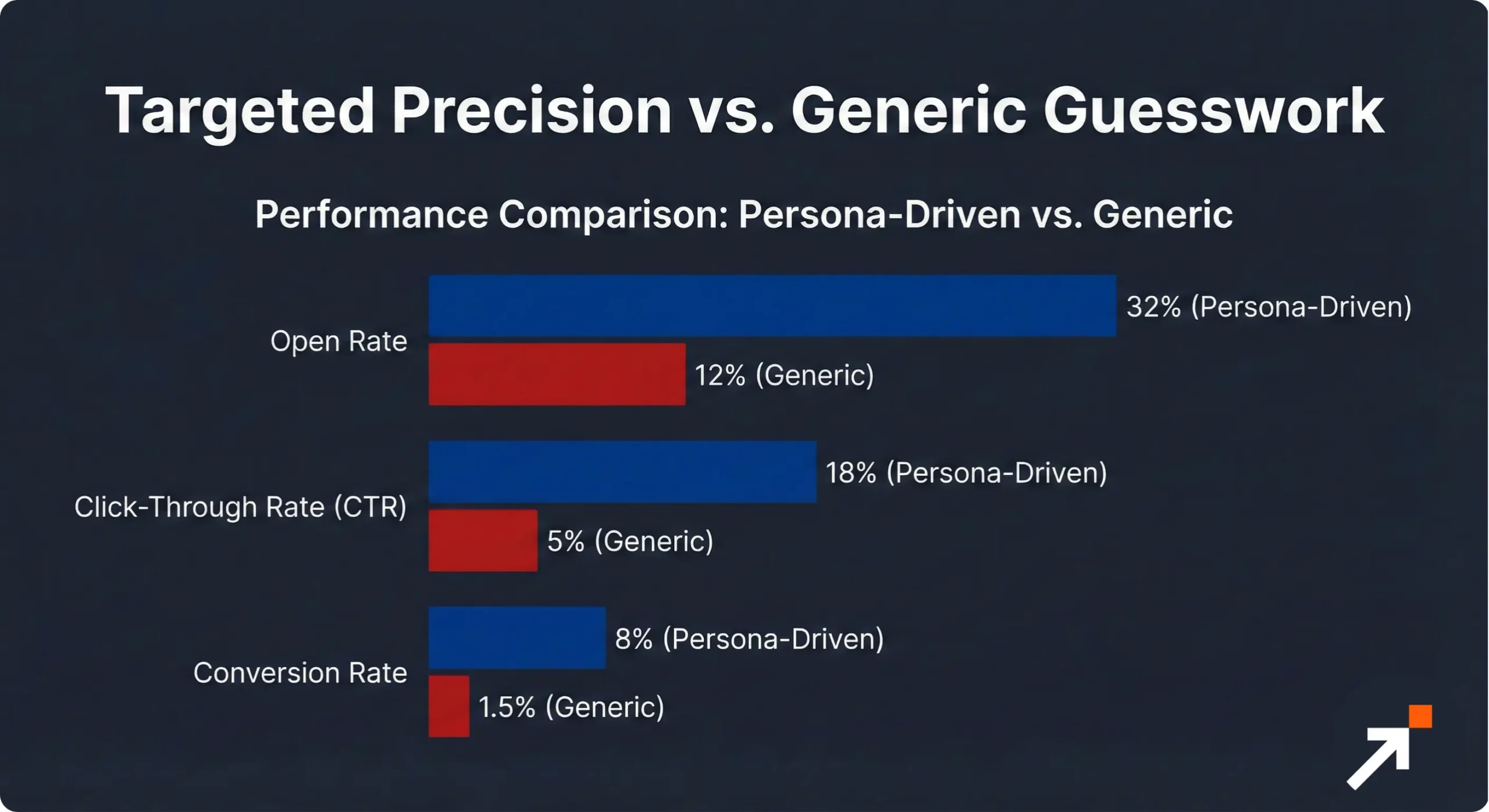
| Factor | Persona-Driven Campaign (Targeted Approach) | Generic Campaign (Broad Approach) |
|---|---|---|
| Target Audience | IT Directors at mid-sized enterprises struggling with outdated security systems. | Any business professional interested in technology. |
| Messaging | “Reduce security risks and IT downtime with our enterprise-grade SaaS solution tailored for mid-sized firms.” | “Upgrade your IT infrastructure with our latest SaaS platform!” |
| Email Open Rate | 32% (Subject line and content resonate with the audience’s specific pain points.) | 12% (Vague messaging, lacks personalization.) |
| Click-Through Rate (CTR) | 18% (Links to a case study showcasing real results for similar companies.) | 5% (Generic landing page with no specific customer relevance.) |
| Conversion Rate | 8% (Prospects see immediate value and request a demo.) | 1.5% (Visitors leave without taking action.) |
| Sales Cycle Length | Shorter (Prospects are already problem-aware and looking for solutions.) | Longer (Leads need extensive nurturing since they aren’t clearly qualified.) |
| ROI on Marketing Spend | Higher (Fewer, high-quality leads with a better chance of converting.) | Lower (Large volume of low-intent leads requiring more resources to convert.) |
Key Components of a Buyer Persona
A persona is only as good as the data behind it. Here’s what a well-crafted buyer persona should include:
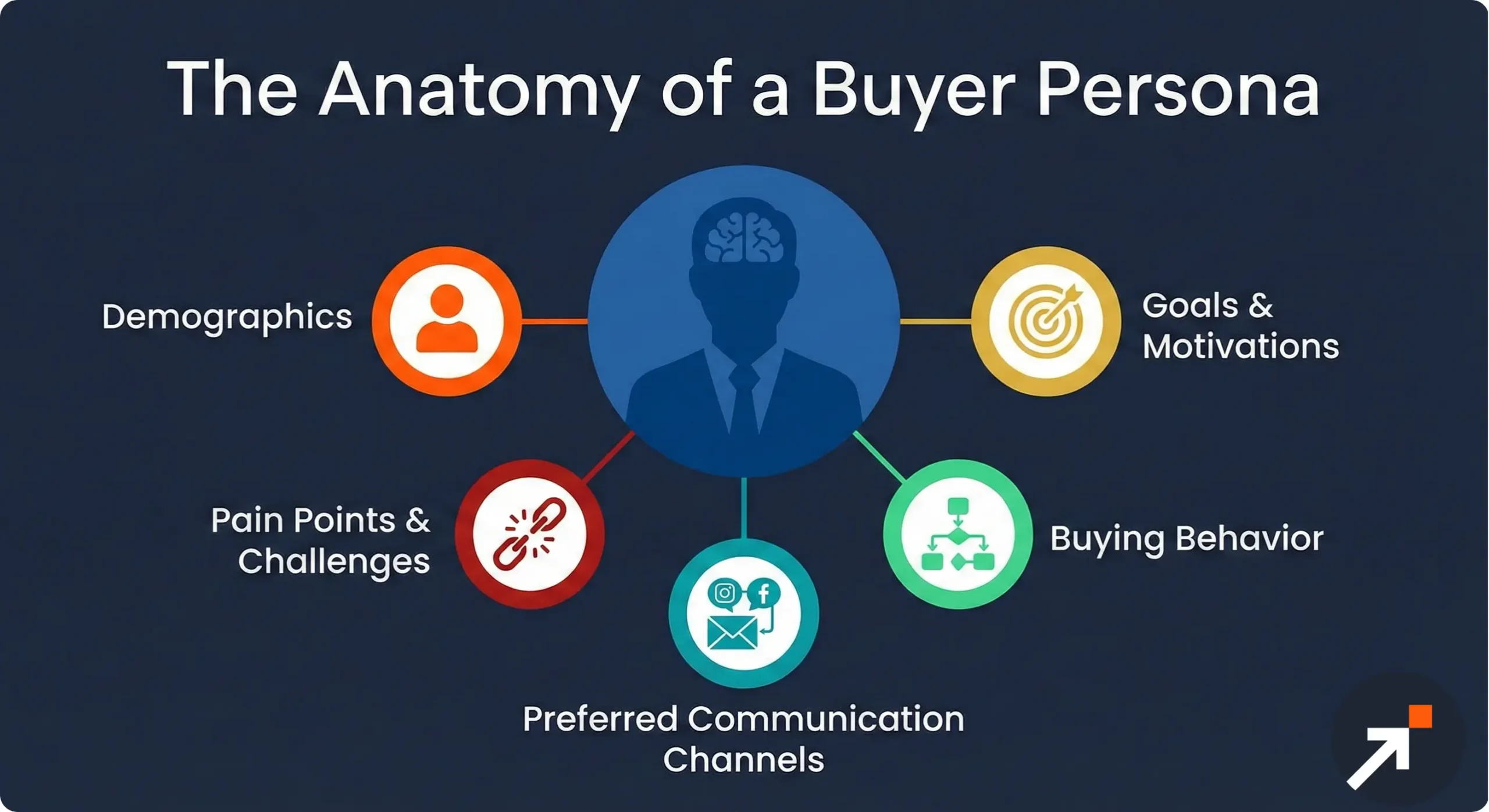
- Demographics – Age, job title, location, industry, company size.
- Pain Points & Challenges – The obstacles preventing them from achieving their goals.
- Goals & Motivations – What drives their decisions and influences their priorities.
- Buying Behavior – How they research, evaluate, and choose vendors.
- Preferred Communication Channels – Email? Social platforms? Webinars? In-person events?
The best personas are based on real customer data, not assumptions. Surveys, interviews, CRM analytics, and website behavior tracking provide the most accurate insights.
Real-World Buyer Persona Examples
Let’s explore three detailed personas from different industries – B2B SaaS, consumer fitness, and e-commerce sustainability.
A. B2B Buyer Persona Example: The IT Director
Industry: Enterprise SaaS
- Pain Points:
- Struggles with outdated systems that slow down operations.
- Increasing cybersecurity threats add complexity.
- Budget constraints limit technology upgrades.
- Buying Behavior:
- Prefers in-depth research and case studies before making decisions.
- Relies on peer recommendations and C-level approvals.
- Marketing Approach:
- Provide data-driven content like whitepapers and reports.
- Offer ROI-focused messaging to justify investment to leadership.
- Host technical webinars where prospects can ask security and compliance-related questions.
B. B2C Buyer Persona Example: The Busy Professional
Industry: Fitness & Wellness
- Pain Points:
- Doesn’t have time for long workout sessions.
- Overwhelmed by too many fitness options and diet plans.
- Buying Behavior:
- Looks for quick, convenient solutions that fit into a busy schedule.
- Prefers mobile-friendly fitness apps over in-person training.
- Marketing Approach:
- Focus on ease of use and time efficiency in messaging.
- Offer short, high-impact workout routines.
- Use success stories from professionals who achieved fitness goals despite their busy schedules.
C. E-commerce Buyer Persona Example: The Eco-Conscious Shopper
Industry: Sustainable Fashion
- Pain Points:
- Wants ethically sourced products but struggles to verify brands’ claims.
- Concerned about greenwashing and misleading marketing.
- Buying Behavior:
- Engages with brands that are transparent about their sourcing.
- Looks for sustainability certifications and third-party endorsements.
- Marketing Approach:
- Use storytelling to highlight ethical supply chains.
- Leverage influencers who align with sustainability values.
- Provide eco-friendly packaging and incentives for returning old products.
A well-defined buyer persona like the IT Director helps tailor marketing efforts that resonate with real challenges and decision-making processes. By addressing their pain points with data-driven insights, peer validation, and ROI-focused messaging, businesses can build trust and accelerate the sales cycle. Rather than a one-size-fits-all approach, a persona-driven strategy ensures that every touchpoint speaks directly to their needs leading to higher engagement and conversions.
Buyer Persona Templates & How to Create Your Own
Building a data-driven buyer persona requires structured research. Follow these steps:
Step 1: Gather Data
- Conduct customer interviews to understand real pain points.
- Analyze CRM and website analytics for behavior patterns.
- Use survey responses to identify key trends.
Step 2: Identify Common Patterns
- Group customers by shared challenges and motivations.
- Identify recurring objections in the sales process.
Step 3: Create the Persona Profile
- Give them a name, role, and backstory.
- Define their pain points, goals, and decision-making factors.
Step 4: Align Marketing & Sales Strategies
- Tailor messaging and outreach to match the persona’s needs.
- Use A/B testing to refine targeting and personalization.
Case Study: How CriticalArc Transformed Its Buyer Persona Strategy
The Challenge: Wasting Months on Manual Research

For CriticalArc, a company specializing in safety and security solutions, building the right prospect list was a time-consuming, manual process.
- Researching contacts across 190 universities in Texas took four months.
- By the time they uploaded the data, 30% was already outdated, leading to high bounce rates.
- Existing B2B data providers lacked accuracy, forcing their team to start from scratch repeatedly.
Data decay is a major challenge in B2B prospecting. A persona built on outdated information leads to wasted efforts and poor engagement.

The Solution: SalesIntel’s Data-Driven Persona Development
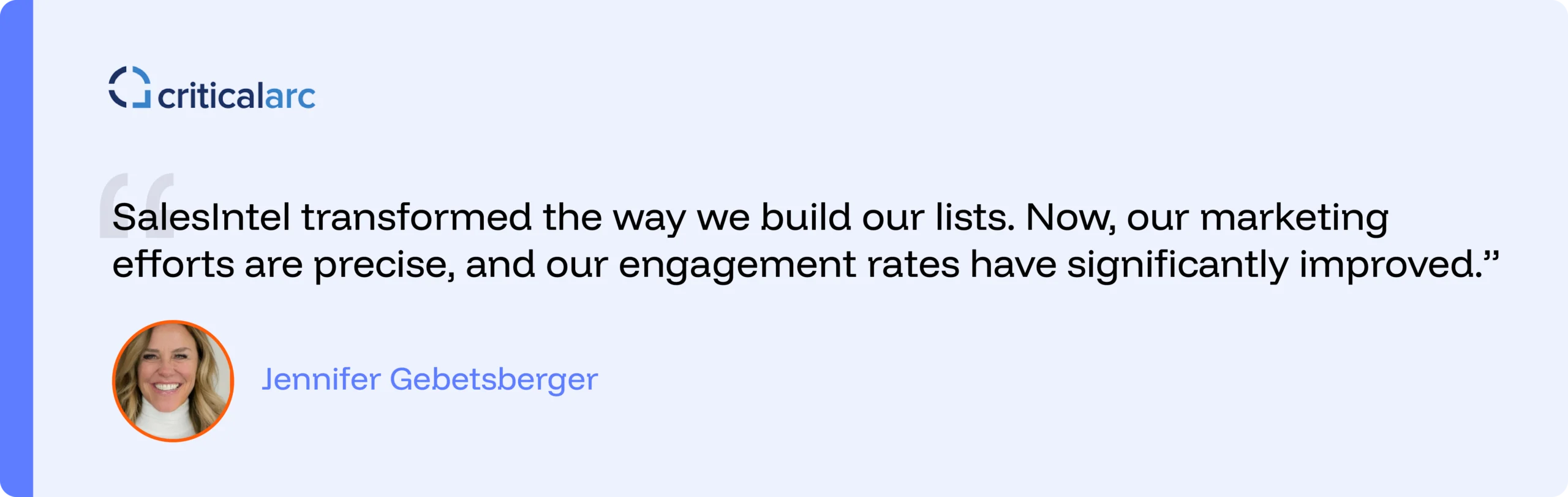
Jennifer Gebetsberger, CriticalArc’s Administration Manager, knew they needed a faster, more accurate approach. She advocated for SalesIntel. A platform offering real-time, human-verified B2B contact data.
With SalesIntel, CriticalArc:
- Reduced research time from four months to one day with instant access to verified contacts.
- Eliminated outdated data that previously caused bounce rates.
- Refined buyer personas using firmographic, technographic, and intent data, ensuring outreach reached the right people.
From Guesswork to Precision: Build Data-Driven Buyer Personas with SalesIntel
Building accurate buyer personas is not just about improving marketing; it’s about driving real business growth. When you truly understand your ideal customers, you can craft messages that resonate, target the right decision-makers, and eliminate wasted efforts on the wrong audience. But getting there requires more than guesswork; it demands accurate, real-time data.
SalesIntel takes the guesswork out of persona-building by providing verified firmographic, technographic, and intent data. With access to human-verified contacts and deep insights, you can refine your buyer personas, build high-converting prospect lists, and engage the right audience with precision.
Ready to move beyond assumptions and start reaching your best customers? Request a demo today and see how SalesIntel can help you turn data into results.
Frequently Asked Questions
What is a buyer persona and why is it important?
A buyer persona is a research-based profile that represents your ideal customer, built from real data on demographics, job role, goals, pain points, and buying behavior. It matters because it forces specificity. Without one, messaging is generic and conversion suffers. With one, sales and marketing can align on exactly who they are targeting, what those people care about, and how to reach them at the right time through the right channel.
What are the key elements of a buyer persona?
A complete buyer persona includes: job title and seniority, company size and industry (firmographics), primary goals and KPIs, day-to-day pain points, decision-making role in the buying process, preferred content and communication channels, common objections, and what triggers them to evaluate a new solution. For B2B personas, buying authority and influence within the committee should also be captured.
What is the difference between a buyer persona and an ideal customer profile (ICP)?
An ICP defines the type of company you sell to best, based on firmographic and technographic fit: industry, headcount, revenue, tech stack, geography. A buyer persona defines the individual within that company you need to engage: their role, motivations, and challenges. ICP answers “what accounts should we target?” Persona answers “who inside those accounts should we talk to, and how?” Both are necessary and work together in ABM and outbound strategies.
How many buyer personas should a business have?
Most B2B companies operate effectively with two to five personas. Too few means your messaging is still too broad. Too many creates messaging sprawl that’s impossible to execute consistently. Start by identifying the roles most involved in your buying process, champion, economic buyer, technical evaluator, and build personas around those. Expand only when you have meaningful behavioral or motivational differences across segments that justify distinct messaging.
How do you create a buyer persona using real customer data?
Start with your existing customer base. Interview customers who match your best accounts, analyze CRM data for patterns in closed-won deals, and review support tickets and sales call notes for recurring pain points. Layer in third-party intent and firmographic data to validate what you’re seeing. The goal is to ground every persona attribute in something real, not in assumptions about who you think buys from you.
Can AI help create buyer personas?
Yes, with the right inputs. AI can synthesize large volumes of CRM data, call transcripts, and survey responses to surface patterns faster than manual analysis. It can also help draft persona narratives once the underlying data exists. The risk is using AI to generate personas from scratch without real customer data as the foundation. AI-generated personas built on assumptions rather than evidence tend to reinforce existing biases rather than surface what actually drives buying decisions.
What are some examples of B2B buyer personas?
A few common B2B persona archetypes: the Revenue-Focused VP of Sales who cares about pipeline coverage and quota attainment; the Data-Driven Marketing Ops Manager who needs clean, integrated data to run campaigns; the Compliance-Minded IT Director who prioritizes security and system governance; the Growth-Oriented SDR who needs accurate contact data to hit connect rate targets. Each persona has different goals, objections, and content needs, which is why generic outreach consistently underperforms personalized messaging.
What mistakes should companies avoid when building buyer personas?
The most common mistakes: building personas from internal opinions instead of customer research, creating too many personas and diluting execution, never updating them as markets shift, and confusing demographics with motivations. A persona built entirely around job title and company size misses the “why” behind buying decisions. Personas also become stale fast. If yours were built more than 18 months ago and haven’t been reviewed, they probably no longer reflect how your buyers actually behave.