ICP Analysis & Lookalike Modeling
 Buying Signals & Intent
 AI Automation and Data
 SalesIntel Platform
 Marketing
 Sales
Sales Revenue Operations
 Advertising
 Resources
 Events
Rep-driven follow-up timing loses deals because buying signals move in minutes and manual dashboard-checking moves in hours. The fix is automation: software acts on a signal the instant it fires, then brings a rep into the conversation with full context at the moment human judgment adds the most value.
Leads contacted within 5 minutes of showing intent are 21 times more likely to qualify than leads contacted after 30 minutes, per the Lead Response Management Study (Oldroyd, MIT Sloan School of Management with InsideSales.com, 2007), yet most sales teams still leave follow-up timing to whichever rep happens to check a dashboard first. SalesIntel, an end-to-end pipeline generation and activation platform, replaces that guesswork with automation: its Signal Intelligence capability detects intent the moment it happens, and GTMCanvas automations launch the matching play automatically, before a human ever opens a dashboard. Reps stop monitoring signals and start closing the conversations those signals already started.
Why a 24-Hour Follow-Up Gap Costs Real Pipeline
A follow-up delay of even a few hours can turn a live buying signal into a stale one, and that gap between signal and outreach is where deals die. A VP at a target account downloads a competitive comparison guide Monday morning, a clear, high-intent signal. The CRM logs it within the hour, but the assigned rep doesn’t see it until early afternoon and decides to follow up “once things quiet down.” By the time the email goes out Tuesday, more than 24 hours have passed, and the prospect has typically reviewed other vendors, cooled on the pain point that drove the search, or booked a demo with whoever responded first.
Where Manual Timing Breaks Down
Manual follow-up timing fails in three predictable ways: it’s too slow, it’s inconsistent rep to rep, and it burns out the people doing the monitoring.
Response Speed Determines Whether You Qualify the Lead
Response time and lead qualification are directly linked: leads contacted within 5 minutes are 21 times more likely to qualify than leads contacted after 30 minutes, per the Lead Response Management Study (Oldroyd, MIT/InsideSales.com, 2007). Most sales organizations still treat a same-day response as fast; buyers researching in real time expect faster than that.
Discretionary Timing Isn’t a Process, It’s Chaos
When follow-up timing is left to individual judgment, the result isn’t a process, it’s chaos. One rep checks dashboards hourly and follows up instantly. Another batches everything for Friday afternoon. A third forgets the dashboard exists until a manager asks in a 1:1. Same company, same brand, wildly different buyer experiences, and a revenue motion that can’t be forecast.
Manual Signal-Monitoring Burns Out Reps
Asking reps to monitor multiple signal dashboards, cross-reference CRM records, and manually prioritize alerts turns skilled sellers into data janitors. Every hour spent checking a dashboard is an hour not spent selling, and that cognitive load compounds into the turnover and missed-quota problems most GTM leaders already track, without connecting them back to follow-up timing.
What GTMCanvas Automations Change
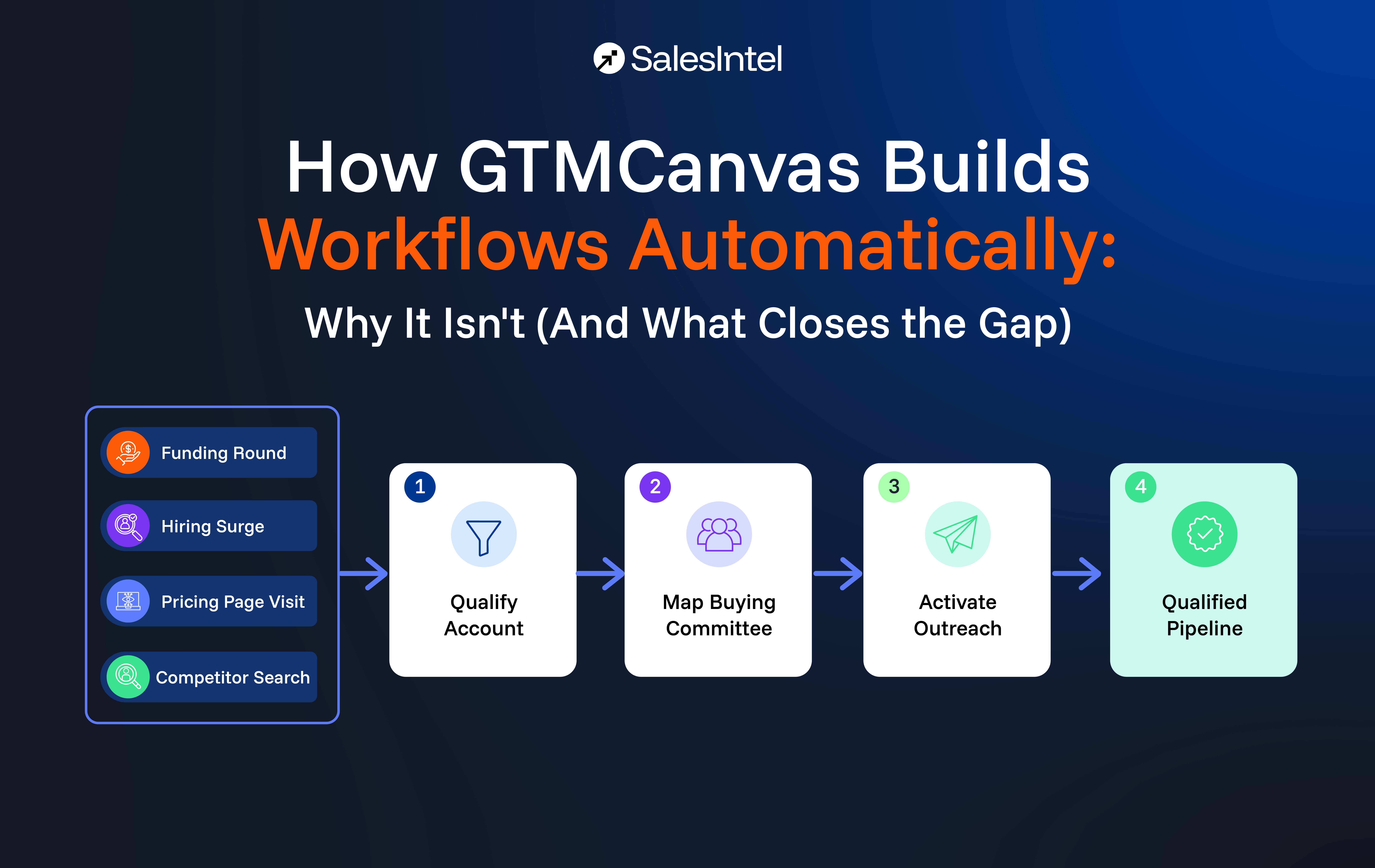
A GTMCanvas automation is a workflow where software senses a buying signal and acts on it immediately, then brings a rep in once a human adds real value. It replaces “signal fires, rep sees it, rep decides, rep acts” with “signal fires, the automation runs, the rep enters once the buyer is ready.” Human processing was the bottleneck in the old model; with automation running the timing layer, the rep is the strategic layer, not the timing engine.
In practice this runs in three steps. Every meaningful interaction (a website visit, content download, intent surge, job change) is captured and routed in real time, no overnight sync required. Each signal maps to a pre-built automation that fires automatically: a VP-level contact engaging with competitive content might trigger a multi-channel sequence plus a Slack alert to the account’s AE, while an anonymous visitor to a competitor’s pricing page might trigger enrichment and retargeting instead. The rep enters last, with context already assembled: what fired, what the automation already did, and the talk track suited to that moment.
None of this works without real-time, verified data and automation logic that can act without human review. An automation that fires instantly at a bounced email or the wrong contact just automates failure faster, so it requires continuously verified contact data, accurate firmographics, genuinely actionable signals, and a stack synced tightly enough that a rep’s manual follow-up never duplicates one the automation already sent.
Reps Become Strategists, Not Dashboard Monitors
The hardest part of adopting automation isn’t the technology, it’s redefining what a rep’s day looks like once timing stops being their job. Time previously spent on dashboard monitoring, manual prioritization, and deciding when to follow up shifts to personalization, account strategy, and negotiation. The goal stops being “get the follow-up out the door” and becomes “add the value an automation can’t.”
Where SalesIntel Fits: ICPIntel, Signal Intelligence, and GTMCanvas
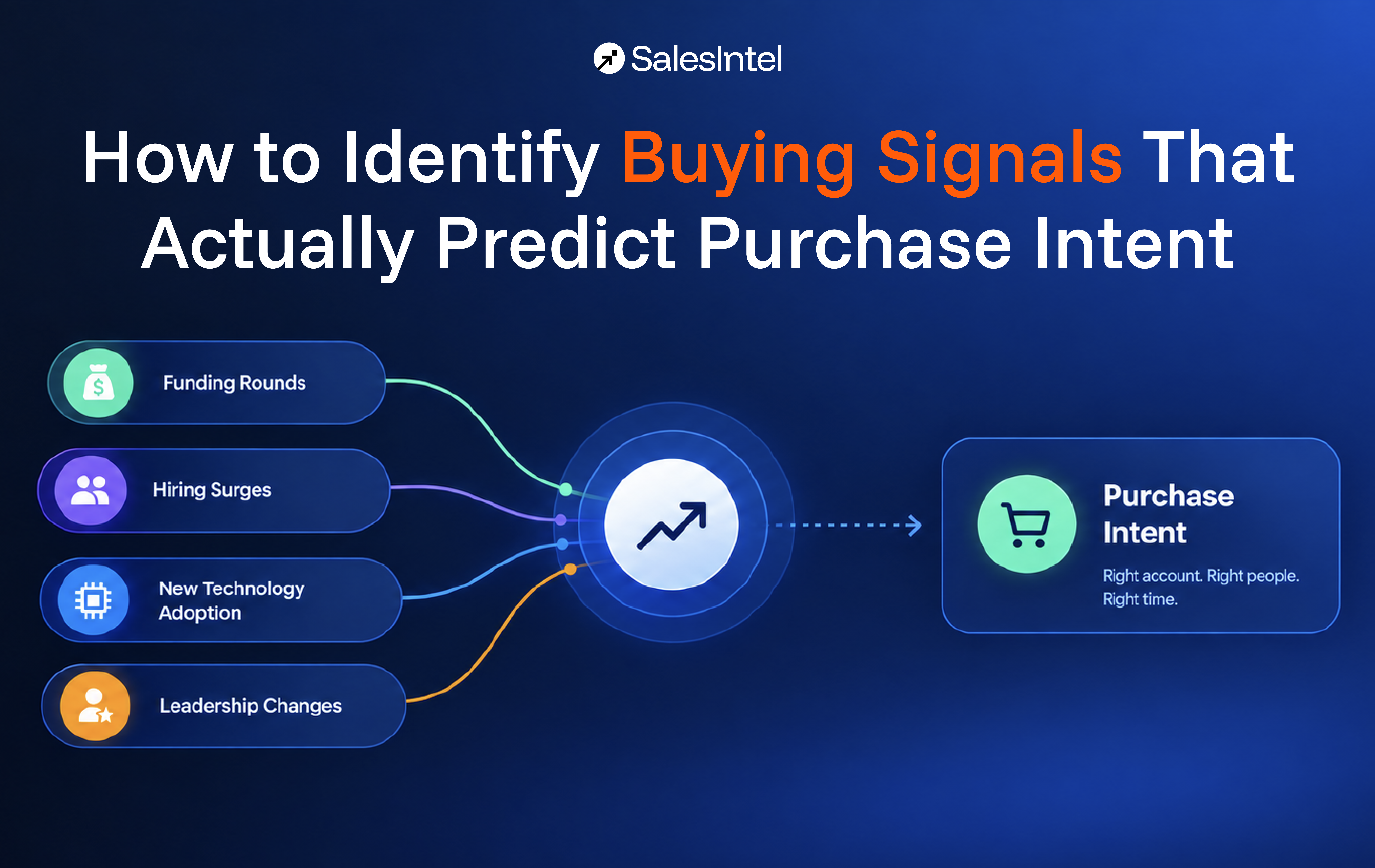
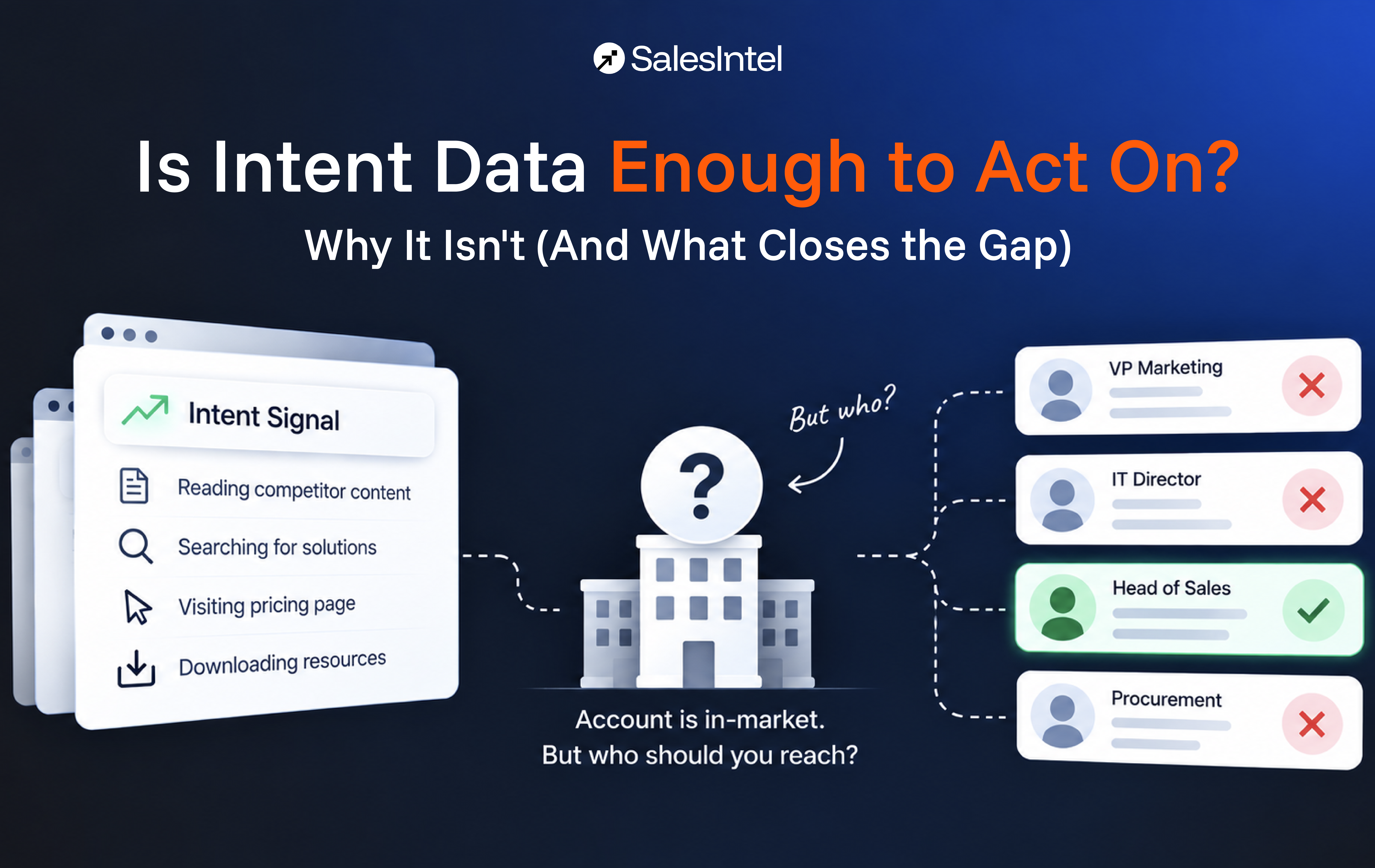
SalesIntel’s three capabilities map onto what automated follow-up requires: knowing who to target, knowing when they’re ready, and acting the moment it happens. ICPIntel decodes a company’s best-customer patterns across revenue, geography, headcount, and technology to score fit and surface look-alike accounts. Signal Intelligence tracks 32-plus buying-signal categories and 60,000-plus intent topics across predictive signals (funding, leadership changes, hiring surges, new technology adoption) and demand-capture signals (pricing-page visits, competitor searches, content downloads). GTMCanvas turns a Signal Intelligence detection into an automated, multi-channel play the moment it fires, without a rep building or triggering it manually. All three sit on the same data foundation: contacts hand-verified on a 90-day cycle to maintain 95% accuracy, per SalesIntel’s own methodology.
Signal to Play: A Quick Decision Matrix
Use this as a starting map for which signals should trigger which automations, then adjust thresholds to your own ICP.
- VP-level contact engages with competitive or pricing content (Signal Intelligence demand-capture signal) leads to an immediate multi-channel sequence plus a Slack alert to the AE (GTMCanvas), since the buyer is actively comparing vendors.
- Unknown visitor from an ICP-fit company visits a pricing page (Signal Intelligence, cross-checked against ICPIntel fit scoring) leads to enrichment plus targeted retargeting, since the account is in-market but the buying committee isn’t identified yet.
- Target account raises funding or shows a hiring surge (Signal Intelligence predictive signal) leads to a strategic nurture sequence plus an account-research prompt, since the buying cycle is likely months out, not immediate.
What Actually Changes: The Business Impact
Shifting from rep-timed to signal-timed follow-up changes four things a revenue leader can measure. Pipeline quality improves because outreach targets accounts already showing real buying signals instead of a cold list. Sales cycles compress because multi-threading starts while the account is still forming its evaluation criteria, not after. Spend gets more efficient because activity concentrates on accounts already in-market. And tooling costs drop because signal detection, contact data, and activation run through fewer connected systems instead of several disconnected point tools.
The Only Question Is Timing, Not Technology
Reps deciding when to follow up made sense when signals were scarce and processing them by hand was the only option. That constraint doesn’t exist anymore: the technology to detect a signal and act on it in real time is available today, and the sales organizations running it aren’t waiting for a rep to open a dashboard. See current SalesIntel pricing to scope what an automated follow-up motion would cost on your own pipeline.
Frequently Asked Questions
What is a GTMCanvas automation?
A GTMCanvas automation is a go-to-market workflow where software detects a buying signal and acts on it immediately (launching outreach, alerting a rep, enriching a contact) instead of waiting for a person to notice the signal and decide what to do. Reps are brought into the conversation once the automation has already acted, not before.
Why is letting reps decide follow-up timing a problem?
Because buying signals lose value fast: leads contacted within 5 minutes are 21 times more likely to qualify than leads contacted after 30 minutes (Oldroyd, MIT/InsideSales.com, 2007). Manual, discretionary timing also produces wildly inconsistent buyer experiences from rep to rep, since there’s no shared standard for when a signal gets acted on.
Does automated follow-up replace sales reps?
No. It replaces reps as the timing mechanism, not as the seller. Reps still handle negotiation, relationship-building, and account strategy; they just enter the conversation once an automation has already detected the signal and taken the first action, with full context instead of a cold dashboard alert.
How does SalesIntel support automated follow-up specifically?
Signal Intelligence detects predictive and demand-capture buying signals across 32-plus categories and 60,000-plus intent topics, ICPIntel scores which signals belong to accounts that actually fit the ICP, and GTMCanvas turns a qualifying signal into an automated, multi-channel play the moment it fires.